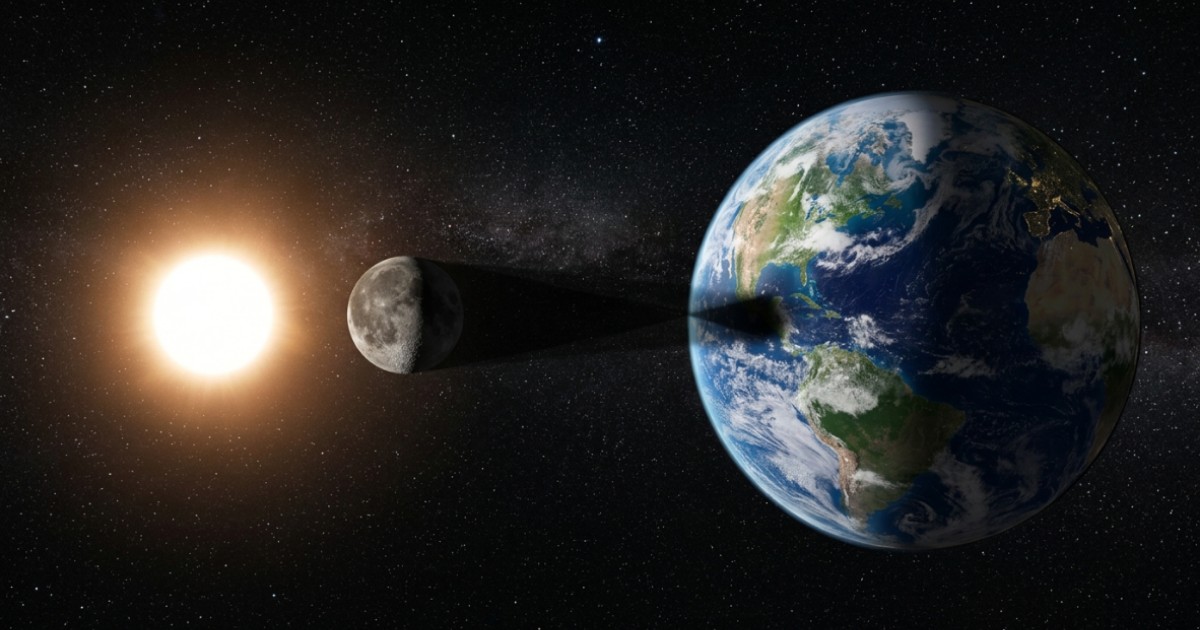
August 2, 2027, is set to be a milestone for space enthusiasts and astronomers worldwide. On this day, Earth will witness a massive total solar eclipse, dubbed the "Great North African Eclipse." Marking one of the longest durations for a total solar eclipse visible from land in over a century, the phenomenon is expected to plunge the affected regions into darkness for approximately 6 minutes and 23 seconds.
While a typical total solar eclipse lasts between 2 to 3 minutes, this specific event owes its extended duration to rare celestial alignment. During the eclipse, Earth will be positioned at its ‘Aphelion’—the point in its orbit farthest from the Sun. This makes the Sun appear slightly smaller in our sky. Simultaneously, the Moon will be near its ‘Perigee,’ or the point closest to Earth, making it appear larger. This combination allows the Moon to cover the Sun for a much longer period.
The eclipse’s path of totality will be approximately 258 kilometers wide, spanning across three continents. It will begin in the Atlantic Ocean before crossing Spain, Morocco, Algeria, Tunisia, Libya, Egypt, Sudan, Saudi Arabia, Yemen, and Somalia. The duration of darkness will be most significant in Luxor, Egypt, and parts of the Libyan desert, where the Sun will be obscured for over six minutes. As August offers typically clear skies in these regions, it presents an ideal opportunity for observation and research.
While most of India will not see the total eclipse, some western regions might witness a partial eclipse just before sunset. Because the eclipse path stays close to the equator, the Moon’s shadow will traverse the Earth at a slower pace, further extending the duration of totality. Beyond the awe-inspiring experience of daylight turning into darkness, this event provides a crucial opportunity for scientists to study solar activity and lunar positioning in unprecedented detail.
Such cosmic events serve as a profound reminder of the intricate clockwork of our solar system. The 2027 eclipse will undoubtedly be a historic day in astronomy. For those planning to witness this phenomenon, preparation is key, but the most important safety rule remains the use of certified solar viewing glasses or filters to prevent permanent eye damage.