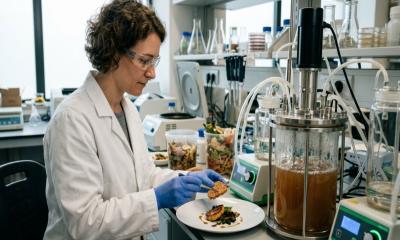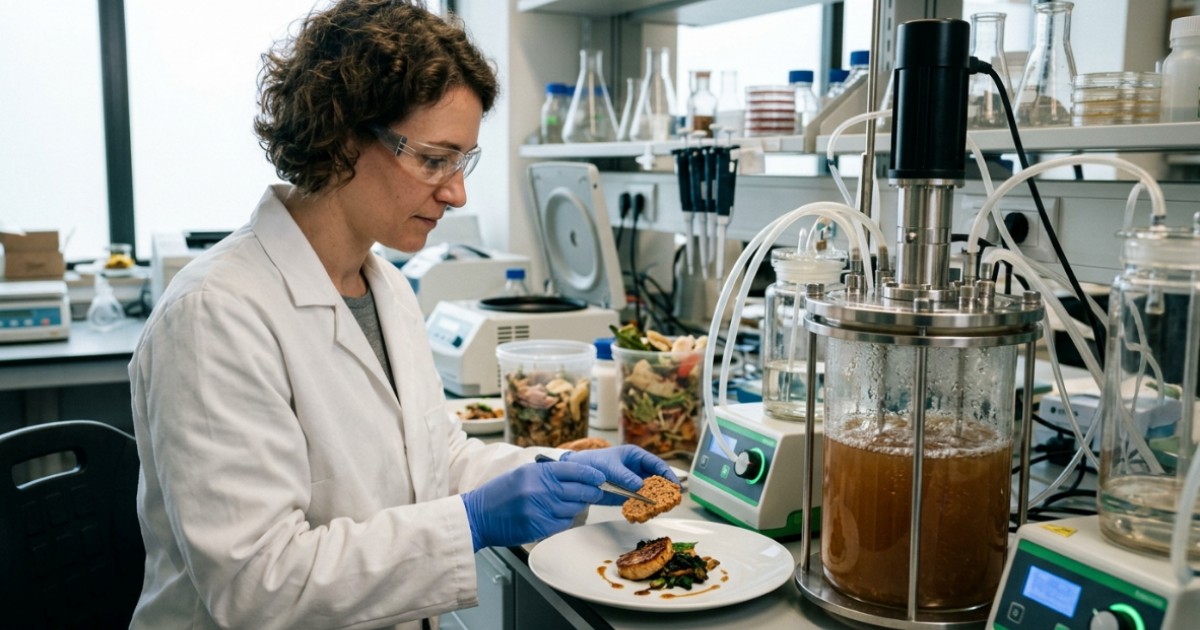
The global food industry is currently undergoing a significant transformation as researchers find innovative ways to convert industrial waste into palatable food products. According to a recent report by BBC News, a laboratory at Stanford University in California has successfully developed a cheese-like product derived entirely from food waste. Vayu Hill-Maini, a bioengineer leading the lab, has been experimenting with fungal fermentation to process discarded materials. The result is a substance that mirrors the texture and taste of aged cheeses like Parmigiano or Pecorino.
Fermentation is a biological process where organisms convert carbohydrates, such as starch or sugar, into various substances without the need for oxygen. While traditionally associated with baking and brewing, modern biotechnology is expanding the scope of what can be fermented. Companies are now identifying various byproducts of food manufacturing—often discarded or considered low-value—and using them as substrates for microbial growth. This process allows scientists to extract value from parts of plants and crops that were previously headed for compost heaps or incinerators.
In the United Kingdom, a company called Fermtech is working to transform cocoa shells into a viable cocoa powder substitute. During standard chocolate production, the outer shells are typically discarded. By utilizing fermentation, Fermtech can break down the tough plant material while retaining its intense, chocolatey flavor profile. Andy Clayton, the CEO of Fermtech, emphasizes that this approach makes the nutrients in these byproducts bioavailable for human consumption, preventing the environmental and economic loss associated with simply disposing of them.
The pea protein industry provides another significant opportunity for innovation. About three-quarters of a pea is left over after the protein is extracted. Spain-based MOA Foodtech is leveraging artificial intelligence to process these leftovers. The company sequences the genomes of microorganisms and utilizes AI to determine the best combinations of substrates and microbes to achieve high-yield bioprocesses. This automation has drastically increased production speed, allowing the platform to develop hundreds of bioprocesses hourly, a task that once took weeks to complete.
Germany`s MicroHarvest is addressing the issue of agricultural side streams by focusing on the sugar industry. They are working with sugar manufacturers to convert molasses—typically relegated to animal feed—into premium pet food products. Katelijne Bekers, the CEO and co-founder, notes that their process creates a product with a distinct umami flavor profile, effectively bypassing the bitterness often associated with plant-based proteins.
These initiatives are part of a growing movement to eliminate waste in the food supply chain. Singapore`s Mottainai Food Tech is also operating with a similar mission, drawing inspiration from the Japanese concept of mottainai, which expresses regret over waste. By focusing on unconventional and underappreciated ingredients, these companies are building a future where industrial byproducts are viewed as valuable resources rather than trash. This intersection of science, data, and sustainability is establishing a new paradigm for global food security.