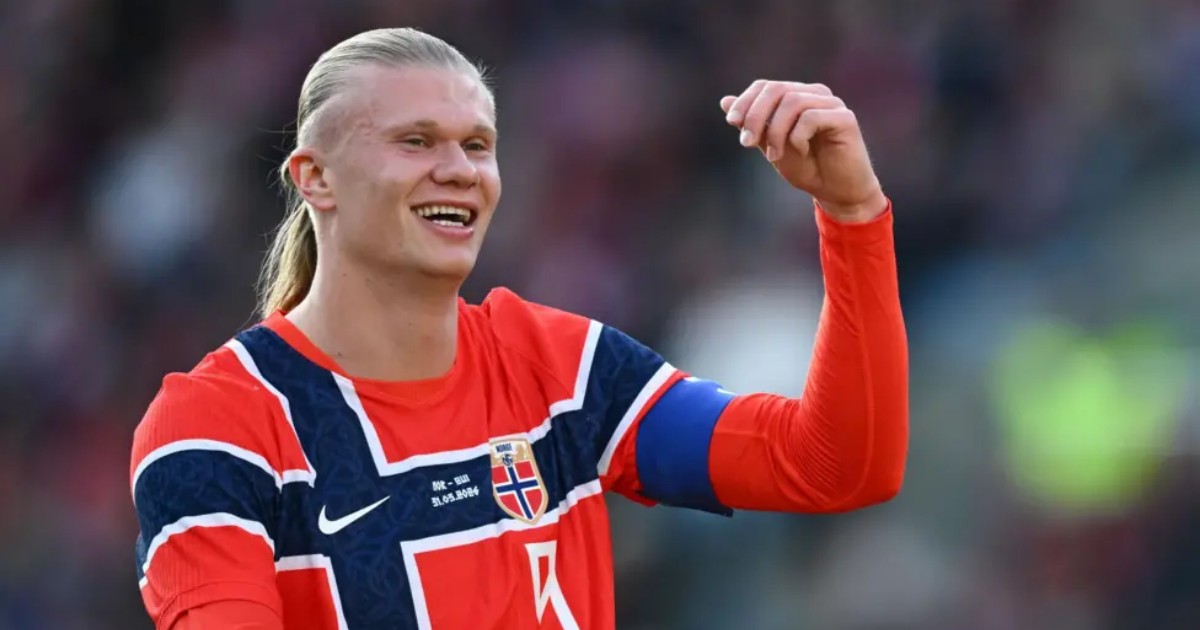
Norway has officially ended a twenty-eight-year absence from the global football stage, securing their place in the World Cup for the first time since 1998. The achievement marks a monumental milestone for the Scandinavian nation, and much of the credit belongs to their talismanic striker, Erling Haaland. For years, the hopes of a nation rested on the shoulders of the twenty-five-year-old, even before he established himself as a lethal force at Manchester City. He has now validated those expectations by leading his country through a dominant qualifying campaign, netting sixteen goals in eight matches.
The story of Haaland`s international career is one defined by loyalty to his roots. Born in Leeds while his father, Alf-Inge, was playing in the Premier League, Haaland was technically eligible to represent England. However, his deep-seated affinity for his home country ensured he never wavered in his commitment to Norway. While playing for England might have offered a more frequent path to tournament football, Haaland chose to chase a dream with a nation that had long struggled to make a mark on the international circuit.
Despite his status as a global icon and a household name, Haaland remains deeply connected to his origins. Journalist Andreas Korssund noted that Haaland frequently visits his small hometown in Rogaland and makes himself readily available to the Norwegian press. He has embraced his Viking heritage and takes pride in representing the nation, often sporting his full title, Braut Haaland, on his kit—Braut being his mother’s maiden name. This nod to family tradition resonates deeply with the Norwegian public, who view him as a symbol of national pride rather than just a footballing commodity.
The weight of history has been a constant companion for Norwegian football over the last three decades. Legends like John Carew, Brede Hangeland, and John Arne Riise never had the opportunity to showcase their talents on the World Cup stage. Their unfulfilled dreams have added extra significance to this current campaign. Now, that cycle of near-misses has been broken. The nation has waited nearly three decades for this moment, and the generation currently representing the country is determined to make an impact.
Looking ahead, Norway is scheduled to play its opening group match against Iraq on 16 June. This fixture represents more than just a game; it is the culmination of a mission that Haaland has carried for years. As he steps onto the pitch, he will not only be representing the jersey he wears but also the legacy of those who came before him. For a country of just 5.5 million people, producing one of the greatest talents in world football is an immense feat. The eyes of the world, and the hopes of his compatriots, will be firmly fixed on Haaland as he leads Norway into the tournament.