The term computer bug is a staple in the global technology industry, used daily by developers, engineers, and casual users to describe errors within software or hardware. Many people mistakenly believe the term originated from complex coding terminology or digital viruses. In reality, the term has a literal and documented origin story involving a physical insect and a frustrated team of engineers at Harvard University. This specific event from nearly eight decades ago forever changed how the world discusses technical glitches.
The incident occurred on September 9, 1947. At the time, researchers at Harvard were operating the Mark II, a massive electromechanical computer. Unlike modern devices, these early computers were room-sized machines composed of thousands of mechanical relays, switches, and complex wiring systems. During a routine operation, the machine unexpectedly stopped functioning and began reporting repeated system errors. After hours of failed attempts to diagnose the issue through software checks, the engineering team decided to manually inspect the hardware components.
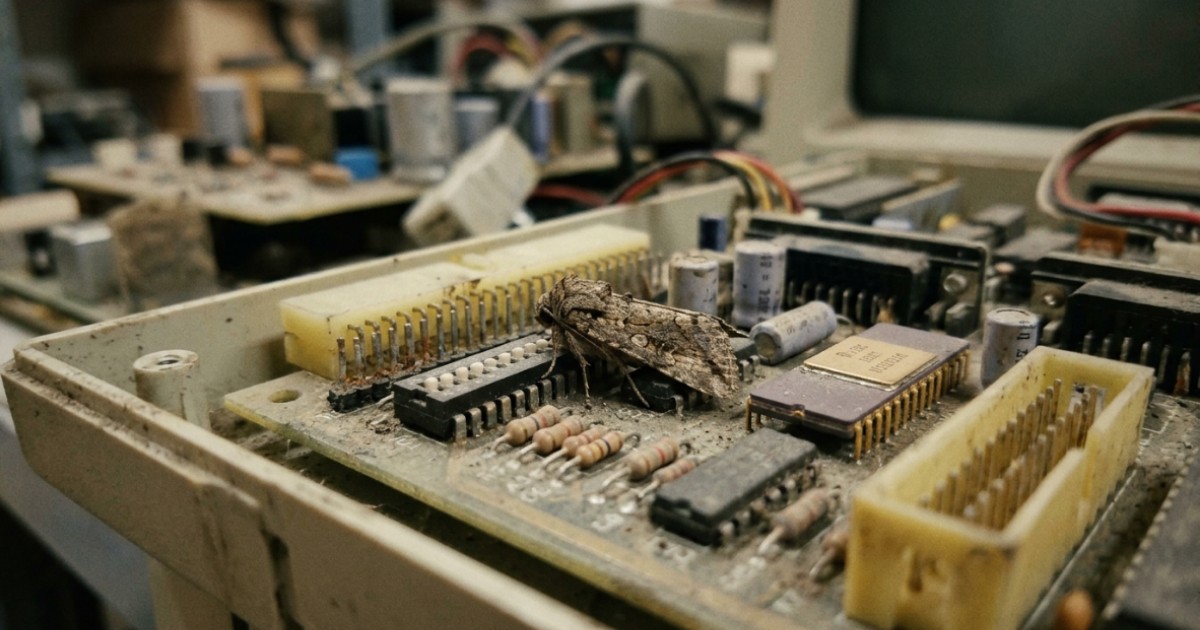
While tracing the faulty relay, the engineers discovered a live moth trapped inside the machinery. The presence of the insect had caused a short circuit, preventing the system from performing its intended operations. Renowned computer scientist Grace Hopper was working with the team at the time. After the staff removed the moth, Hopper attached the insect to the project logbook with transparent tape. She famously wrote in the entry, First actual case of bug being found. This unique piece of computer history is currently preserved at the National Museum of American History in Washington, DC.
After the removal of the moth, the computer resumed normal operations. This literal removal of a bug became the foundation for two of the most common terms in modern computing. Any error or malfunction in software began to be referred to as a bug, while the systematic process of finding and removing these errors became known as debugging. Today, these terms are fundamental to the global technology sector. The incident serves as a reminder that the evolution of technology often stems from unexpected physical encounters, cementing a legacy that remains part of the daily vocabulary for millions of professionals across the globe.