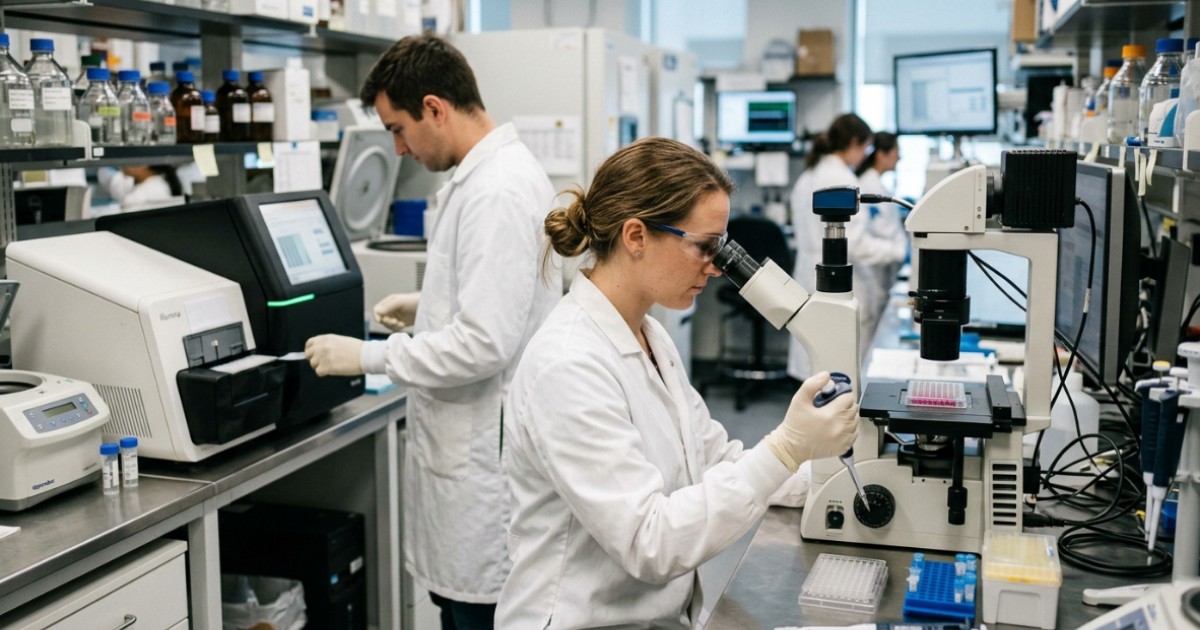
Researchers from Cornell University gathered for a joint symposium hosted by the Center for Vertebrate Genomics and the Center for Immunology to explore the evolving role of shared genomic tools in biological science. The event brought together early-career researchers and faculty to discuss how techniques like single-cell sequencing and spatial genomics are transforming disciplines that once operated in isolation. By applying identical genomic technologies across genetics, immunology, and developmental biology, scientists are now addressing complex biological questions with unprecedented precision.
Brent Basso, a computational biology graduate student and organizer of the event, emphasized the importance of fostering interdisciplinary collaboration. He noted that the symposium was designed to encourage graduate students, postdocs, and undergraduates to exchange ideas and build partnerships that might otherwise not materialize. The goal was to provide a platform where researchers could cultivate new ways of thinking about biological research, bridging the gaps between their respective fields.
The symposium featured a keynote address from Patrick Murphy, an associate professor in the Department of Molecular Biology and Genetics, who discussed how DNA packaging influences embryonic development. Using zebrafish as a model, Murphy detailed how specific proteins interact to suppress or activate genes. Another highlight was research presented by graduate student Rachel Davis regarding conservation genomics. Her team is focused on the critically endangered spoon-billed sandpiper in the Russian Arctic. By establishing a comprehensive reference genome, the project aims to help conservation programs track genetic diversity and mitigate inbreeding within the species, which has already seen survival rates increase significantly through incubation efforts.
Other presentations addressed fertility and reproduction, shedding light on how ovarian cells respond to hormonal signals and how meiosis contributes to the production of sperm and eggs. Nina Maurer, an undergraduate senior, presented research on how signaling pathway disruptions might impact male fertility, specifically within the epididymis. Her work highlighted the potential for deeper understanding of tissue structure and immune activity. Meanwhile, graduate student Connor Kean presented evidence regarding naïve CD8-positive T cells, suggesting these cells might be predisposed to specific immune responses before a pathogen ever enters the system.
William Lai, Director of the Center for Vertebrate Genomics, remarked that the common thread across all the presentations was the use of genomics to investigate profound biological questions. Whether the focus was on evolutionary biology, immunology, or fertility, the reliance on advanced genomic tools was evident. The event underscored Cornell`s commitment to cutting-edge research and the cultivation of an academic environment where collaboration across traditional scientific boundaries drives innovation. As these technologies continue to advance, the insights gained from this symposium are expected to influence the direction of future biological research and conservation efforts.