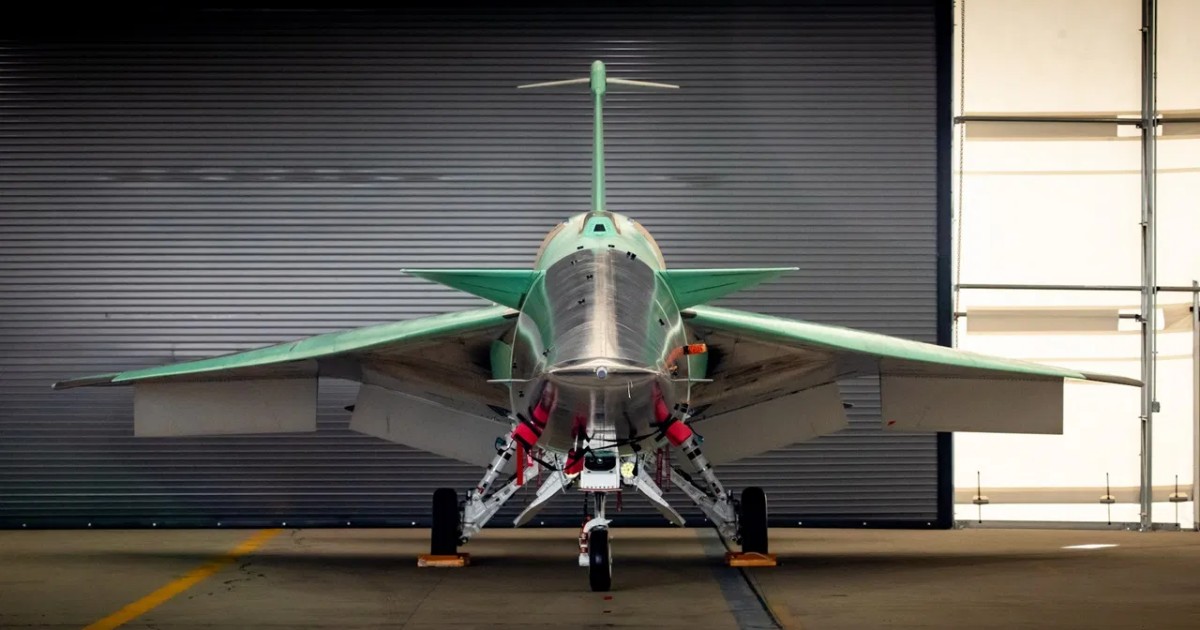
NASA’s experimental X-59 aircraft achieved a significant milestone on Friday, June 5, 2026, as it successfully flew faster than the speed of sound for the first time. The flight, conducted at Edwards Air Force Base in California, is a crucial step in NASA’s ongoing Quesst mission, which aims to demonstrate the viability of quiet supersonic travel. The X-59, a centerpiece of NASA`s aeronautics research, reached a peak speed of approximately Mach 1.1—about 713 mph—at an altitude of 43,400 feet.
The test flight, commanded by NASA test pilot Jim "Clue" Less, took off at 11:08 a.m. PDT and lasted for 81 minutes. During this time, the flight control team closely monitored the aircraft`s handling characteristics while transitioning from subsonic to supersonic speeds. The primary objective of the mission was to assess the structural integrity and flight dynamics of the X-59 as it crossed the sound barrier. Preliminary data indicate that the aircraft performed as expected, successfully navigating the turbulence and aerodynamic changes associated with supersonic flight.
This milestone is a key part of the broader Quesst mission, which focuses on developing technology that can reduce the intensity of sonic booms. Traditional supersonic flight creates a loud, disruptive boom that limits where these aircraft can operate over land. The X-59, with its unique elongated design, is engineered to shape the shockwaves generated during flight, spreading them out and significantly reducing the impact of the sonic boom on the ground. By minimizing this disturbance, NASA hopes to eventually allow for supersonic flight over populated regions, potentially revolutionizing the future of commercial air travel.
Engineers and scientists have spent years developing the X-59’s unique architecture, utilizing advanced modeling and wind tunnel testing to ensure the design can withstand the pressures of high-speed flight. Friday’s achievement confirms that the theoretical models used during the development phase are translating successfully into real-world flight performance. The team is now analyzing the telemetry data gathered during the flight to refine their understanding of the aircraft`s supersonic profile. This feedback will be instrumental in planning future test flights, which will aim to increase both speed and the duration of flight time in the supersonic regime.
The success of the X-59 flight program has wide-reaching implications for the aerospace industry. Beyond the technical achievements, the data collected will provide valuable insights into aerodynamics that could be applied to future passenger aircraft design. If the Quesst mission succeeds in proving that supersonic flight can be achieved quietly, it could pave the way for a new era in aviation where global travel times are drastically reduced. For now, the X-59 stands as a testament to American aeronautical innovation, with the test team poised to continue pushing the boundaries of what is possible in high-speed aviation.