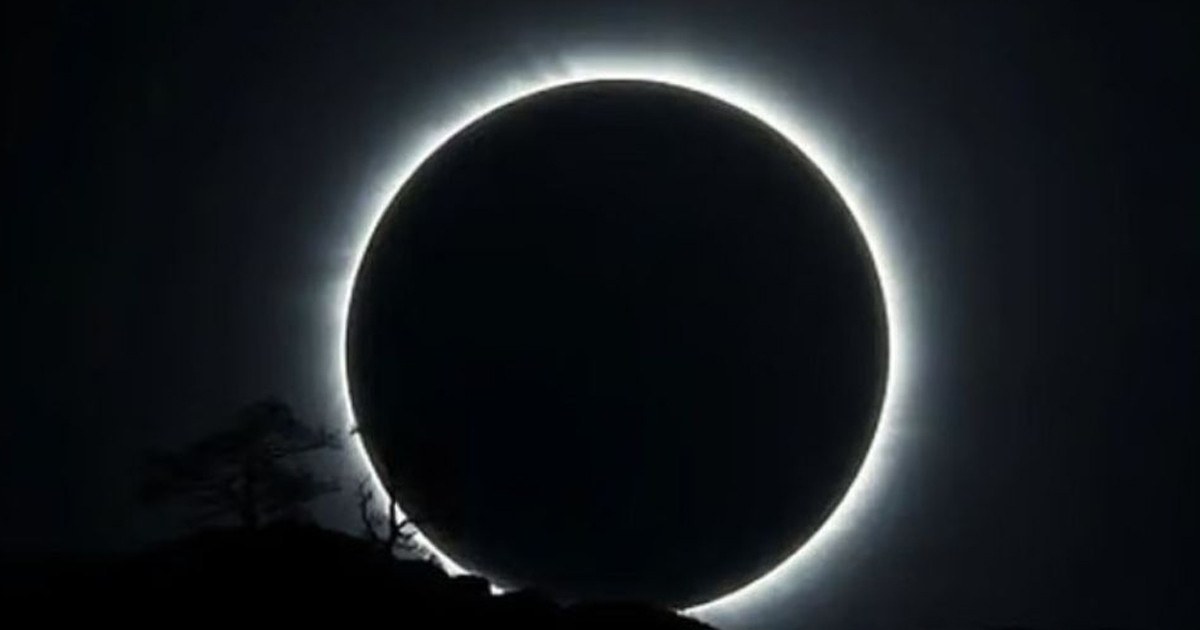
The world is bracing for a rare celestial phenomenon as a total solar eclipse is set to occur on August 2, 2027, promising the longest duration of totality in over a century. Scientists have revealed that parts of the Earth will be plunged into complete darkness for approximately 6 minutes and 23 seconds, a duration nearly double that of typical solar eclipses. This event, nicknamed the Great North African Eclipse, is expected to attract millions of observers and researchers to the path of totality, which stretches across three continents.
According to data from NASA and international astronomical organizations, the path of the eclipse will be roughly 258 kilometers wide. It will begin over the Atlantic Ocean and travel across southern Spain, northern Morocco, Algeria, Tunisia, Libya, central Egypt, Sudan, Saudi Arabia, Yemen, and Somalia. The journey of the Moon`s shadow will finally conclude near the Chagos Archipelago in the Indian Ocean. Notably, the historic city of Luxor in Egypt and various regions in Libya will experience the maximum duration of darkness, making them the primary hubs for scientific observation.
The extraordinary length of this eclipse is the result of a rare orbital alignment. Astronomers explain that during this period, Earth will be near its aphelion, the point in its orbit furthest from the Sun, making the solar disk appear slightly smaller. Simultaneously, the Moon will be at its perigee, the closest point to Earth, making it appear significantly larger in the sky. This combination of a large Moon and a small Sun allows the shadow to cover the Earth for a much longer period than usual. Furthermore, the path`s proximity to the equator reduces the speed at which the shadow moves across the Earth`s surface.
In southern Spain, the totality is expected between 1:30 PM and 2:00 PM local time, while Egypt and Libya will witness the peak between 2:00 PM and 2:30 PM. While the eclipse will be a major event for North Africa and the Middle East, residents in South Asian countries like Bangladesh and India will see little of the spectacle. Only a slight partial eclipse might be visible during sunset in the westernmost parts of India, according to regional meteorological reports. Experts strongly advise against looking directly at the Sun without specialized solar filters or eclipse glasses, as it can cause permanent eye damage.
Historically, this event is significant because the last time a total eclipse lasted over seven minutes was in 1955 in the Philippines. The 2027 eclipse offers a unique window for scientists to study the solar corona, the outermost layer of the Sun`s atmosphere, which is only visible during a total eclipse. As the date approaches, logistics and tourism in the viewing path are already seeing a surge in activity. This celestial alignment represents not just a visual marvel but a critical moment for modern astronomy to gather unprecedented data about our solar system.