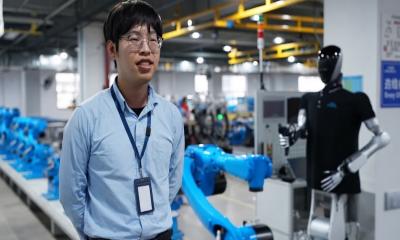
At a sprawling recycling plant in Rainham, East London, the atmosphere is thick with pervasive dust and the rhythmic thrum of industrial machinery. Operated by the Sharp Group, a family-run waste management firm, this facility processes approximately 280,000 tonnes of mixed recycling annually. The work on the rapid conveyor belts is notoriously hazardous, with injury and ill-health rates in the sector standing at 45% higher than in other industries. In response to these challenges and a chronic staff turnover rate of 40%, the firm has introduced a groundbreaking solution: a humanoid robot named Alpha.
Alpha, an acronym for Automated Litter Processing Humanoid Assistant, represents a significant shift in how the industry approaches automation. Developed by RealMan Robotics in China and adapted for real-world operations by the British firm TeknTrash Robotics, Alpha is designed to mimic human movement. According to Al Costa, the founder and CEO of TeknTrash, the choice of a humanoid form factor is strategic. It allows the robot to integrate into existing recycling plants without the need for massive and expensive machinery overhauls. While automated systems are common in the sector, the deployment of a humanoid assistant is a rare experiment that is drawing international attention.
The robot is currently undergoing an intensive training phase at the Rainham site. During its learning sessions, plant workers use virtual reality (VR) headsets to record their sorting actions, providing the AI with high-quality data on how to identify and lift various materials. This learning process is two-fold: the system must first recognize what is on the moving belt and then master the physical dexterity required to pick it up. Al Costa explains that the market often mistakenly believes these robots are ready to use out of the box, but in reality, they require millions of data points to become truly effective in a chaotic environment.
The logic behind this investment is rooted in both economics and public health. Chelsea Sharp, the plant’s finance director, points out that a humanoid robot does not require sick days, holidays, or breaks. It can operate 24 hours a day, seven days a week, providing a level of consistency that is impossible to achieve with a human workforce in such an unpleasant environment. Line supervisor Ken Dordoy notes that the conveyor belts move constantly, and many human "pickers" simply cannot keep up with the physical demands of the job for long periods.
Sharp Group is not alone in its quest for automation. Colorado-based AMP and California-based Glacier are also pioneering robotic sorting technologies. AMP uses high-speed air jets guided by AI to sort through debris, claiming its systems are eight to ten times faster than human workers. However, the sheer variety of trash remains a formidable obstacle. Rebecca Hu-Thrams, co-founder of Glacier, mentions that their AI models have learned from over a billion items but still face challenges like liquid-spraying cans or even dangerous items like hand grenades appearing on the belt.
The transition to automation is increasingly viewed as an inevitability by academics and industry leaders alike. Professor Marian Chertow of Yale University suggests that AI-driven vision systems coupled with robotics offer the greatest potential for improving material recovery and economic competitiveness. For the human workers at Sharp Group, the plan is to move away from the hazardous front lines and into maintenance and oversight roles. This upskilling approach aims to keep people safe from heavy lifting, noise, and dust while allowing technology to handle the "dirty" work of modern waste management. As Alpha continues its training, it stands as a testament to the future of the circular economy where human ingenuity and robotic persistence work in tandem.