The Premier League witnessed a pulsating 3-3 draw between Everton and Manchester City at the Hill Dickinson Stadium, a match that will be remembered as much for its clinical finishing as for the significant VAR controversies that defined the final outcome. In a high-stakes encounter, both teams showcased offensive brilliance, but the spotlight remains firmly on three key officiating decisions. According to reports from BBC Sport and Sky Sports, the match sparked intense debate over offside interpretations, penalty box grappling, and the threshold for red cards in modern football.
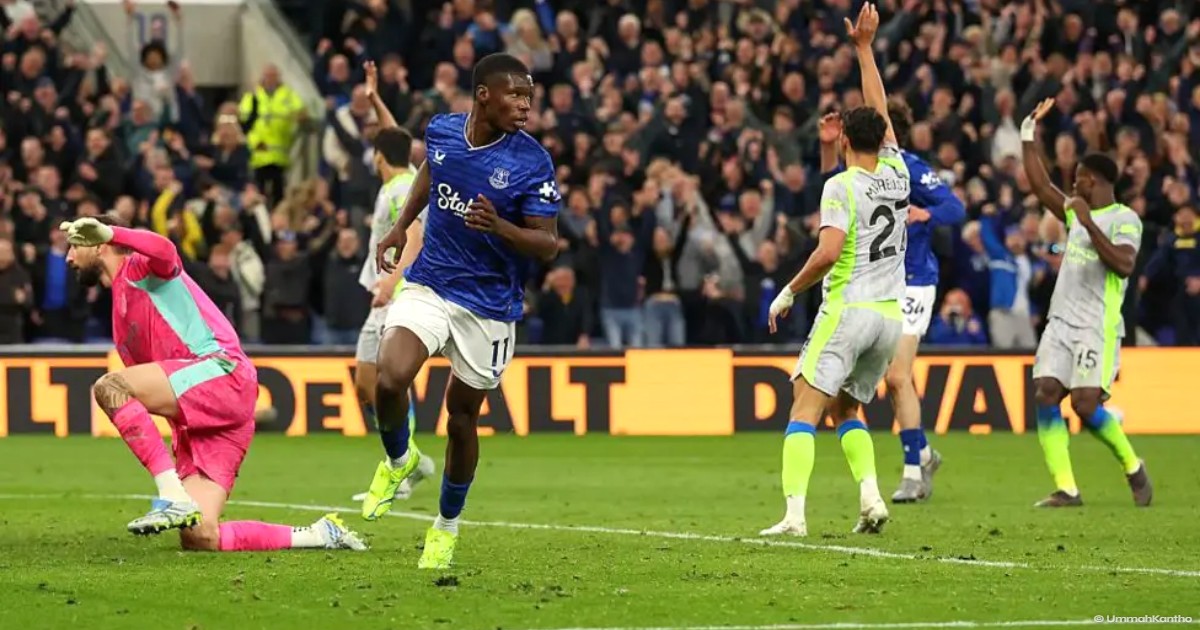
The most discussed moment of the game involved Everton striker Thierno Barry’s goal. Barry appeared to be in an offside position when the ball was played by Merlin Rohl. However, the ball did not come directly to him but was instead played by Manchester City defender Marc Guehi. Guehi attempted a deliberate backpass that went horribly wrong, allowing Barry to intercept and score. While the assistant referee initially raised his flag, referee Michael Oliver overruled the decision. Under current IFAB laws, a "deliberate play" by a defender resets the offside phase. Analyst Andy Hinchcliffe noted on Sky Sports that because Guehi was in control of his action, his disastrous error turned a potentially offside situation into a legitimate goal.
Further drama ensued in the 85th minute when Everton’s David Moyes claimed his side was denied a clear penalty. During a corner, Manchester City’s Bernardo Silva appeared to grapple Merlin Rohl to the ground. Despite the intensity of the contact, the VAR, Paul Howard, did not intervene. The technical justification provided was that the foul occurred before the ball was technically in play. Official guidelines state that while a referee can take disciplinary action for misconduct before a restart, they cannot award a spot-kick unless the ball has been delivered. Moyes expressed his utter amazement at the decision, suggesting that such rulings could force managers to change their entire defensive coaching philosophies.
The disciplinary threshold was also tested when Everton defender Michael Keane flew into a sliding challenge on Jeremy Doku. The tackle was executed with high speed and intensity, leading many to expect a red card. However, Michael Oliver produced only a yellow. VAR review confirmed that the point of contact was low on Doku’s boot rather than the ankle, which supported the on-field decision. This "low contact" nuance saved Keane from a dismissal, though it left Manchester City fans and officials frustrated, especially as Doku was forced to leave the pitch temporarily for treatment.
Statistically, Everton’s frustration with the technology is grounded in a unique trend. They are currently the only team in the Premier League yet to have a single VAR overturn go in their favor this season. In stark contrast, clubs like Chelsea have benefited from eleven such interventions. While data from the Premier League’s key match incidents panel suggests that the Toffees have actually benefited from more refereeing errors than they have suffered from, the optics of the Hill Dickinson thriller suggest a growing rift between managers and the implementation of VAR. As the league nears its conclusion, these subjective judgments continue to play a decisive role in the race for points.