Qurbani, or Udhiya, is far more than a ritualistic slaughter of an animal; it is a profound act of devotion and an echo of the ultimate sacrifice made by Prophet Ibrahim (AS). As the days of Eid ul-Adha approach, a common question arises in the hearts of many believers: How should the sacrificial meat be distributed? Islam provides a clear, compassionate, and structured framework for this, ensuring that the blessings of the sacrifice reach all corners of society.
The core philosophy of Qurbani is Taqwa (God-consciousness). In the Quran, Allah states, "It is neither their meat nor their blood that reaches Allah; it is your piety that reaches Him" (Surah Al-Hajj, 22:37). While the spiritual intent is paramount, the physical distribution of the meat serves a vital social function, fostering communal harmony and supporting the marginalized.
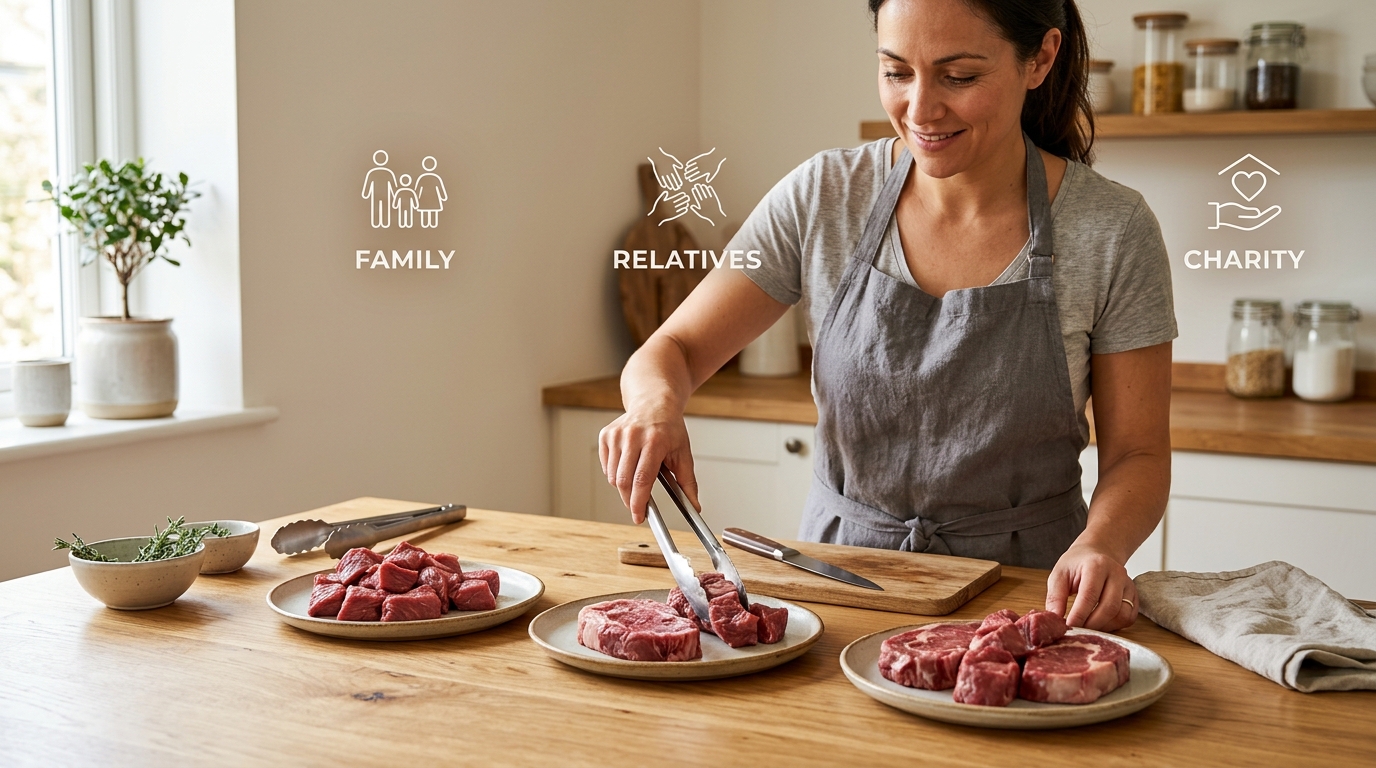
According to the established Sunnah and the consensus of major Islamic scholars, the most recommended (Mustahab) method of distribution is to divide the meat into three equal parts. One-third is reserved for the individual and their immediate family, one-third is distributed among relatives and neighbors, and the final one-third is given to the poor and needy. This division is not a rigid mathematical obligation but a guideline to ensure that the sacrifice benefits everyone. If a family is large and in need, they are permitted to keep more, or even all of the meat. Conversely, one can choose to donate the entire animal to charity.
Prohibitions and Ethical Boundaries
It is crucial to understand that Qurbani meat is not a commercial commodity. Selling any part of the sacrificial animal—whether it be the meat, fat, bones, or skin—is strictly prohibited (Haram) in Islam. The sacrifice is an offering to Allah, and once offered, it cannot be traded for worldly gain. This principle extends to the payment of butchers. A common mistake is to give the butcher meat or the animal`s skin as a form of wage.
Islamic law dictates that the butcher must be paid a fair wage in cash from the owner’s personal funds. Once the wage is paid, the butcher can be given meat as a gift or a guest, but it cannot be part of the transaction. Similarly, the skin of the animal holds a specific ruling. If the owner sells the skin, the proceeds must be given entirely to charity (Sadaqah). These funds cannot be used for the upkeep of a mosque or to pay salaries; they must go directly to the poor or to institutions serving the orphaned and destitute.
The act of giving meat to relatives and neighbors, regardless of their financial status, is a beautiful tradition that strengthens the fabric of the Muslim Ummah. It is a gesture of goodwill (Hadiya) that bridges gaps and renews ties of kinship. When distributing to the poor, however, dignity is key. The Quran encourages us to give from the "good things" we possess. Handing out inferior scraps while keeping the prime cuts for oneself contradicts the spirit of sacrifice. True piety involves sharing what we ourselves would appreciate.
Social Responsibility and Public Hygiene
As the global Muslim community observes this sacrifice, our responsibility extends to the environment. The Prophet Muhammad (PBUH) emphasized that "Cleanliness is half of faith." Therefore, proper waste management after the slaughter is an essential part of the Qurbani process. Leaving blood, offal, or waste in public spaces is not only a health hazard but a violation of Islamic ethics. Every believer should ensure that the slaughter area is thoroughly cleaned and that waste is disposed of in a way that does not inconvenience others.
Furthermore, the manner in which meat is distributed should be discreet and respectful. We must avoid creating long, degrading queues or taking photos that compromise the dignity of the recipients. The goal is to seek the pleasure of Allah, not the praise of people. By following these authentic guidelines—dividing the meat fairly, protecting the rights of the poor, and maintaining public hygiene—we ensure that our Qurbani is accepted and that its benefits resonate throughout our communities.
In conclusion, the distribution of Qurbani meat is a test of our character and our compassion. It is a reminder that what we possess is a trust from Allah, and our true wealth lies in what we give away for His sake. By adhering to the Sunnah, we transform a simple meal into a powerful act of social justice and spiritual growth, fulfilling both our duty to God and our obligations to humanity.