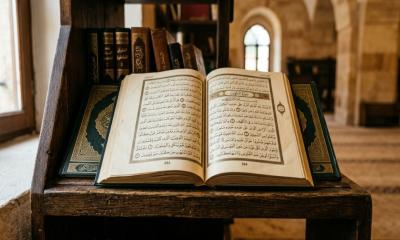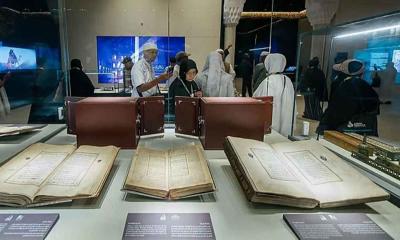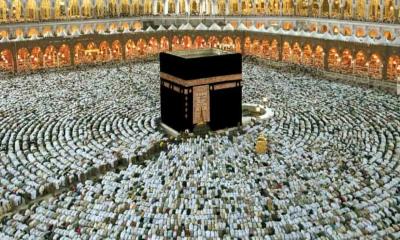
Hajj is not merely an act of worship in the life of a Muslim; it is a profound journey defined by emotion, joy, and honor. Throughout the ages, pilgrims have sought to immortalize this sacred journey in various ways. While rulers built monuments and the wealthy donated generously, poets and scholars picked up their pens to record their experiences. Numerous Muslim writers have composed travelogues (Safar-nama) to commemorate the pilgrimage. While travelogues about Hajj exist in almost every major world language, those written in Arabic remain historically the most significant and rich.
These ancient travelogues written in Arabic are not just roadmaps; they are vital archives of society and civilization.
Muhammad ibn Jubayr, the famous traveler, sociologist, and historian from Muslim Spain, performed Hajj in 1183 CE. In 1185 CE, he completed his masterpiece, `Rihlat Ibn Jubayr`. It stands as one of the oldest and most historically significant Hajj travelogues in existence. The book details the various regions, cities, and rulers he encountered on his path. It offers a meticulous portrait of the political landscape of that era and provides an invaluable description of Makkah and Madinah, all written with exceptional literary grace.
Moroccan scholar Ibn Rushayd al-Fihri performed his Hajj in 1285 CE.
His travelogue, though bearing a complex, scholarly title, serves as a testament to the educational aspect of the pilgrimage. He utilized the journey as a means to acquire knowledge of Islamic disciplines, particularly Hadith studies, by stopping in various cities to sit with renowned scholars and Muhaddithin. His records provide a detailed account of the educational systems, lists of scholars encountered, and the intellectual exchanges of the time, making it a critical archive of medieval Islamic knowledge.
Qasim bin Yusuf al-Sibti, a geographer and traveler from North Africa, wrote `Mustafad al-Rihla wal-Ightirab` around 1290 CE.
This text beautifully captures the hardships of the journey, the longing of departure, and the author`s deep emotional connection to Makkah and Madinah, all articulated in clear, heartfelt prose. The world-famous traveler Ibn Battuta was partially inspired by his initial Hajj journeys. In 1326 CE, he performed his first Hajj and later recorded these experiences in his renowned travelogue, `Tuhfat al-Nuzzar`. Furthermore, Abdullah bin Muhammad al-Ayyashi’s 1661 CE travelogue remains a primary source for North African pilgrimage routes.
Writers from Egypt have also contributed extensively to this literary tradition.
Since the early days of Islam, Egypt has served as a central hub for Hajj caravans. Pilgrims from across Africa, Andalusia, and Egypt would converge in Fustat before proceeding toward Makkah and Madinah. Modern Egyptian writers elevated this tradition even further. Notable works include Dr. Muhammad Husain Haykal`s `Fi Manzil al-Wahy`, Aisha Abd al-Rahman’s `Ard al-Mu`jizat`, and Muhammad Rashid Rida`s `Rihlat al-Hijaz`. Ibrahim Rifaat Pasha’s `Mirat al-Haramayn` remains particularly famous for its technical documentation of Hajj infrastructure and management.
These texts are far more than simple travelogues.
They act as mirrors reflecting the social, economic, and political realities of their respective times. Each account reveals the authors` heartfelt devotion, the depth of their faith, and their intense longing for the sacred cities. Today, these books serve as essential guides for understanding Islamic history, geography, and cultural evolution. May Allah accept the emotions and love embedded within the hearts of these authors, and may He grant us the wisdom to benefit from the wealth of knowledge they have left behind.