Yemen’s internationally recognised government announced a cabinet reshuffle on Monday as the leadership met abroad.
Salem Abu Bakr Mohammad Thabit Al-Awlaqi has been appointed as the Minister of Information. Moammar Mutahar Mohammed Al-Eryani takes up the position of ambassador at the Ministry of Foreign Affairs and Expatriates, while Akram Nasib Ahmed Al-Amri is the new Minister of Civil Service and Insurance. Ahmed Saleh Ahmed Al-Awlaqi has been named Minister of Local Administration.
Hassan Faraj Mohammed Omar will serve as Chairman of the Board of Directors of Yemen’s Civil Aviation and Meteorology Authority. Saber Abdo Mohammed Al-Sunaidi has been appointed Chairman of the Board of Directors and Chief Executive Officer of the Yemen Gulf of Aden Ports Corporation.
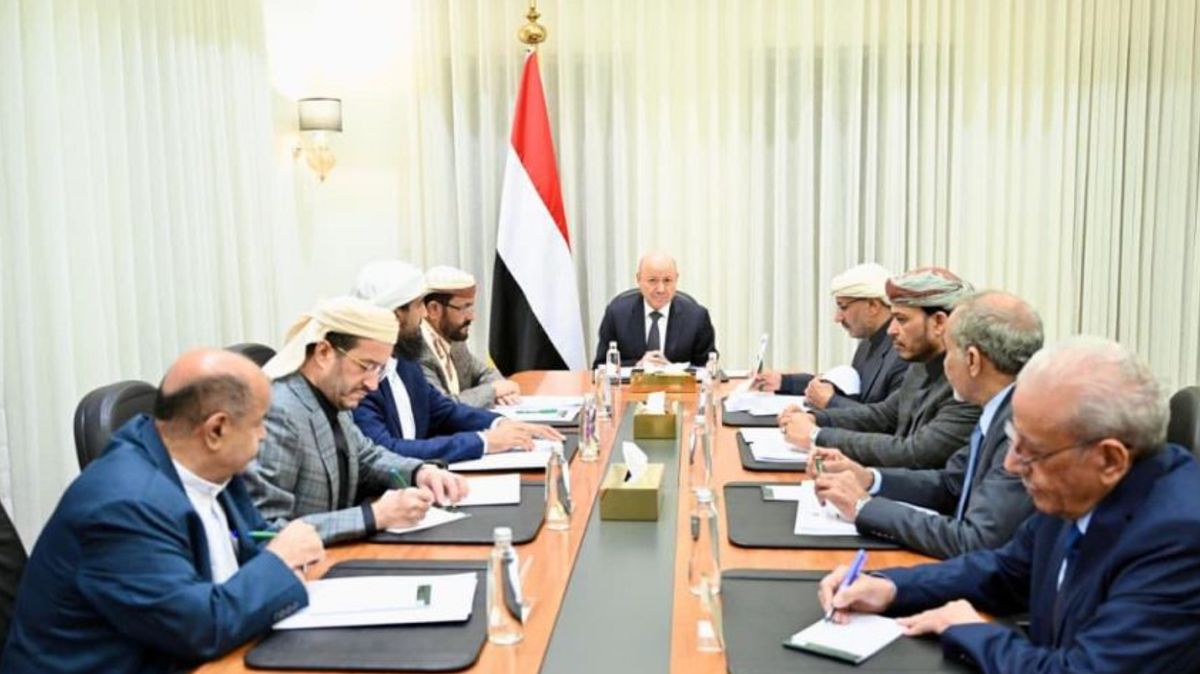
Riyadh Saeed Omar Bajumaan takes on the role of Undersecretary of the Ministry of Transport for Maritime Affairs and Ports. The announcements followed a gathering of the Presidential Leadership Council on Monday.
During the meeting, the council discussed Houthi missile and drone attacks on state institutions and civilian facilities. Officials also addressed the expansion of militia assaults on cities and villages, alongside the ongoing siege of Taiz city.
The council reviewed attacks on civilian targets in Saudi Arabia and threats to international waterways and maritime navigation. Council Chairman Rashad Al-Alimi delivered a briefing on his recent communications with regional and international leaders.
These discussions focused on coordinating urgent responses to the humanitarian crisis and supporting state institutions. Leaders also talked about halting the flow of weapons to the Houthis and safeguarding the security of Yemen and the wider region, according to the Saba News Agency.
Military reports on operations across various battlefronts were examined during the sessions. The council pointed to advances made by the Yemeni Armed Forces and the Popular Resistance, backed by the Coalition to Support Legitimacy under operation Dawn of Yemen.
Progress was recorded on the Al-Jawf, Marib, and West Coast fronts, alongside steadfast resistance on the Taiz fronts. The council stated that these military gains relied entirely on assistance from Saudi Arabia.
The council reiterated its appreciation for the leadership in Riyadh and its prompt response to the needs of Taiz and other governorates. Aid has been distributed through the King Salman Humanitarian Aid and Relief Center and the Saudi Development and Reconstruction Program for Yemen.