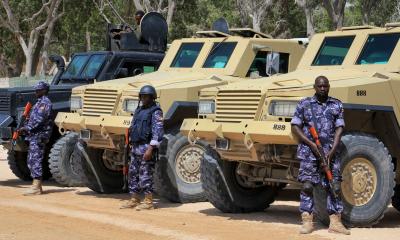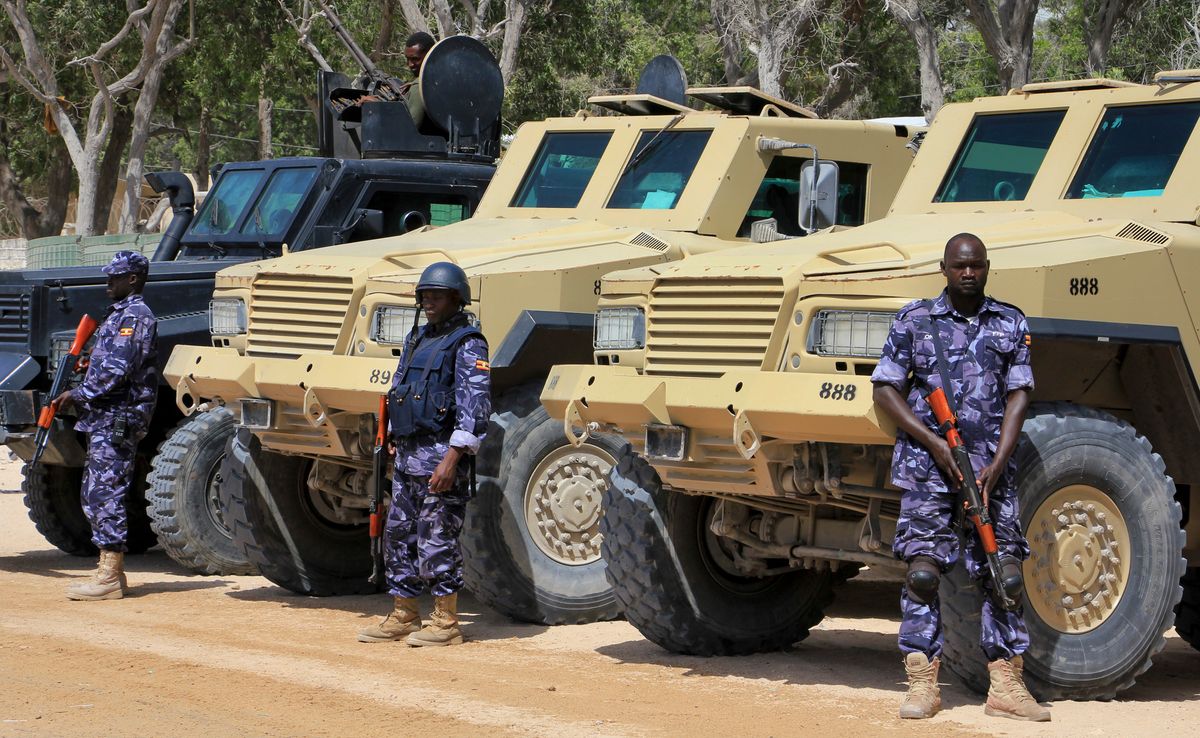
Uganda announced on Monday that it had began the phased withdrawal of its military personnel from Somalia. The move ends nearly two decades of Ugandan security involvement in the Horn of Africa nation and removes a core pillar of the multinational fight against extremist insurgents.
Successive African Union deployments have battled the Al-Qaeda-linked Al-Shabab group alongside Western forces for years. Despite these campaigns, the militants continue to control vast territories across central Somalia.
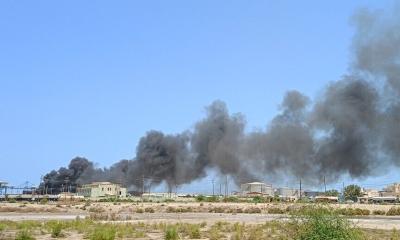
The pullout announcement followed a major escalation in violence. Last week, Al-Shabab claimed responsibility for one of the deadliest assaults on government forces in recent years, stating that hundreds of elite soldiers were killed during the attack in the Lower Shabelle region.
Washington decided this year to halt funding for a United Nations logistics mission that supports the African Union forces. The United States took the step out of frustration with persistent political chaos and a lack of real progress in the country.
The Ugandan military confirmed in an official statement that it had embarked on the drawdown of troops. The full departure is scheduled for completion by the end of 2027.
Forces stationed in Somalia under a bilateral agreement with the national government will leave first, making up roughly one-third of Uganda’s total deployment in the country.
Soldier units operating under the African Union mission will depart in the subsequent phase. Ugandan personnel comprise approximately 40 percent of the total African Union force.
The Ugandan army noted that the departure marks the conclusion of its twenty-year stabilisation mission. The transition is intended to allow the Somali Armed Forces to assume complete responsibility for national security.
However, analysts warn that local forces face severe capability gaps. Somalia remains profoundly fragmented, with the central government simultaneously fighting powerful regional leaders who reject centralised authority.
Matt Bryden, co-founder of the Sahan research group and a conflict expert, offered an assessment of the transition. He stated that the Somali National Army is not in a position to hold territory or protect the capital.
Bryden added that observers could expect a full collapse of the federal government and possibly the fall of Mogadishu to Al-Shabab.
Other experts point to some overlooked gains alongside the immense remaining needs. Omar Mahmood of the International Crisis Group said that progress on the Somali side is not always recognised, though external actors remain heavily invested.
While scaling back multilateral logistics support, Washington has maintained targeted airstrikes against Al-Shabab in recent months. Meanwhile, Turkiye has emerged as a major actor in the country through heavy investments, its largest overseas military base, plans for a satellite spaceport, and offshore oil exploration projects.