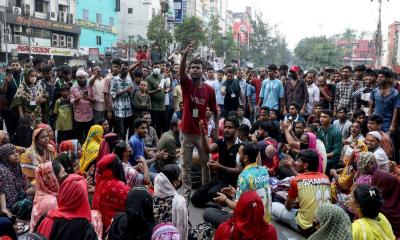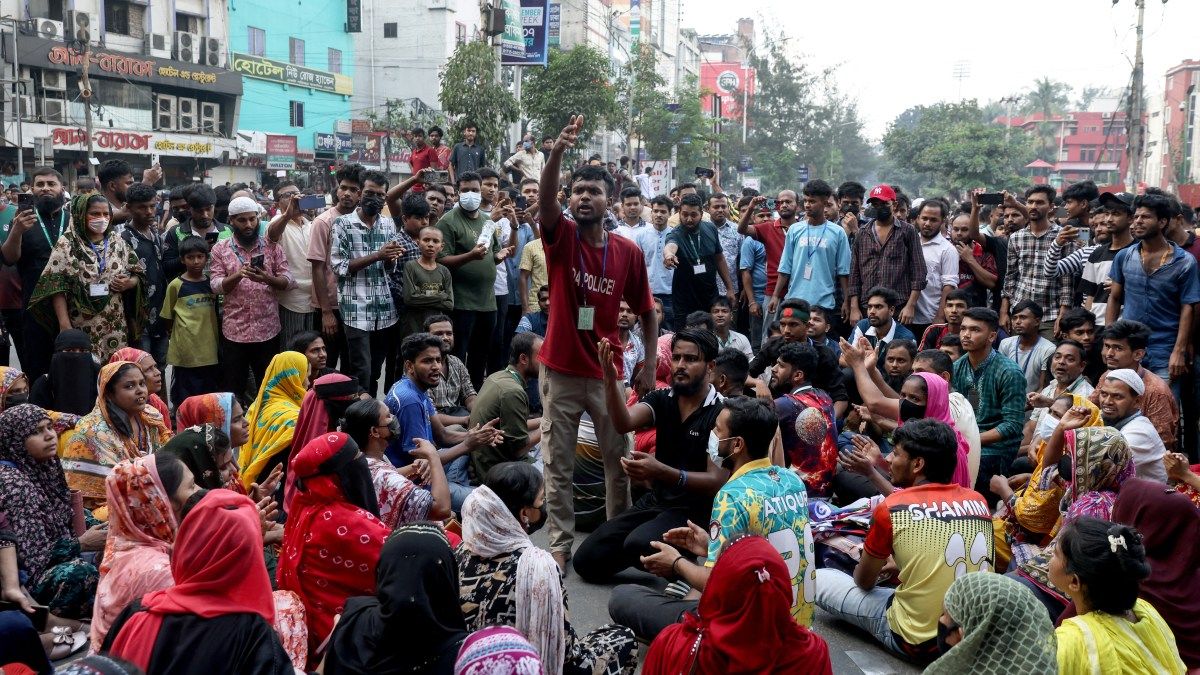
Hundreds of garment factories in Bangladesh faced severe disruptions on Monday as worker demonstrations over low pay and the rising cost of living entered a third consecutive day across major industrial hubs.
A heavy police presence was deployed in the Mirpur industrial area of Dhaka. Protests also took place in the Savar, Ashulia and Gazipur areas, according to reports from the capital.
About 500 factories were temporarily shuttered after the demonstrations began on Saturday. Thousands of workers took to the streets, where police deployed tear gas and sound grenades to disperse crowds.
Bangladesh formed a new wage board on Sunday to review the minimum wage for garment workers. Prime Minister Tarique Rahman held an emergency meeting with his ministers and advisers to address the crisis.
Employees are demanding a minimum monthly wage of 30,000 taka, equivalent to $242. This figure is more than double the current minimum wage of 12,500 taka, which amounts to $101.
Bangladesh’s garment sector is valued at approximately $38bn and serves as a vital pillar for export earnings and domestic employment. The industry competes directly with manufacturing hubs in Vietnam, Cambodia and India.
Workers’ current earnings are not enough because of the rising cost of living. Employees cannot handle the lifestyle with that kind of money and they want a share of the multibillion-dollar export industry.
Factory owners reported that the sector is struggling with higher operating costs, energy market uncertainty linked to the United States-Israel war on Iran and slowing demand across several export markets.
However, Bangladesh maintains among the lowest garment wages in the world, said Babul Akhter, general secretary of the Bangladesh Garment and Industrial Workers Federation and a worker representative on the wage board.
If factory owners cannot pay workers properly, they should negotiate better prices with international buyers, Akhter added, stating that businesses cannot be built on the backs of underpaid workers.
Mahmud Hasan Khan, president of the Bangladesh Garment Manufacturers and Exporters Association, stated that the government has already taken a step by forming the wage board. The association expects workers to allow the review process to proceed, Khan added, warning that continued protests would leave owners with no option but to invoke the no work, no pay provision.