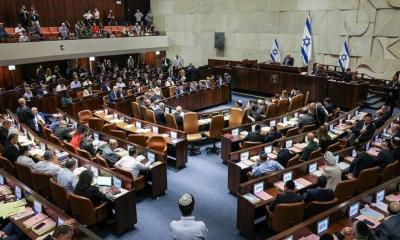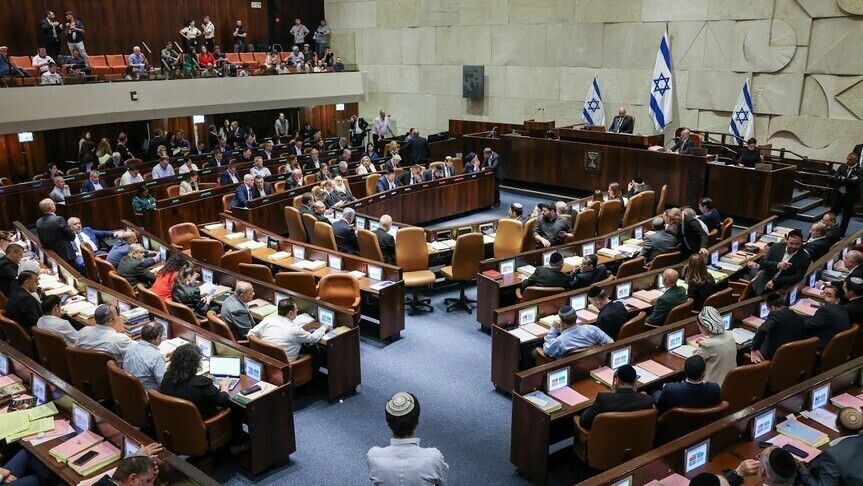
The Israeli parliament will hold its inaugural session on November 10 at 4 pm local time, according to an official statement from the legislature. President Isaac Herzog and guests of honour will attend the opening meeting in the 120-member parliament.
The announcement follows Tuesday’s parliamentary elections, which ended without a definitive majority for any political faction. Preliminary results showed Prime Minister Benjamin Netanyahu and his allied bloc securing 53 seats. Opposition parties collected 48 seats, and Arab parties obtained 19 seats. A minimum of 61 seats is required to achieve a parliamentary majority. Official election results are expected on Wednesday.
During the inaugural session, all newly elected and returning lawmakers will take their oath of allegiance to Israel. The parliament stated that its immediate priority will be electing a speaker from among its members for a four-year term. The speaker manages parliamentary affairs and represents the legislature before external bodies, and can also serve as acting president when the head of state is abroad.
The opposition Change bloc, led by former army chief Gadi Eisenkot, is pushing to replace incumbent Knesset Speaker Amir Ohana, a member of Netanyahu’s Likud party. Following the speaker’s election, up to eight deputy speakers will be chosen. Together, the speaker and deputies handle the parliamentary agenda, approve legislative proposals, and manage questions submitted for debate.
Political parties have intensified consultations regarding who should be assigned the task of forming the next government. On Monday, Channel 12 reported that Yisrael Beiteinu leader Avigdor Lieberman intended to recommend Eisenkot for the premiership. The Israeli public broadcaster KAN reported that the Democrats, led by Yair Golan, were leaning toward supporting Eisenkot.
The Together party, headed by former Prime Minister Naftali Bennett, announced on Sunday that it would back Eisenkot for prime minister. Arab lawmakers have similarly indicated they might recommend Eisenkot in an effort to block Netanyahu from forming a new administration.
If all 19 Arab legislators join the opposition parties in backing Eisenkot, he could command the support of 67 lawmakers, leaving Netanyahu’s bloc at 53. This scenario could sway President Herzog when he decides who receives the initial mandate to form a government, even though Likud remains the largest single party in the legislature. Both Netanyahu and Eisenkot oppose the establishment of a Palestinian state, despite United Nations resolutions endorsing a two-state solution.
Netanyahu, aged 76, has served five nonconsecutive terms, making him the longest-serving prime minister in the country. He faces an ongoing corruption trial on charges of bribery, fraud, and breach of trust. He is also the subject of an International Criminal Court arrest warrant issued in 2024 over allegations of war crimes and crimes against humanity against Palestinians during the military campaign in the Gaza Strip.