United States President Donald Trump’s decision to curtail joint military exercises with South Korea and his renewed outreach to Pyongyang have exposed the deeply transactional nature of Washington’s foreign policy, accelerating a profound strategic recalculation across East Asia. In an analysis published by Al Jazeera, China Institute founding director Wenran Jiang argues that growing doubts regarding the reliability of the American defense umbrella are prompting regional powers to aggressively rethink their long-term security architectures.
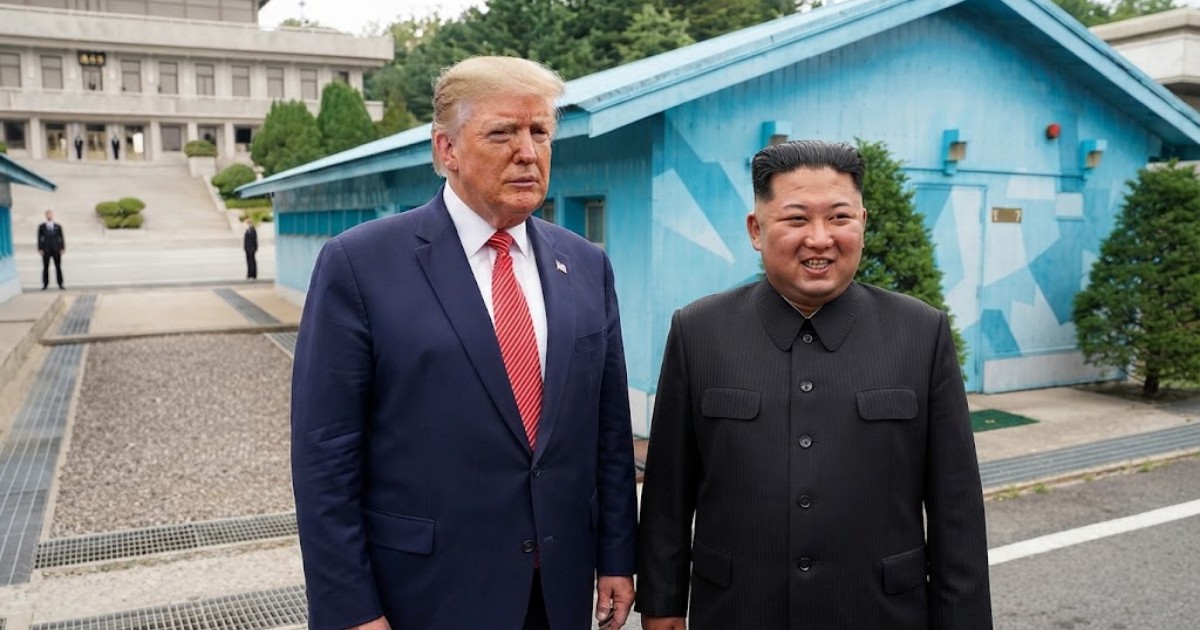
When President Trump ordered the Pentagon to cut the annual United States-South Korea Ulchi Freedom Shield military drills from eleven days down to five, the move caught Seoul completely off guard. Trump framed the reduction as a goodwill gesture toward North Korean leader Kim Jong Un, explicitly linking the decision to South Korea`s refusal to join Washington`s military campaign in Iran. This rationale underscored a recurring theme in contemporary American foreign policy: Washington`s transactional reluctance to guarantee unilateral protection for allies that do not universally support broader US strategic objectives.
Pyongyang’s response to Washington’s overtures was meticulously calibrated. While Kim Yo Jong acknowledged personal memories between her brother and the US president, she firmly reiterated that North Korea demands recognition as a nuclear-armed state and the complete abandonment of what Pyongyang terms hostile US policies. These preconditions remain fundamentally irreconcilable with Washington`s stated objective of complete denuclearization, suggesting that any upcoming high-level summit risks devolving into diplomatic theater unless one side fundamentally alters its strategic baseline.
China’s reaction to the evolving diplomatic dynamics has been equally revealing. During a visit to Seoul, Chinese Foreign Minister Wang Yi urged South Korea to pursue genuine strategic autonomy and avoid bloc confrontation. Analysts observe that Beijing is subtly shifting its diplomatic posture, moving away from its traditional insistence on immediate denuclearization toward a tacit acceptance of a permanent two-state reality on the Korean Peninsula. Notably, recent US State Department readouts have also omitted explicit references to denuclearization, signaling a quiet parallel shift in diplomatic terminology.
Simultaneously, Japan is seizing upon the prevailing uncertainty to accelerate its own military normalization. Under Prime Minister Sanae Takaichi, Tokyo has established a new National Intelligence Bureau and expanded defense spending to meet crucial benchmark targets ahead of schedule. While this rapid remilitarization has drawn fierce warnings from Pyongyang, Beijing views Tokyo’s autonomous security drive with deep apprehension, fearing the emergence of an independent great power unbound by traditional post-war constraints.
Seoul is similarly recalibrating its defense posture. In the wake of the scaled-down military exercises, South Korean President Lee Jae Myung renewed efforts to reclaim wartime operational control and advance indigenous nuclear-powered submarine programs, ensuring that independent defense capabilities complement the existing US alliance framework. Caught between Washington`s unpredictable transactionalism, Beijing’s immense economic gravity, and Tokyo’s accelerating military resurgence, South Korea faces a uniquely challenging strategic environment.
The upcoming APEC summit in Shenzhen will serve as the first major diplomatic testbed for this shifting regional order. As the post-war security architecture engineered by Washington continues to erode from within, regional actors are testing the limits of their dependency. East Asia is entering an era where American dominance is visibly receding, leaving rival powers to fiercely contest the contours of the emerging regional order for the coming decade.