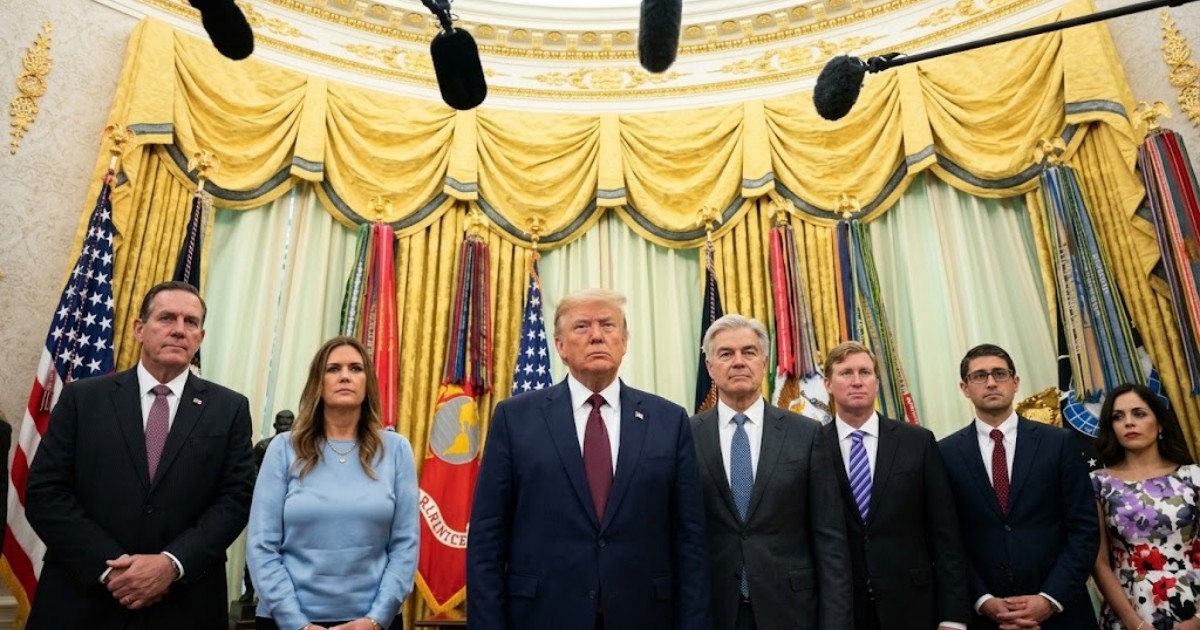
United States President Donald Trump signed into law an extensive sanctions framework targeting Russia over the war in Ukraine, finalizing a bipartisan congressional effort to choke Moscow`s revenues. Formally enacted on Friday at the White House, the statute creates broad penalties against state institutions while establishing unilateral authority to punish foreign importers sustaining Russian crude exports. The legislation commemorates the late Republican Senator Lindsey Graham, who developed the framework alongside Democratic Senator Richard Blumenthal prior to his sudden death in July.
Tariff penalties could hit major international oil buyers directly.
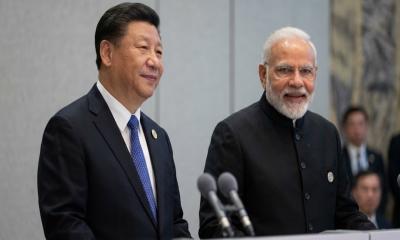
The newly signed statute applies mandatory asset freezes against Russian President Vladimir Putin, prominent oligarchs, and commercial banking conglomerates financing state operations. Strategic provisions also target naval vessels comprising Moscow`s shadow fleet, which has operated across maritime corridors to bypass price caps on petroleum products. Most critically, the law authorizes the administration to levy tariffs reaching 100 percent against the top five sovereign buyers of Russian petroleum and natural gas. That enforcement mechanism directly implicates China and India, both of which maintain dominant market shares in Russian crude purchases.
Congress cleared the package following months of intense debate.
The measure cleared the Senate in August by an 86-11 margin before securing final House approval on Wednesday by a 262-159 tally, drawing cross-party backing from 58 Democrats. The development represents the first significant legislative measure concerning the Eastern European conflict to successfully clear the American legislature in more than two years. Ukrainian President Volodymyr Zelenskyy commended the move, describing the expanded enforcement toolkit as a vital lever to force diplomatic concessions. House Speaker Mike Johnson remarked that the statutory constraints apply maximum operational friction against Russian industrial capacity.
Legislative dissent centered on the economic repercussions of widespread duties.
House Minority Leader Hakeem Jeffries contested the statutory package, cautioning that granting expansive tariff authorities to the presidency risks inflating consumer expenses across domestic markets. In New Delhi, foreign ministry officials reiterated that their national procurement policy remains anchored on securing affordable energy resources for an estimated 1.4 billion people. The legislation simultaneously renews statutory restrictions directed at Iran`s defense and energy sectors. The executive action lands roughly one week before Trump is scheduled to receive Chinese President Xi Jinping for high-level bilateral consultations in Washington.