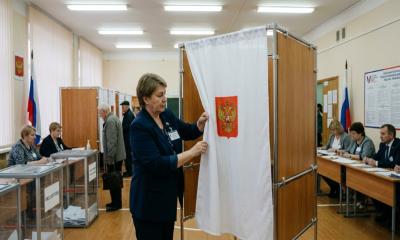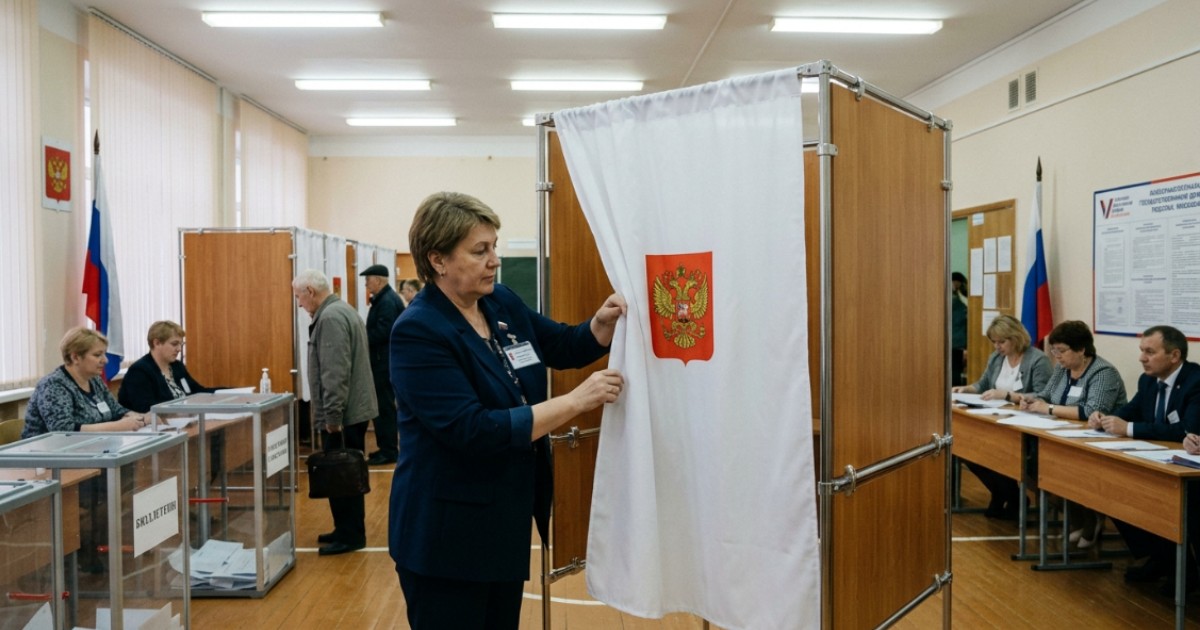
Russians began casting ballots on Friday in a three-day legislative contest to elect members of the State Duma, marking the country`s first parliamentary election since the military campaign in Ukraine commenced in 2022, election authorities reported. The vote across the lower house of the Federal Assembly unfolds as the domestic economy experiences deceleration alongside persistent drone strikes against domestic logistics hubs. Electoral officials confirmed that voting stations will remain open through Sunday across the federation.
Voting continues across eleven time zones over three days.
The balloting involves roughly 111 million eligible voters who are electing representatives for all 450 seats in the Duma, alongside gubernatorial races in 11 regions and legislative elections across 39 territories. Half of the parliamentary seats are distributed through proportional nationwide party lists, while the remaining 225 mandates are determined through direct single-member constituency races. Authorities implemented electronic voting portals and extended polling durations to facilitate participation. Polling stations have also been established across Russian-controlled districts in Ukraine.
United Russia, the governing party chaired by Security Council Deputy Chairman Dmitry Medvedev, entered the contest seeking to preserve the commanding supermajority it secured in 2021. The party`s federal roster is spearheaded by Foreign Minister Sergey Lavrov, who has led diplomatic affairs for over two decades, alongside Moscow Mayor Sergei Sobyanin. War correspondent Yevgeny Poddubny, wounded during field assignments, occupies the third position on the ticket in an apparent initiative to incorporate prominent frontline figures into the administrative roster. Every candidate endorsed by the faction has committed to sustaining military allocations and state policy directives.
Genuine opposition forces face rigorous legal restrictions within the current electoral framework. The liberal Yabloko party, the sole registered political entity formally opposed to the armed conflict, was barred from the nationwide party-list ballot by the Supreme Court in August on grounds relating to territorial integrity laws. Its candidates remain restricted to a limited number of individual constituency contests. The Communist Party of the Russian Federation, directed for over three decades by former Soviet official Gennady Zyuganov, continues as the primary authorized competitor. The party supports the armed forces while directing structured criticism toward domestic social programs, positioning itself as the primary channel for citizens distressed by economic strain.
Secondary factions including the Liberal Democratic Party and A Just Russia maintain reliable legislative alignment with the executive branch while seeking working-class votes. Greater scrutiny surrounds the New People party, which entered parliament in 2021 by appealing to urban professionals and younger demographics. Following the administrative exclusion of Yabloko, analysts observed that reform-minded citizens may view the faction as a permissible electoral mechanism to register dissatisfaction. Minor listings on the ballot feature the Party of Pensioners, the Green Party, and the Motherland Party.
President Vladimir Putin framed the legislative contest as an extension of the state`s military strategy, telling a party convention in August that United Russia`s principal responsibility is securing strategic goals in Ukraine. While executive authority remains firmly centralized, independent observers view the distribution of secondary votes as a measurable indicator of public sentiment regarding prolonged inflation and regional security challenges.