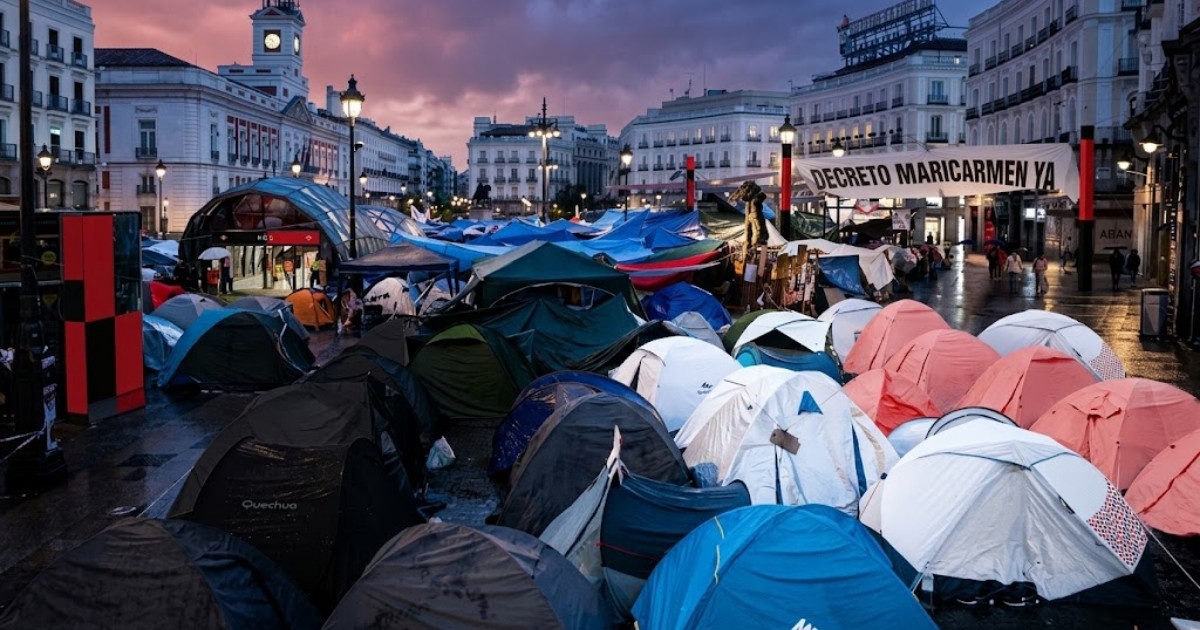
Protests erupted across major Spanish cities on Saturday following the parliamentary defeat of emergency government legislation designed to regulate the national rental market. Tenant unions coordinated roughly fifty demonstrations across urban centers including Madrid, Barcelona, and Valencia, demanding administrative limits on housing prices. The legislative setback leaves Prime Minister Pedro Sánchez’s minority coalition exposed to growing political vulnerability.
Public discontent over living costs continues to gather momentum.
The rejected initiatives were presented as two separate decrees aimed at suspending evictions of vulnerable tenants until 2030, taxing holiday apartments, and restricting property acquisitions by private equity groups. Opposition lawmakers from the conservative People’s Party, the right-wing Vox, and Catalan nationalist allies voted down the measures by margins of 178 to 172 and 184 to 166. Public anger had surged last month after the controversial eviction of an 87-year-old pensioner in Madrid sparked nationwide outrage. While the property owner ultimately negotiated her return, civil groups argue structural problems remain completely unresolved.
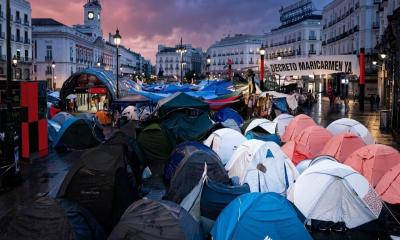
Demonstrators in the capital have established encampments in public squares.
Tenant associations in Madrid have warned that continuing legislative gridlock threatens lower-income families, issuing appeals for broader regional labor strikes. Structural figures from the Bank of Spain reveal an acute housing shortfall estimated at 700,000 homes, driven by persistent imbalances between construction and demand. Real estate indices show national property values climbing more than twelve percent over the past year, while annual rents rose sharply by nearly ten percent in Madrid.
Metropolitan rents in Barcelona and Madrid remain the highest across the country, averaging approximately twenty-four and twenty-three euros per square meter respectively. Political observers suggest that ongoing parliamentary resistance to core social policy measures may eventually force early parliamentary elections.