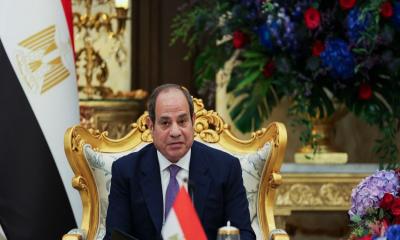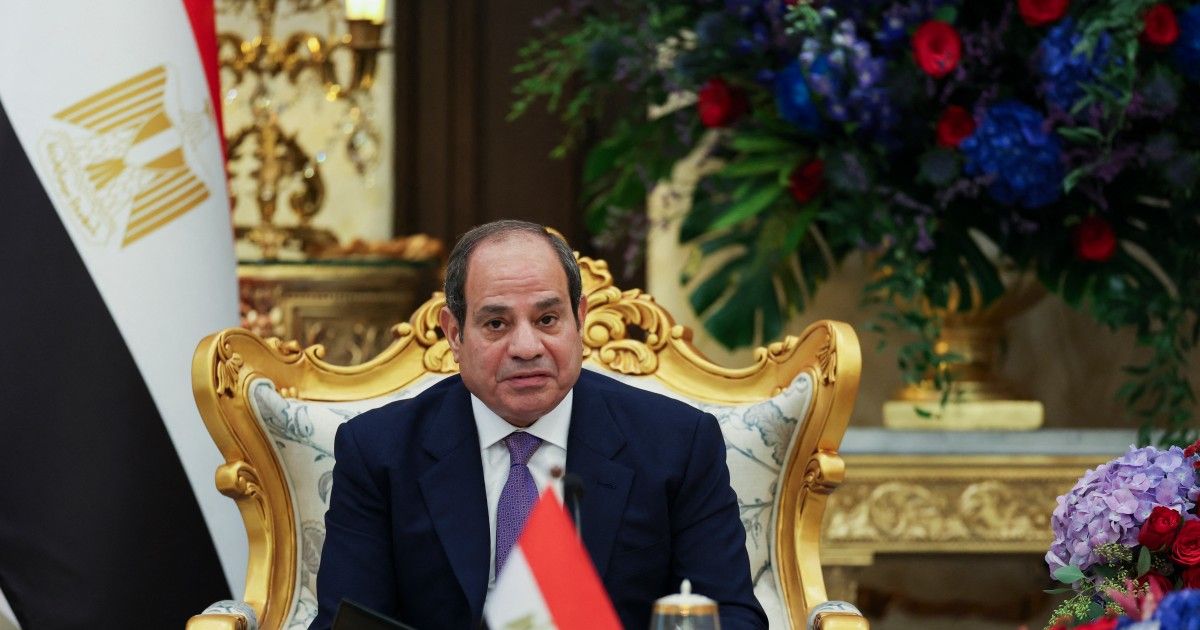
Egyptian President Abdel Fattah El-Sisi stated on Saturday that he will not seek to remain in office when his current mandate expires in 2030. He described the matter as completely settled during a public appearance.
The 71-year-old leader made the announcement at a graduation ceremony at the Egyptian Military Academy in the New Administrative Capital, a flagship megaproject located east of Cairo.
Speaking before state officials and graduates, El-Sisi stated that the national constitution would not be touched. He added that the period leading up to the end of the decade would mark the conclusion of his presidency.
"The period leading up to 2030 will be the end of my term as president of the state, if I am still alive," El-Sisi said. He told the audience that this issue is completely settled and there will be no discussion about it.
The Egyptian constitution was approved in 2014 following the military ouster of late Islamist president Muhammad Mursi in 2013. The original text limited presidents to two four-year terms in office.
Constitutional amendments were subsequently approved in a 2019 referendum. Those changes extended presidential terms from four years to six years and included transitional provisions allowing El-Sisi to run for an additional term.
Under the amended framework, El-Sisi was re-elected in 2023 for a six-year term scheduled to expire in 2030. Opposition figures and critics have previously speculated about further constitutional changes that might enable him to stay in power beyond that date.
Before running for the presidency in 2014, El-Sisi served as defence minister and initially denied having political ambitions. He ultimately resigned from his military post to enter the presidential race, which he won.
On Saturday, the president said the remaining years until 2030 will be dedicated to preparing a new generation of leaders. He stated that the Military Academy is currently training hundreds of prospective officials, ministers, and presidential candidates in statecraft.
During his twelve years in power, El-Sisi has overseen a state-led development strategy focused on large-scale infrastructure projects. Critics argue these initiatives relied heavily on borrowing and exacerbated Egypt’s national debt and economic pressures.
His administration has also faced persistent criticism from international human rights organisations regarding restrictions on political opposition, civil society, and freedom of expression. The Egyptian government has consistently rejected these allegations, maintaining that its policies are essential for preserving national stability and security.