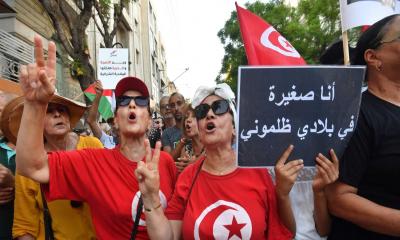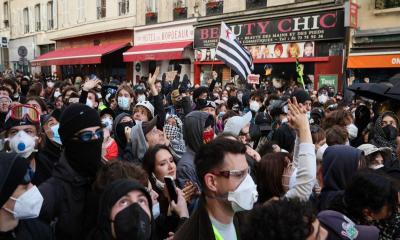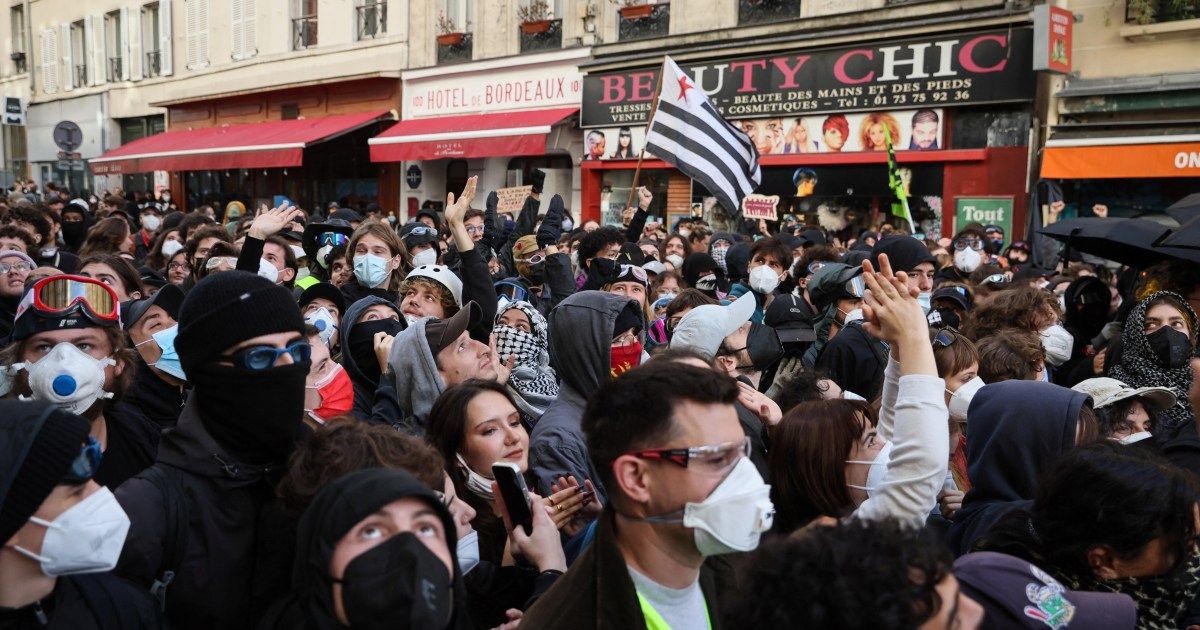
France braced for widespread demonstrations on Saturday as high school students, trade unions and yellow vest activists prepared to take to the streets. The French newspaper Le Monde described the day as a series of unknowns as authorities anticipated large crowds.
The protests began in mid-September at a high school in the Paris suburb of Creteil. Students initially demonstrated over dilapidated buildings, overcrowded classrooms, teacher shortages and an unequal education system. Since then, the movement has spread to thousands of upper secondary schools across the country.
The mobilisation reflects broader anxieties in a nation facing fiscal pressures, economic stagnation and social discontent. Teachers, university students and trade unions have joined the campaign. On Saturday, remnants of the yellow vest grassroots cost-of-living movement that shook President Emmanuel Macron’s first term in 2018 also called on supporters to join the students.
Jerome Rodrigues, a prominent yellow vest activist, urged people to participate in a video message released last week. He stated that high school students, workers and retirees all face different struggles with concerns that converge.
Authorities reported that the unrest ranks among the most violent in decades. More than 900 police officers have been injured since the protests began. Critics argued that violent demonstrators represent a minority whose actions risk overshadowing the wider movement.
The government faced criticism over its response, including the detention of thousands of minors and the use of force against young demonstrators. Reports published this week showed that more than 6,700 children had been taken into police custody since mid-September. Human rights lawyers stated that several teenage students suffered severe injuries during the demonstrations.
Two specific cases drew wide attention. A 15-year-old boy lost his hand when a stun grenade exploded outside a school in the northern city of Lens. In western Tours, a 16-year-old lost his sight due to an injury caused by a rubber bullet.
Prime Minister Sebastian Lecornu addressed the unrest on Thursday. He stated that the country is experiencing a moment of fatigue and perma-crisis involving wars, inflation and purchasing power issues. The government accused the far-left France Unbowed party of inflaming the protests, an accusation the party rejected.
France suspended the use of stun grenades for student demonstrations, but Interior Minister Laurent Nunez stated on Friday that he authorised police to use them in the event of urban violence. Nunez said authorities expected a strong turnout on Saturday. A website tracking yellow vest actions listed more than 1,750 planned protest locations across the country.
The government attempted to quell student anger by scrapping plans to increase higher education registration fees and promising to deploy 3,000 substitute teachers. It also set up a national online survey for pupils to share their concerns. Mathieu Roger-Lacan, a French literature teacher and author, argued that these measures fail to address an education system struggling to provide equal opportunities.
The protests coincide with a difficult financial period for the government, which is caught between demands for better-funded public services and the need to rein in national debt. France recorded a deficit of 152.5 billion euros last year, equivalent to 5.1 percent of its gross domestic product, while the European Union average stood at 3.1 percent. Public debt reached 115.6 percent of GDP.
Lecornu’s proposed 2027 budget seeks to reduce the deficit through spending restraint and tax measures, including a freeze on public sector pay and limits on pension increases. The political stakes are high as the budget bill heads to a divided parliament ahead of the 2027 presidential election, which will mark the end of Macron’s presidency.