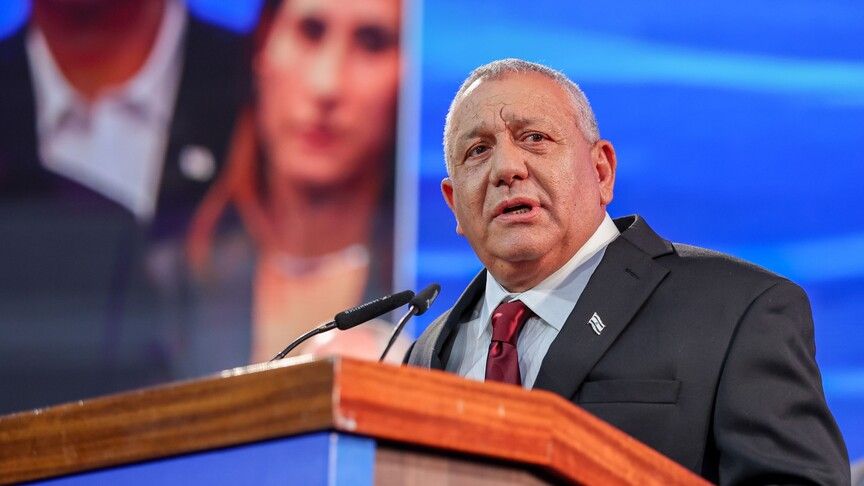
Israeli politician Gadi Eisenkot issued a sharp rebuke on Tuesday, describing Prime Minister Benjamin Netanyahu as a direct threat to the nation’s democratic system. He was responding to an investigative report broadcast earlier in the day by Channel 12. The program accused associates of the prime minister of feeding misleading intelligence to police officers.
According to the broadcast, the alleged maneuver aimed to secure the arrests of activists from the United Arab List party, known as Ra’am, during the October 27 Knesset elections. Eisenkot took to X to demand immediate explanations from the police and the Shin Bet security agency.
He pledged to establish a formal commission of inquiry into the alleged involvement of the Prime Minister’s Office and the conduct of security agencies surrounding the vote. Eisenkot accused Netanyahu of bending state institutions to serve his own political survival. He stated that the prime minister must not remain in power even one minute longer.
As long as he is in office, there will no longer be fair and lawful elections in Israel, Eisenkot wrote. Preventing another election under Netanyahu serves as the central consideration guiding his ongoing coalition talks.
The Channel 12 investigation detailed how Netanyahu’s chief of staff, Ido Norden, allegedly contacted the police commissioner’s office on the eve of the election. Norden lodged a complaint regarding three Ra’am activists in southern Israel and referred law enforcement to an intelligence source who previously worked in the prime minister’s office.
Police subsequently relied on this information to raid the homes of the activists without valid search or arrest warrants before carrying out the arrests. Authorities alleged at the time that the detained individuals were carrying large sums of cash and party vouchers intended to sway voters.
The report stated that Netanyahu quickly publicised the allegations and repeated them throughout election day. The program raised suspicions that his office helped set the case in motion, which was later used to fuel a campaign claiming that Arab citizens were stealing the elections.
The broadcast also revealed that Shin Bet chief David Zini sought permission to wiretap five Arab lawmakers on election day. Zini cited suspected foreign interference, but Attorney General Gali Baharav-Miara rejected the request.
President Isaac Herzog formally assigned Eisenkot the task of forming a government on November 8. Eisenkot holds a standard 28-day window for negotiations, with a possible 14-day extension.
Netanyahu’s political bloc currently holds 53 seats in the 120-seat Knesset. Eisenkot’s bloc controls 48 seats, while Arab parties hold 19. Parties seeking to end Netanyahu’s rule have not yet reached an agreement on forming a governing coalition.