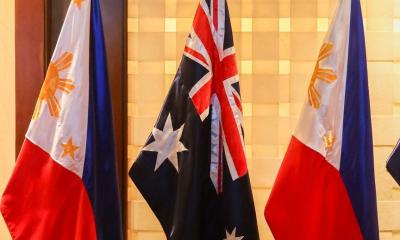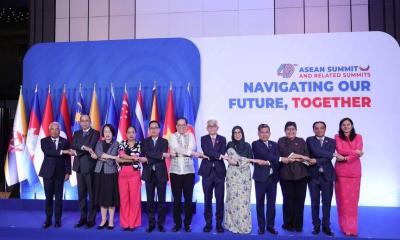
World leaders are converging on Asia for back-to-back high-level diplomatic summits against the backdrop of an ongoing rivalry between the United States and China. The Association of Southeast Asian Nations meeting in the Philippines begins on Sunday, with Donald Trump in attendance. This gathering is followed by the Asia-Pacific Economic Cooperation leaders meeting, which starts on Wednesday in the southern Chinese technology hub of Shenzhen.
Beijing hosts the Apec meeting two weeks after the US leader lost midterm elections. The summit also follows revelations that the head of US chipmaker Nvidia was having an affair with a woman suspected by US intelligence of being a Chinese spy. Apec represents over 60 percent of global gross domestic product and focuses on free trade and multilateralism.
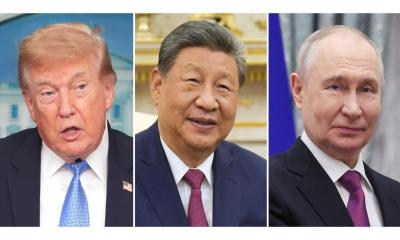
A confirmed trilateral meeting between Trump, Chinese President Xi Jinping, and Russian President Vladimir Putin is scheduled during the events. Xiaoyu Pu, an associate professor at the University of Nevada, stated that the three-way meeting might be more symbolic than substantive. He noted that Trump is interested in nuclear arms control and denuclearisation, while Xi aims to maintain a stable relationship with Washington and preserve China’s strategic partnership with Russia. Putin reportedly wants to maintain bargaining leverage over Ukraine.
Global issues on the summit agendas include artificial intelligence supply chains and governance, tariff reductions, and the green energy transition. Regional discussions will center on the South China Sea, where Beijing has constructed military outposts in disputed waters, alongside the Indonesian forest fire haze affecting the region. Other perennial topics include the crisis in Myanmar and the status of Taiwan, which is sending the founder of hardware company Acer as its envoy to Apec.
For over a decade, Washington’s engagement in the region has been shaped by concern over China’s rise. This strategy of intense diplomacy and trade deals was continued by Joe Biden and adapted into a transactional style under Trump. However, analysts say that Trump’s unpredictability has caused concern among smaller nations who view China as a more predictable partner.
Jayant Menon, an economist at the Iseas-Yusof Ishak Institute in Singapore, wrote this month that Southeast Asian countries are laying groundwork for a future with reduced dependence on the United States by seeking deals elsewhere. Regional integration and diversification are key strategies for handling potential US tariffs.
Chinese Premier Li Qiang may face difficult talks in Manila regarding the South China Sea. Brunei, China, Malaysia, the Philippines, Taiwan, and Vietnam have engaged in decades of territorial standoffs in the waterway. Washington continues to conduct freedom of navigation operations in the area despite Chinese objections, even as crises in other regions demand US attention.
Negotiations for a South China Sea pact will not conclude at the Asean summit and will extend into next year when Singapore assumes leadership of the bloc. Diplomats will also discuss Myanmar and its potential reintegration. The timing of the summits coincides with an International Court of Justice judgment on Thursday that could find Myanmar responsible for genocide, while the country’s coup leader remains barred from Asean meetings.