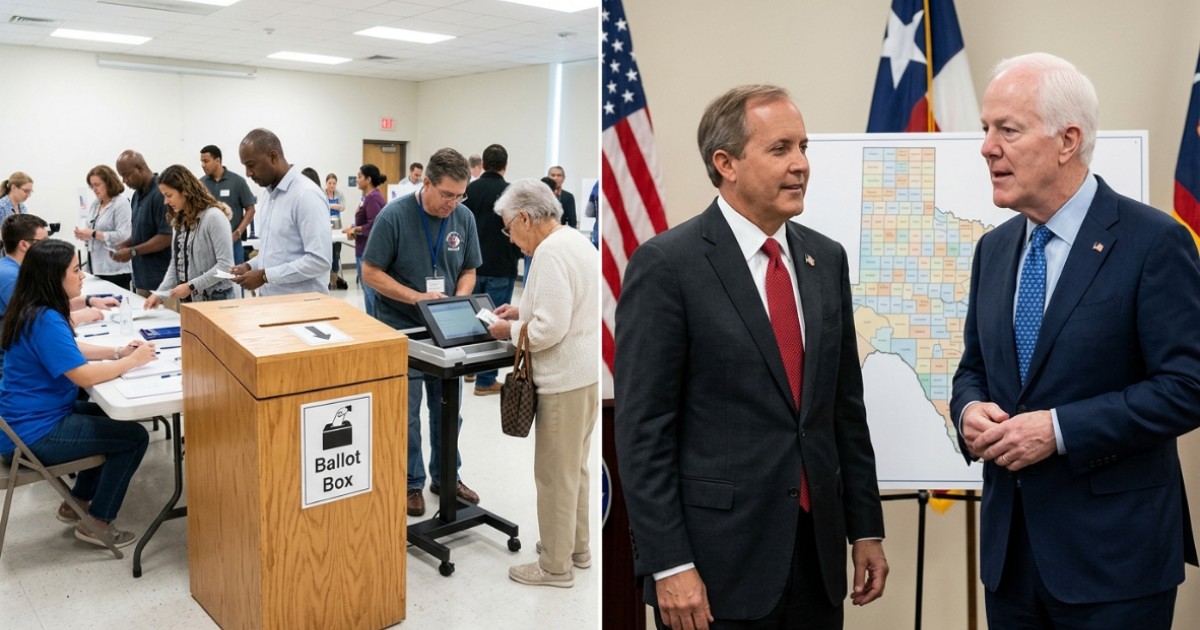
The political climate in Texas is reaching a boiling point as the state prepares for its pivotal Republican primary run-off on Tuesday. The contest between Attorney General Ken Paxton and incumbent Senator John Cornyn has exposed deep fissures within the party, with the victor set to face Democratic nominee James Talarico in the November midterms. While Democrats have not won a statewide seat in Texas since 1994, the state has become increasingly competitive, with margins narrowing significantly over the last decade.The outcome of this primary could redefine Texas`s status as a GOP stronghold.
Ken Paxton, a staunch ally of Donald Trump, has secured the former president’s coveted endorsement. His campaign platform centers heavily on border security, a tough stance against Big Tech, and cryptocurrency development. In contrast, John Cornyn, who has held his seat since 2002, is running on his extensive experience in the Senate and his judicial record in the Texas Supreme Court. Despite his 99 percent voting alignment with Trump, Cornyn’s perceived lack of support during difficult times has made him a target of the former president’s frustration.
However, concerns within the Republican party are focused less on policy and more on Paxton’s baggage. He has faced a series of allegations—ranging from securities fraud and mortgage fraud to ties with disgraced investor Nate Paul—that political strategists believe provide ample ammunition for Democratic attack ads. Mark Jones, a political science professor at Rice University, described Paxton as a "target-rich environment" for the opposition, warning that his controversies could jeopardize GOP prospects in the general election.
Public opposition from within the Republican camp is palpable. Representatives like Matt Shaheen have warned that a Paxton nomination would damage the party’s down-ballot prospects across the state. A poll commissioned by pro-Cornyn groups suggests that Paxton’s nomination could lead to a five-to-eight-point decline for Republicans in legislative races, potentially transforming "safe" districts into battlegrounds that Democrats could successfully flip.
The race also carries significant weight for the national balance of power. Control of the US Senate hangs in the balance, and a Democratic win in Texas would be historic, serving as a gateway to broader control over executive appointments and judicial confirmations. As voters head to the polls, the choice before Texas Republicans is clear: stay the course with a veteran senator or gamble on an ideologically aligned but controversial challenger, a decision that could ultimately decide the state`s political future.