Data centres operating at the bleeding edge of artificial intelligence are facing a severe physical bottleneck driven by extreme electricity consumption and thermal saturation. Inside these cavernous facilities, thousands of computational servers are linked by hundreds of tonnes of copper wire. Engineers and infrastructure operators are now attempting to replace internal electrical wiring with photonics, using light rather than electrons to move information between computing units.
The era of copper reliance is drawing to a close.
Chris Sharp, chief technology officer at data centre operator Digital Realty, notes that the industry is not running out of raw metal, but rather hitting a performance ceiling. A typical 100-megawatt computing facility absorbs approximately 400 tonnes of copper across its operational systems. While the bulk powers heavy electrical grids and cooling hardware, roughly 70 tonnes resides directly within server computing nodes, and another 20 tonnes forms the dense thicket of internal networking cables. Sharp points out that physical cabling between graphics processors and central processing units is actively slowing processing cycles.
Electrons travelling through metal inevitably create thermal resistance.
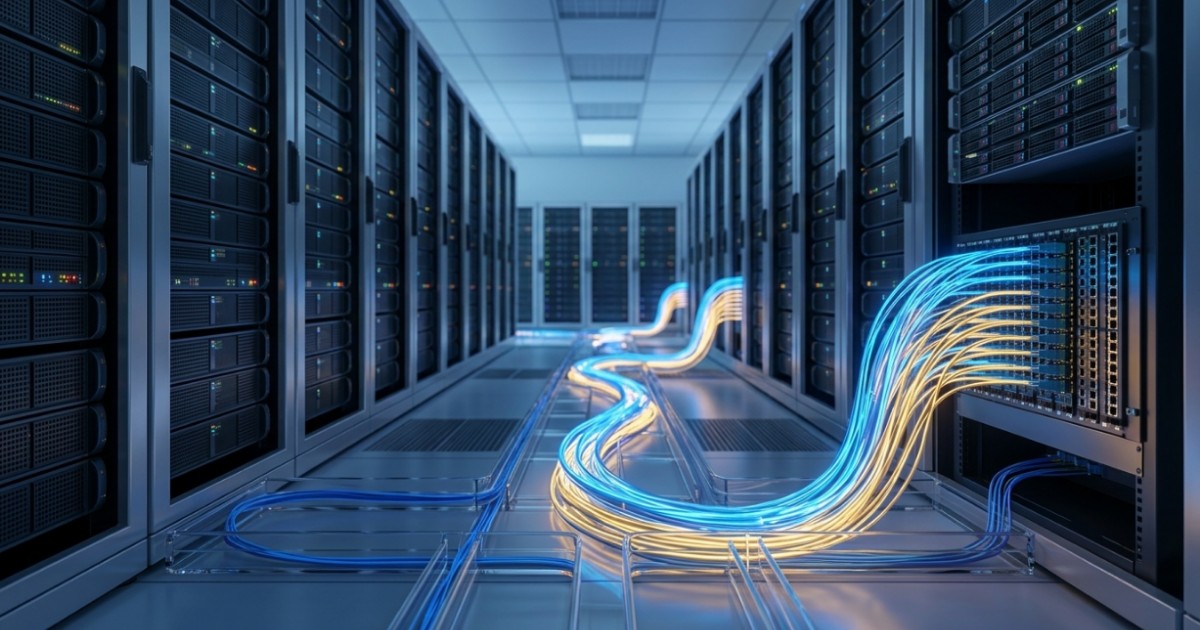
While long-distance telecommunications networks transitioned to glass fibre decades ago, deploying optical links across short distances inside individual computer cabinets has historically proved cost-prohibitive. Moving data with photons eliminates resistive heat, directly slashing the massive cooling loads that consume a significant share of facility operating budgets.
The physics also allows multiple simultaneous data streams across single channels. Callum Littlejohns, deputy director of silicon photonics foundry Cornerstone Labs, confirms that shifting to optics delivers immediate efficiency gains across high-density clusters. Academic institutions are similarly seeing commercial readiness; Peter O`Brien, head of photonics systems at Ireland`s Tyndall Research Institute, stated that the discipline is undergoing a structural reset as semiconductor manufacturer Nvidia lends its institutional backing to optical integration.
Significant supply chain and manufacturing obstacles remain before widespread adoption can occur. The microelectronics sector spent decades driving down costs and optimizing global manufacturing protocols for traditional copper-based chips. Optical component fabrication, by contrast, involves fragmented fabrication paths, with final device assembly heavily concentrated in specialized packaging houses across Taiwan.
Operational vulnerabilities also demand strict engineering discipline. Andrew Wheeler, senior vice president at Hewlett Packard Labs, cautioned that while optical transceivers emit minimal heat themselves, they are acutely vulnerable to the elevated ambient temperatures generated by surrounding computer hardware. Exceeding rigid thermal boundaries compromises device reliability, while physical field assembly presents practical hurdles because delicate optical strands cannot endure the sharp bends common to copper installations.
Achieving maximum structural efficiency will ultimately require eliminating electrical conversion stages entirely. Ofer Shapiro, chief executive of Resolight.ai, argues that modern architectures lose unnecessary energy by repeatedly translating photons into electrons and back again. Replacing traditional electronic network switches with all-optical routing architectures ensures that signals remain within the light spectrum throughout processing runs.
Manufacturers are controlling commercial entry costs by recycling earlier generations of fabrication machinery. Because optical structures are often physically larger than dense silicon computer circuits, foundries do not require expensive cutting-edge lithography systems. Cornerstone Labs has successfully manufactured working photonics components utilizing converted production equipment originally deployed around the turn of the century for Intel Pentium 4 microprocessors.