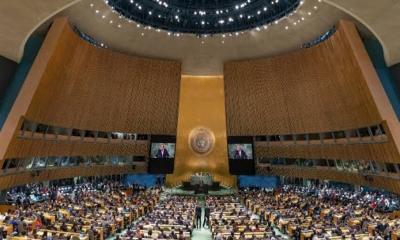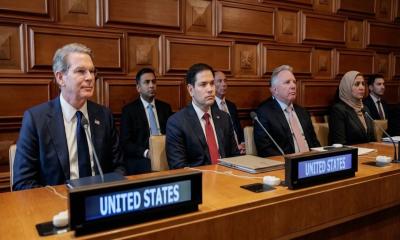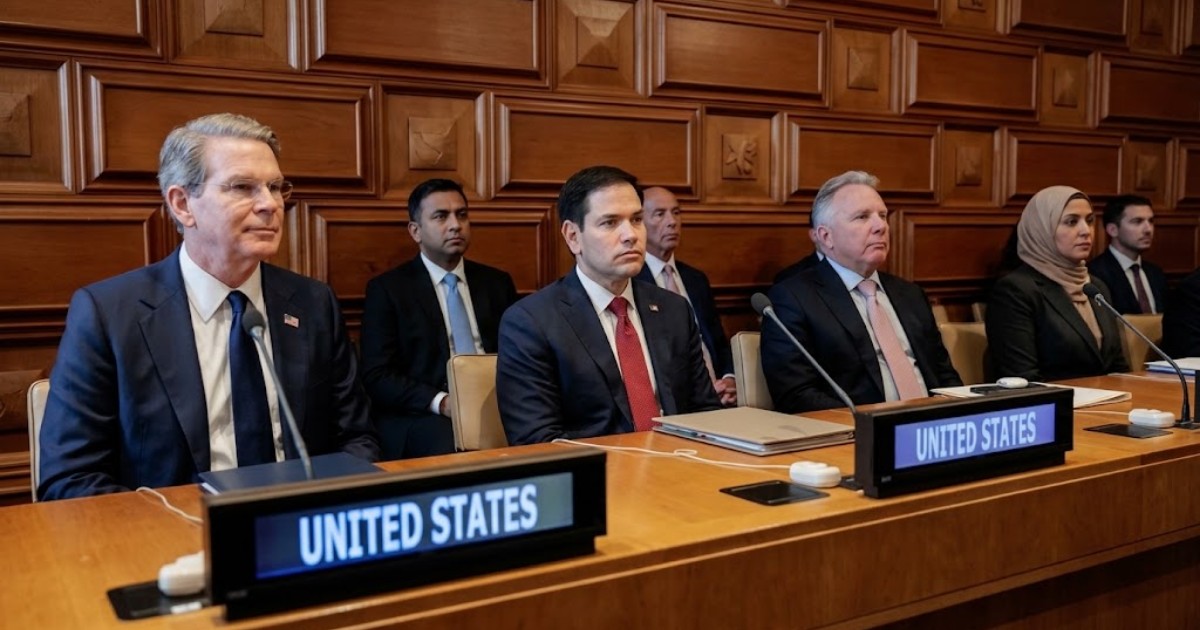
The United States and Iran have held hours of indirect diplomatic discussions through third-party intermediaries on the sidelines of the United Nations General Assembly in New York, aiming to halt armed hostilities and reopen the Strait of Hormuz. Official descriptions of the encounter differed, with Washington describing substantial momentum toward a framework agreement while diplomats emphasized that the exchanges occurred via shuttle mediation rather than direct dialogue.
The diplomatic track proceeded through backchannels.
United States special envoy Steve Witkoff stated that regional mediators shuttled continuously between the American and Iranian delegations throughout Tuesday. Witkoff characterized the session as constructive and expressed hope that the mediated exchange would establish a durable path forward. In contrast, President Donald Trump told journalists that Witkoff and senior adviser Jared Kushner had conducted a three-hour direct session with Iranian officials, adding that negotiations were progressing favorably. The White House subsequently clarified that Trump did not attend the discussions in person.
Tehran maintained that communication remained strictly mediated.
Iranian diplomatic sources confirmed that Iranian Foreign Minister Abbas Araghchi coordinated positions through Qatari diplomats rather than participating in direct bilateral talks. Tehran outlined specific preconditions for any comprehensive resolution, demanding the immediate lifting of the United States naval blockade, the release of frozen sovereign financial assets, and an end to military campaigns across regional fronts. A senior Iranian official told Reuters that Tehran remains prepared to restore commercial maritime traffic through the Strait of Hormuz within seven days if Washington withdraws its naval enforcement measures.
Broader regional efforts accompanied the negotiations in New York. Qatari Prime Minister Sheikh Mohammed bin Abdulrahman bin Jassim Al Thani conferred directly with Araghchi to examine de-escalation mechanisms, while Pakistan and Oman continued diplomatic engagement on maritime passage. Trump also conducted a multilateral session with leaders from the Gulf Cooperation Council, Turkey, Jordan, Syria, and Iraq to review a proposed regional security framework.
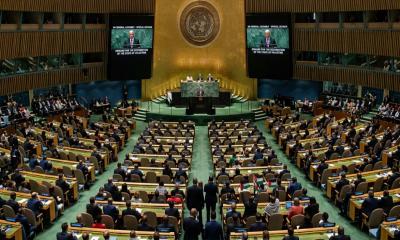
The confidential diplomacy followed sharp rhetoric delivered from the General Assembly podium earlier in the day. Addressing international heads of state, Trump declared that he faced a choice between facilitating economic integration or moving to annihilate the Islamic Republic if no treaty was secured. Iran’s armed forces responded through official state releases, dismissing the ultimatum as strategic weakness and warning that any subsequent military escalation would trigger far more devastating and unpredictable counterstrikes across the theater.