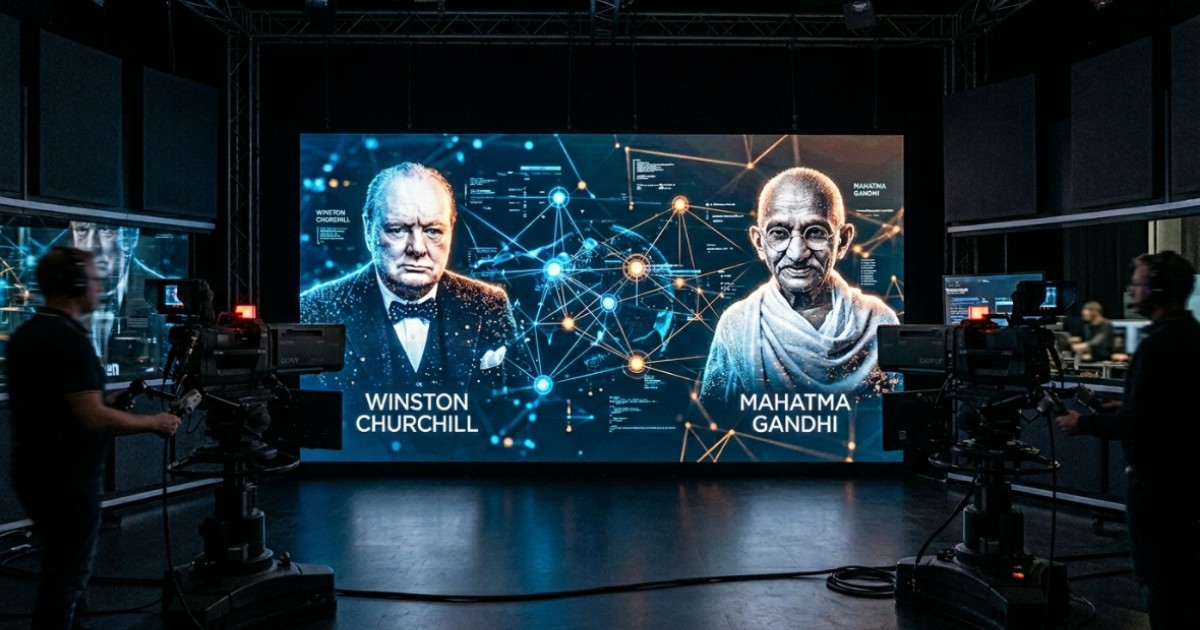
The BBC`s flagship topical debate program, Question Time, initiated its latest broadcast in an unprecedented manner this week by incorporating artificial intelligence-generated avatars of long-deceased historical figures. Virtual simulations of former British Prime Minister Winston Churchill, celebrated Mexican painter Frida Kahlo, Indian independence leader Mahatma Gandhi, and British suffragette leader Emmeline Pankhurst briefly took the digital stage. These historical clones were utilized to introduce the central theme of the evening`s broadcast: the rapid integration, ethical dilemmas, and long-term societal consequences of consumer-grade artificial intelligence.
Following the simulated opening segment, a physical panel composed of senior political figures, tech entrepreneurs, and policy experts took control of the studio to debate the immediate structural challenges posed by synthetic media. The live panel featured Darren Jones, the Chief Secretary to the Prime Minister; Julia Lopez, the Shadow Secretary of State for Science, Innovation, and Technology; Mo Gawdat, an acclaimed technology author and former Chief Business Officer at Google X; Laura Gilbert, the Senior Director of AI at the Tony Blair Institute for Global Change; and Victor Riparbelli, the founder and Chief Executive Officer of the London-based generative video firm Synthesia.
The deliberate choice to resurrect deceased historical figures for mainstream broadcasting swiftly triggered significant cultural and ethical pushback from international observers. Academics tracking modern digital transformations, including Dr. Sarah Son, a Senior Lecturer in Korean Studies at the University of Sheffield, observed that converting sensitive historical legacies or real-world political figures into digital entertainment remains highly controversial. Critics argued that utilizing artificial deepfakes of individuals who passed away decades ago strips them of their authentic historical context and could pave the way for corporate digital revisionism. Conversely, supporters described the demonstration as an effective and immersive method to illustrate the blurring boundary between reality and simulation.
Within the legislative sphere, the studio discussion intensified as political representatives Darren Jones and Julia Lopez debated the structural adequacy of current regulatory frameworks in 2026. As international governing bodies struggle to implement comprehensive enforcement strategies following the rollout of major cross-border initiatives like the European Union`s AI Act, domestic administrations face constant friction between promoting commercial tech innovation and establishing robust consumer safeguards. The real-world panelists emphasized that unauthorized voice cloning, the commercial exploitation of human likenesses without retroactive familial consent, and automated deepfakes pose direct threats to information ecosystems and democratic transparency.
Offering an industry perspective, Victor Riparbelli of Synthesia outlined the technical architecture enabling the creation of highly realistic synthetic avatars, asserting that such tools hold immense pedagogical and communicative potential when developed alongside strict transparency labels. However, tech executive Mo Gawdat offered a much more sobering assessment, reiterating his systemic warnings concerning the existential trajectories of unregulated artificial general intelligence. The intense broadcast concluded with a structural consensus among all participants that the technical capabilities of generative platforms are permanently altering everything from public sector communications to media broadcasting infrastructure.