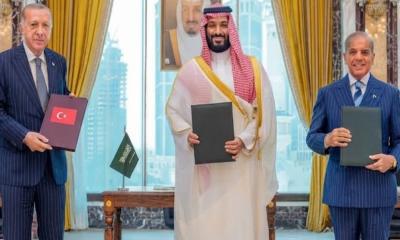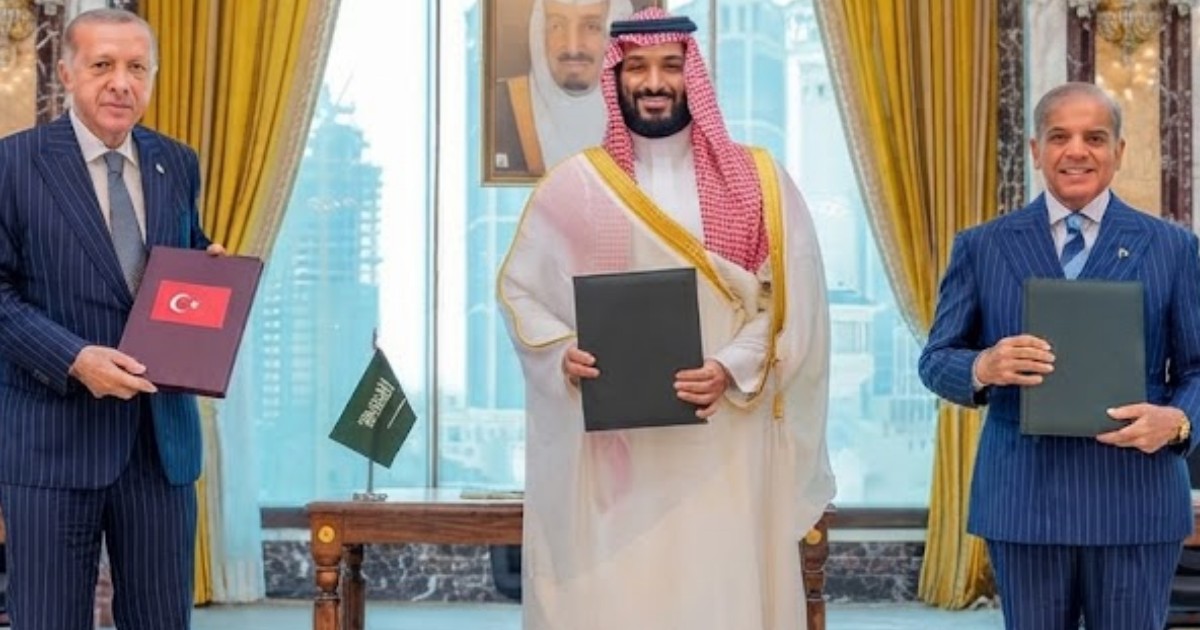
Saudi Arabia, Turkiye, and Pakistan have signed the historic Mecca Joint Defence Pact at al-Safa Palace, establishing a collective security framework where an armed attack against any of the three nations will be considered an attack against all. According to reports from Al Jazeera and Reuters, Saudi Crown Prince Mohammed bin Salman, Turkish President Recep Tayyip Erdogan, and Pakistani Prime Minister Sharif finalized the agreement on Friday amid escalating regional instability and the ongoing fallout from the United States-Israel conflict with Iran.
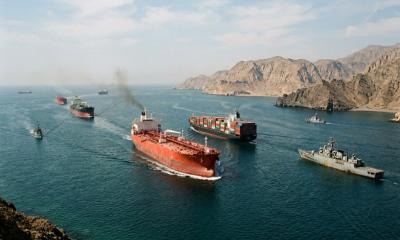
The pact, which does not explicitly name a specific adversary, arrives as regional shipping through the Strait of Hormuz faces severe disruptions and Houthi drone and missile attacks continue to target critical Saudi energy infrastructure. Prime Minister Shehbaz Sharif hailed the agreement as a shield of peace for the region, while President Erdogan emphasized that the alliance does not target any country and remains open to all nations seeking stability and prosperity. Saudi officials further reassured international partners that the pact does not undermine existing alliances with Washington or other Gulf states.
Security and foreign policy analysts view the agreement as a strategic signal rather than an immediate operational military alliance. Kamran Bokhari, a senior resident fellow at the Middle East Policy Council, noted that while integrated military capacity may take years to materialize, the pact creates valuable strategic deterrence against regional threats and non-state actor networks. Each signatory brings distinct capabilities to the tripartite arrangement, combining Saudi financial capital, Pakistan`s strategic weight and manpower, and Turkiye`s rapidly expanding defense manufacturing sector.
The formation of this alliance reflects a broader strategic shift among regional powers seeking to diversify their security partnerships beyond traditional Western guarantees. Following months of intense geopolitical turbulence and military strikes across multiple Middle Eastern nations, Riyadh and its partners are actively pursuing greater strategic depth. Experts suggest that the trilateral framework could potentially expand in the future to include other regional states such as Qatar and Kuwait, which share close defense ties with both Islamabad and Ankara.
Meanwhile, Tehran`s initial parliamentary response dismissed the agreement as a paper pact, though regional analysts caution that Iran is likely to monitor the developments closely. Pakistan`s ongoing diplomatic role as a mediator between Washington and Tehran may face new complexities, yet analysts argue that Islamabad`s inclusion provides essential diplomatic insulation, preventing the pact from being viewed strictly as an anti-Iran coalition. As diplomats and geopolitical experts dissect the long-term implications, the Mecca Joint Defence Pact marks a significant milestone in evolving Middle Eastern alliances.