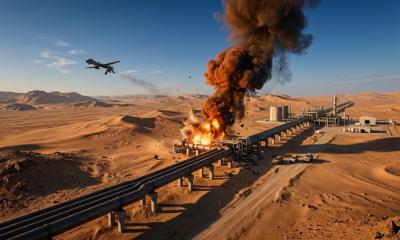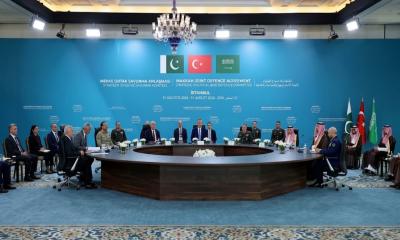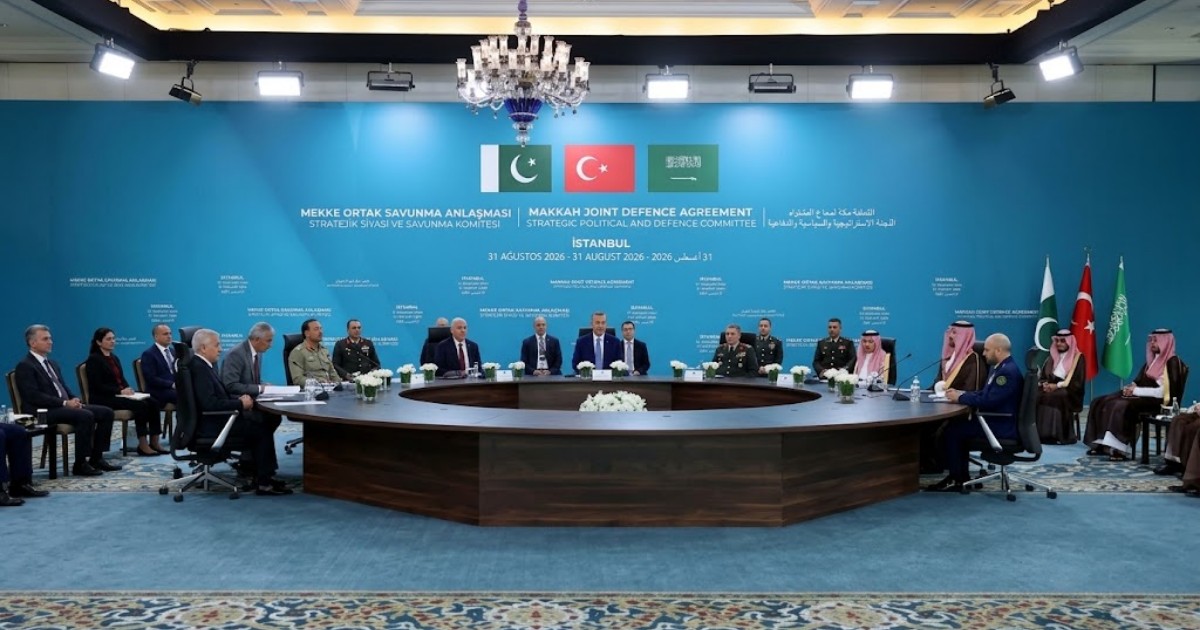
Houthi advances along the Red Sea coast and repeated aerial strikes against critical energy and civilian infrastructure in Saudi Arabia have focused international attention on the operational mechanisms of the Mecca Joint Defence Agreement, according to analyses published by Al Jazeera and Reuters. Formed initially as a bilateral security arrangement between Riyadh and Islamabad in September 2025, the pact expanded in August to incorporate Turkey, creating a trilateral collective security framework headquartered in Riyadh under an initial three-year Pakistani chairmanship.
The operational architecture of the alliance remains in an institutional development phase without established engagement thresholds.
Pakistani Defence Minister Khawaja Asif stated earlier this week that unprovoked external aggression against Saudi sovereign territory would operationalize the trilateral pact. However, procedural clarity offered by Turkish Foreign Minister Hakan Fidan highlighted that the arrangement functions along consultation models similar to NATO principles. Under this structure, collective military mobilization does not trigger automatically; rather, the member state under assault must formally invoke the treaty, outline its operational requirements, and secure reciprocal consent from allied partners.
Riyadh has not yet submitted a formal request invoking allied mutual intervention.
Parallel diplomatic channels have intensified across regional capitals to manage escalation without triggering military clauses. Pakistani Field Marshal Asim Munir and Saudi Foreign Minister Prince Faisal bin Farhan Al Saud engaged in direct discussions with Iranian Foreign Minister Abbas Araghchi, urging Tehran to exercise its influence to restrain maritime blockades along the Bab al-Mandab strait. For Islamabad, memory of protracted regional entanglements and domestic border security concerns near western provinces make direct ground combat operations inside Yemen deeply improbable, favoring enhanced deterrence instead.
Analysts observe that deterrence will likely manifest through bolstered technological and defensive integration rather than offensive expeditions. Pakistan already maintains an operational contingent inside Saudi borders, including a detachment of 16 JF-17 Thunder multirole aircraft alongside air defense technical teams. Strategic experts conclude that future actions will prioritize securing regional maritime channels via multinational maritime coalitions while maintaining diplomatic communication channels to avoid wider regional conflict.