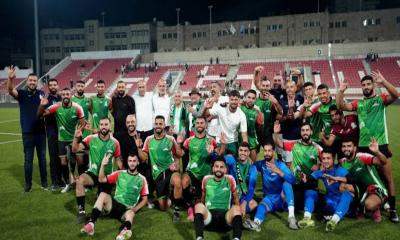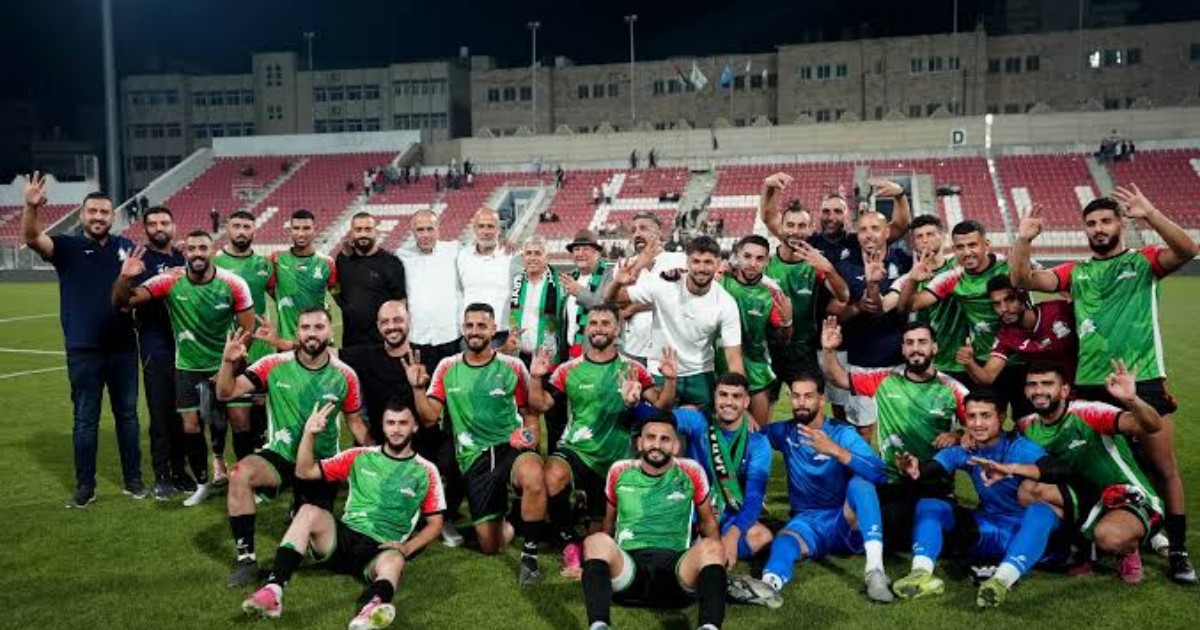
The floodlights illuminated the turf at al-Khader Stadium near Bethlehem on Monday as competitive Palestinian football officially resumed following a suspension lasting nearly three years. Supporters gathered across the stands to sing team anthems while children lined the pitch perimeter, observing Arab Orthodox Beit Jala face off against Dheisheh Youth. The fixture inaugurated the Thousand Martyrs Cup, an expansive tournament organized to revive domestic competition across the occupied West Bank, Gaza, and refugee camps in Lebanon.
More than 200 sporting clubs have enrolled in the tournament.
The competition derives its title from the 1,014 Palestinian athletes and sporting staff documented killed since hostilities accelerated in October 2023. During the half-time interval, an altercation behind the stands prompted spectators to stand abruptly, briefly instilling fear among players on the pitch. Cesar Sarras, a 20-year-old midfielder for Beit Jala, recalled his immediate worry that armed military forces had approached the perimeter with tear gas, a recurring disruption in regional sports history. The disorder subsided rapidly once identified as a dispute between local fans.
Rimas Sarhan, a 15-year-old player from Aida refugee camp who represents the national youth squad, stated that experiencing an active stadium restores a semblance of ordinary life.
The Palestinian Football Association reported that persistent logistical restrictions, border checkpoints, and military raids on civic facilities had completely halted competitive fixtures. In the Gaza Strip, approximately 90 percent of athletic facilities have been demolished, with remaining flattened grounds now housing emergency shelters for displaced families. The casualties include prominent athletes such as national forward Suleiman al-Obeid, who was killed while waiting for humanitarian food distributions in 2025, and Olympic trainer Hani al-Masdar, who was killed in 2024.
Association Secretary-General Firas Abu Hilal affirmed that the revival demonstrates the population`s collective refusal to be extinguished.
To navigate pervasive movement restrictions across the West Bank, football organizers grouped participating squads according to regional proximity, curbing extensive travel requirements. Regional transport remains vulnerable to military iron checkpoints installed at city gateways, which are routinely locked without prior notice and prevent teams from arriving at scheduled fixtures. Abu Hilal confirmed that hindered matches will undergo postponement rather than formal cancellation, ensuring that the championship remains an established annual fixture on the regional sporting calendar.
The prolonged cessation has also generated extreme financial distress, forcing previously salaried professional athletes into amateur ranks. Mohamed El-Zgairy, a player for Dheisheh who coaches youth prospects, endured an eight-and-a-half-year detention period in military prisons and spent two years rehabilitating after sustaining severe gunshot wounds to his leg in 2015. He emphasized that local athletes refuse to abandon their profession, maintaining collective discipline despite acute career disruption.
The governing body confirmed that military strikes have destroyed or compromised 265 sporting facilities in Gaza, a scale of destruction it has formally termed a sports genocide.
In Bethlehem`s Aida refugee camp, players training at the AOD Sports Academy practice adjacent to the concrete separation barrier and armed surveillance towers. The academy’s playing pitch was targeted with a military demolition order in late 2025, which was frozen following representations by international bodies including FIFA and UEFA, though community administrators note the eviction risk has not been formally rescinded. Within these constrained spaces, youth players like 15-year-old Fatima Lutfi continue to practice regularly, while senior squad members maintain that continuing to compete on the pitch establishes their visibility against systemic erasure.