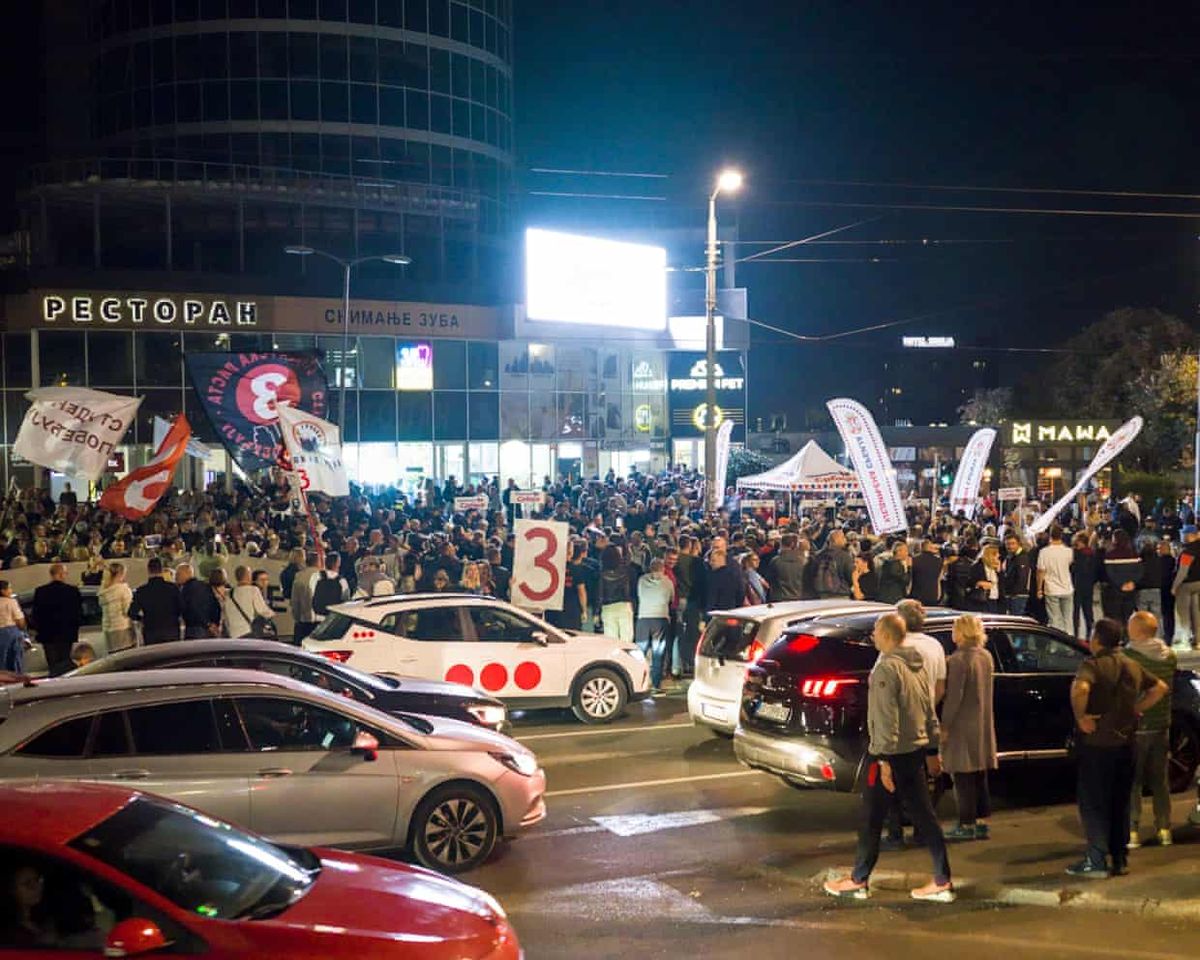
On a cool autumn evening, Serbian student volunteers went canvassing in the housing estates of Krnjača, a Belgrade suburb. They wore lanyards emblazoned with the word victory, carrying a list of questions and a mobile app that mapped visited homes and local support.
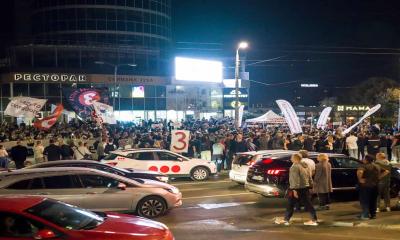
The volunteers belong to a mass student movement, Student List, which has shaken Serbia with two years of constant protests. On Sunday, the group will pose the most serious challenge Aleksandar Vučić has faced in his 12 increasingly authoritarian years in power by putting forward their own candidates in parliamentary elections.
They hope to emulate the defeat of Vučić’s ally, Viktor Orbán, in neighbouring Hungary six months ago, potentially triggering a democratic resurgence across central Europe. Opinion polls vary wildly, but observers say a close race is possible. Neither side is prepared to accept a defeat as legitimate, raising the risk of post-election unrest.
To win, the students’ list of 250 candidates must break the mould of Serbian politics and Vučić’s grip on the country. He stepped down as president last month, five months before the end of his second and final constitutional term, aiming to extend his hold on power as prime minister at the head of the Serbian Progressive party.
In their assigned section of the suburb, law student Zak Veličković and campaign photographer Danijela Radojković met overwhelming support. Apart from a few polite rejections from people claiming no interest in politics, residents seized the opportunity to air grievances. Most promised their vote and a large minority offered help, with some taxi drivers offering to ferry voters to polling stations.
Veličković began each conversation by asking about the biggest problem in Serbian society, a query that often drew laughter. Corruption was the most frequent complaint. On the Transparency International index, Serbia ranks far worse than any of its neighbours, standing as the most corrupt country in Europe outside Belarus and Russia.
Frequent allegations link the ruling party to organised crime. The Student List slogan confronts this perception head on, asking voters to choose between Serbia and the Mafia. The government denies all accusations and claims to be tackling organised crime.
A major infrastructure failure sparked the student protests: the collapse of a concrete canopy at Novi Sad railway station on 1 November 2024, which killed 16 people. Evidence pointed to botched refurbishment work, but no official finding on the cause has been released and no official has been held accountable. When Belgrade students blocked a road in a vigil for the victims three weeks after the disaster, a ruling party mob attacked them, turning the protest movement nationwide.
The students initially distanced themselves from opposition parties and avoided conventional leadership structures. A survey published in July by the Centre for Research, Transparency and Accountability and Stanford University showed 45 percent support for the students compared with 36 percent for the ruling party. Other recent domestic polls show the governing party in the lead, though the opposition views those pollsters as pro-government.
Vučić is taking the political threat seriously, making 129 live television appearances in August. Raša Nedeljkov, programme director for the Centre for Research, Transparency and Accountability, said Serbia had been an electoral autocracy where only ruling parties could win, but added that the status quo is now in jeopardy.