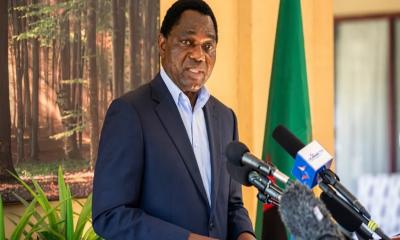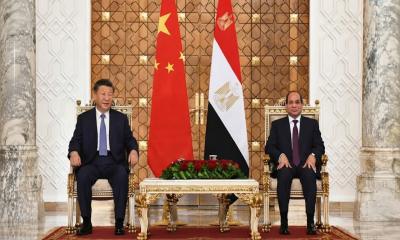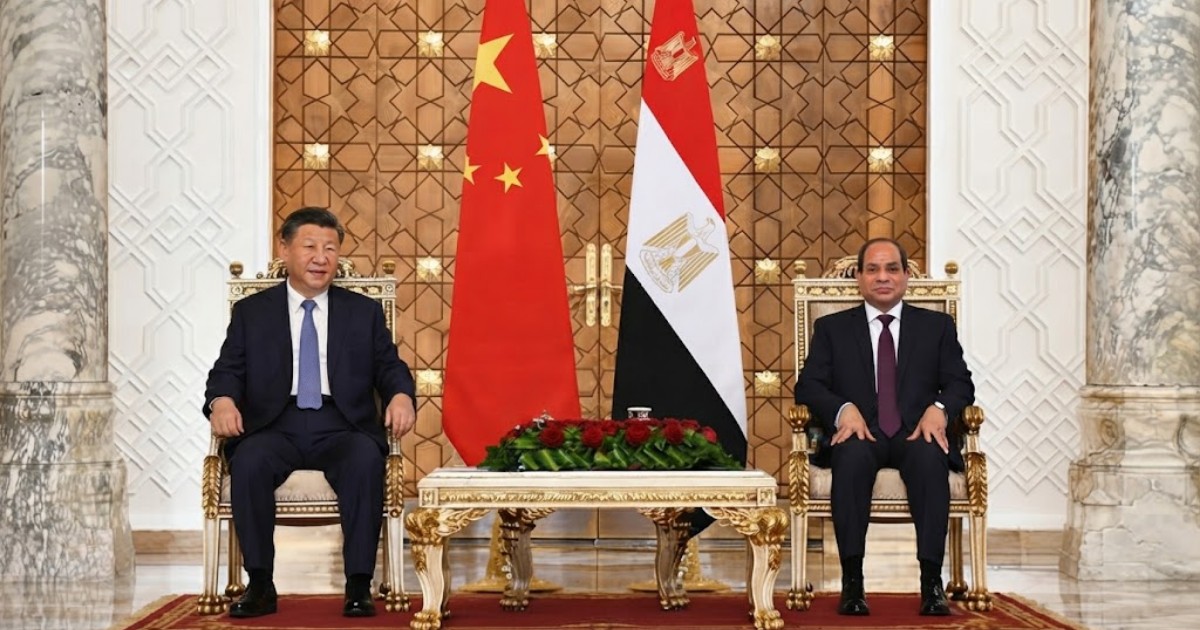
Chinese President Xi Jinping has urged Middle East nations to oppose external interference and consider reshaping the region’s security order independently. Speaking during a rare visit to Cairo, Xi made the remarks on Wednesday during high-level talks with Egyptian President Abdel Fattah el-Sisi at the Ittihadia Presidential Palace. His visit to the Egyptian capital comes as Beijing aggressively seeks to expand its geopolitical footprint and diplomatic leverage in the region amid the ongoing conflict between the United States, Israel, and Iran.
According to Chinese state media reports, Xi emphasized to el-Sisi that the peoples of the Middle East must remain the masters of their own affairs. He stated that regional countries must unite in opposing external meddling while strengthening dialogue on mutual peace and regional security. Upon his arrival in Cairo, President Xi was formally welcomed by el-Sisi, receiving a traditional twenty-one-gun salute and a high-level state reception to mark his first visit to the country in ten years.
The leaders focused extensively on the six-month US-Israel war on Iran, which has severely disrupted stability and prompted various regional governments to rethink their defense strategies. Both presidents stressed the urgent need for diplomatic solutions to establish a comprehensive agreement aimed at ending the hostilities permanently. They underscored that political dialogue remains the only viable path to de-escalating tensions across the volatile region.
In addition to regional security, the two heads of state oversaw the signing of a major agreement to launch the third phase of the Egyptian-Chinese industrial zone situated along the Suez Canal. According to local officials, this joint industrial hub already houses approximately two hundred companies with cumulative investments valued at roughly four billion dollars. The expansion grants Beijing an even stronger economic foothold inermanent maritime trade corridor.
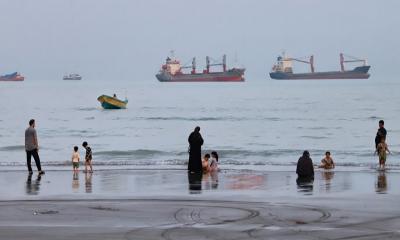
The strategic significance of the Suez Canal has magnified considerably as ongoing conflicts severely choke maritime traffic through the Strait of Hormuz, connecting Oman and Iran, and the Bab al-Mandeb Strait, separating Yemen and the Horn of Africa. By strengthening economic and strategic ties with Egypt, Beijing aims to secure vital global trade arteries while positioning itself as a stabilizing diplomatic partner in the Middle East. Analysts view Xi`s outreach as a calculated step to counter Western hegemony and foster alternative multilateral security architectures across the developing world.