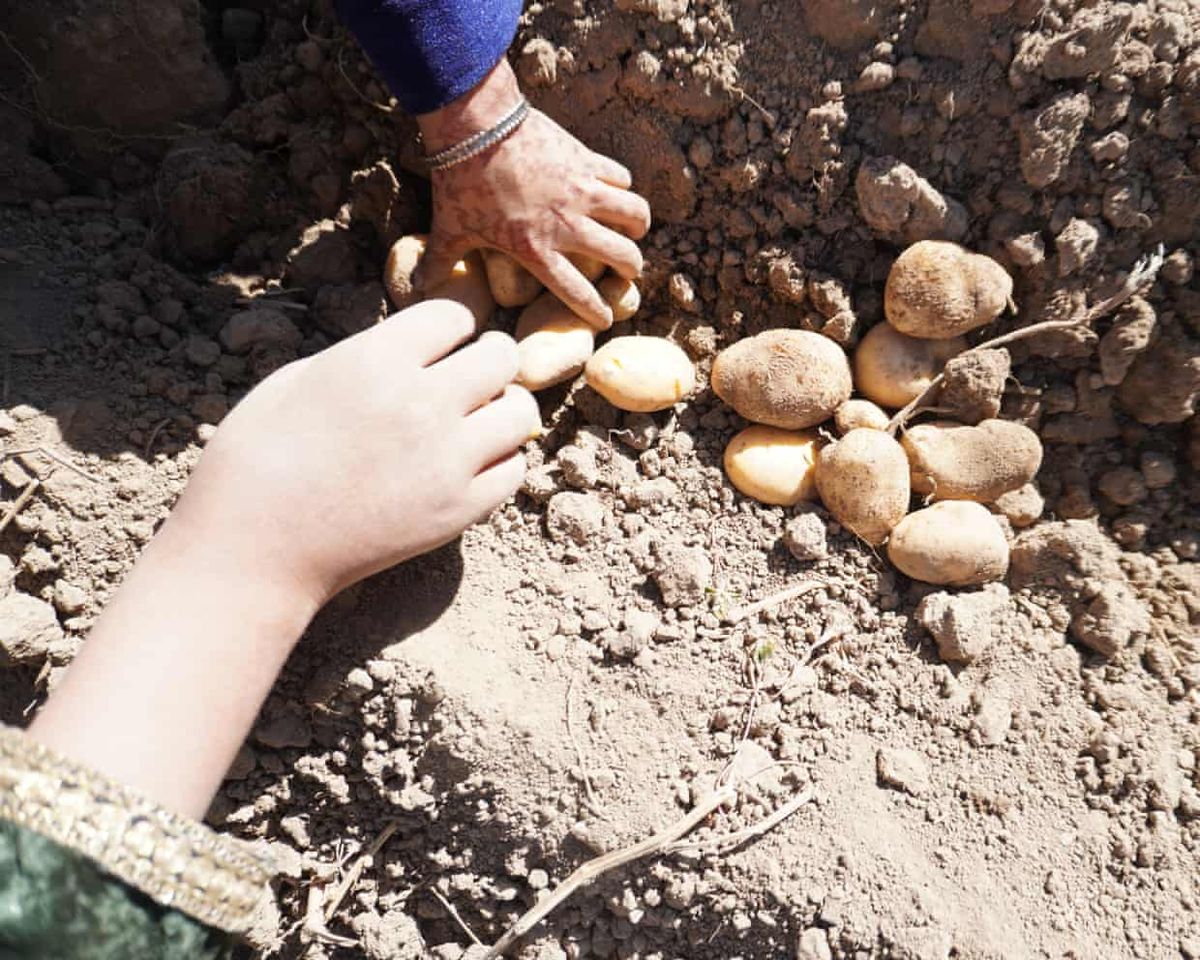
Hajra Begum rolls a potato in her hands, checking its skin for cuts, soft spots and signs of rot. After a day harvesting in her family field in Chorwan, a remote mountain village in Gurez, Indian-administered Kashmir, she is sorting the crop for winter storage. Some of the potatoes will feed her family through the cold months, while others will be saved for planting in spring.
It should be perfect for planting. If you keep a bad potato, you will waste the whole next year, she says on Wednesday.
Begum, 40, is preparing to lower the potatoes into a khraw, a traditional underground storage pit lined with straw and sealed against the cold. For generations, khraws have kept potatoes, turnips and cabbages through Himalayan winters, when heavy snowfall cuts villages off from the Kashmir valley and temperatures fall below minus 20 degrees Celsius, which is cold enough to crack pipes and freeze diesel.
The practice is slowly dying out. As roads have improved and young people have left for work and education, fewer families maintain the pits. Their decline threatens a traditional way of storing food, local potato varieties and the knowledge of which crops store well, resist rot and produce reliable harvests.
When she was young, almost every family had three or four pits. Now, down in the main valley, residents have abandoned the practice altogether, and only a handful of families still use them. The rest buy from the market or get subsidised food from the government.
Begum learned from her mother how to tell potatoes that store well from those that rot or sprout too quickly. She is passing this skill on to her daughter, though she is unsure whether it will survive into another generation.
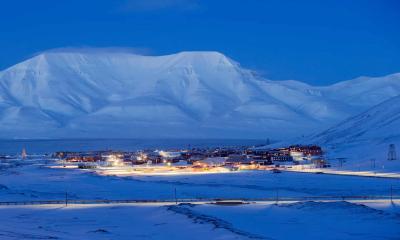
Gurez is a high-altitude Himalayan valley perched near the Line of Control, the heavily militarised boundary separating Indian- and Pakistani-administered Kashmir. About 80 miles from Srinagar, the valley remains cut off each winter when snow closes the Razdan pass, its main road link, which sits at roughly 3,600 metres. The area is home to the Dard-Shin people, an Indigenous community who speak Shina and have a culture distinct from Kashmiri.
Potatoes account for about 45% of the cultivated area in Gurez, according to a 2019 study by the Indian Council of Agricultural Research National Bureau of Plant Genetic Resources, a government body that studies and conserves India crop diversity. Yet the genetic diversity of the valley potatoes has not been systematically documented.
Dr Sheikh M Sultan, a senior scientist based at the research station in Srinagar, surveyed the valley and later struggled to find some of the varieties he had once encountered. When he first visited, he saw many varieties, but later could hardly locate even one sample of some. The loss of genetic diversity is tremendous, he states.
Sultan says migration, improved roads and changing lifestyles have contributed to the decline. When people stop producing their own seeds and start relying entirely on commercial varieties, the loss can be irreparable. He warns that research institutions often prioritise introduced varieties over indigenous crops whose characteristics remain poorly understood.
Abdul Jabbar Mapnoo, a 70-year-old farmer in Chorwan, remembers winters when deep snow covered the valley. Every house used to have two or three khraw, each holding about five quintals of potatoes, he says. The springs are drying up, and there is less snow in winter. Potato production has fallen.
Pressure on farmland poses another risk. In Gurez, where cultivable land is scarce, the Kishanganga hydroelectric project has affected land in the valley through acquisition and submergence.