Residents in the Indonesian city of Palangkaraya check the air quality before opening their eyes, waking to the acrid smell and a hacking cough. On the island of Borneo, skies have turned orange with smoke, windows are sealed with plastic sheeting, and families spend evenings inhaling oxygen from tanks.
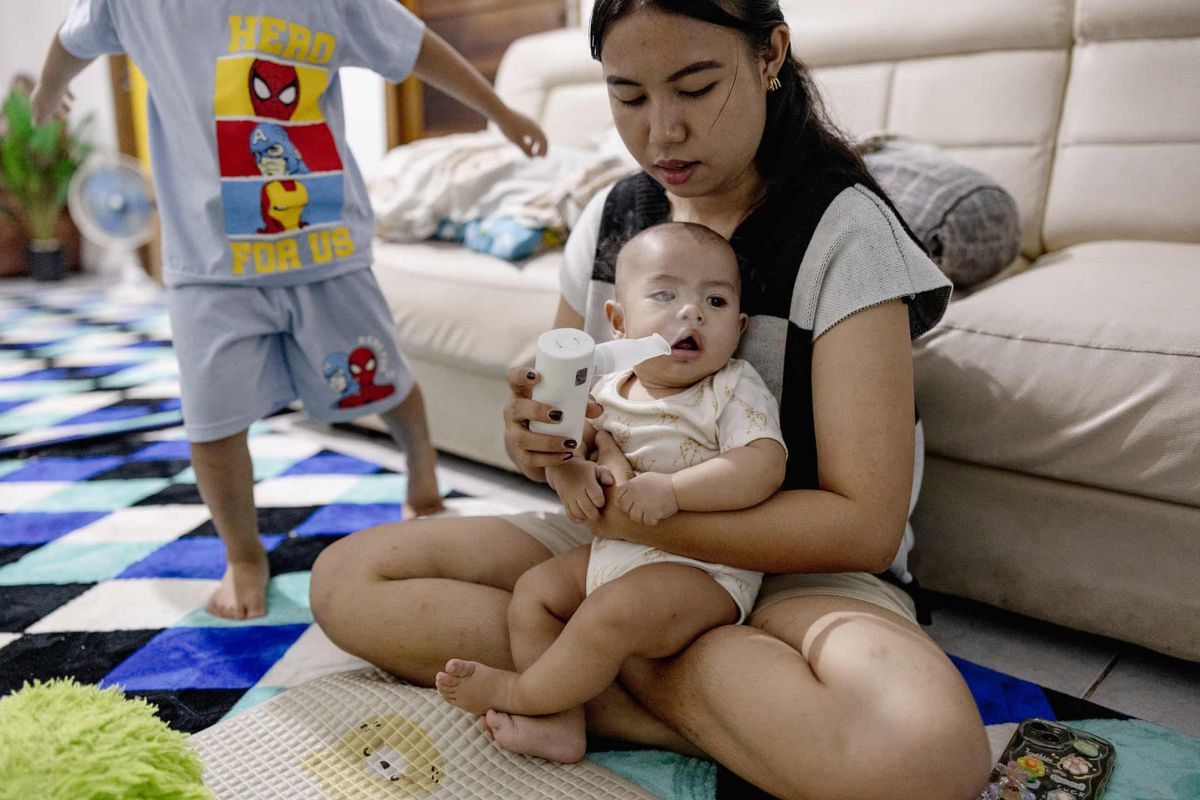
Palangkaraya is home to about 300,000 residents and has been besieged for months by wildfires engulfing surrounding forests. Apri Dona Yusmelita sits on the floor with her five-month-old son, Ares Alexander, encouraging him to breathe from a nebuliser that delivers medicine to his tiny lungs. He has been sick for most of his short life due to the pollution.
"The cough is phlegmy, so he always has to vomit," Yusmelita said. She noted that her baby struggles to reach his target weight because he is constantly sick, vomiting whatever he drinks. She also has a four-year-old child.
Since the fires started in July, the 27-year-old mother has regularly kept her children confined to a bedroom equipped with an air purifier. She moved the television into the room to keep them occupied, though rotating power outages stretch out the days while smoky air seeps into the rest of the house.
"Even eating had to be in the bedroom for the kids because their lungs are different from ours," she said. Over the past four months, her family has spent roughly half their time inside that single room. When her mother briefly took the children outside to play, their symptoms flared immediately.
Annual fires have become a routine part of life, often started intentionally using the slash and burn method to clear land for crops such as palm oil, of which Indonesia is the world’s largest producer. This year has been exceptionally severe, with close to two million hectares of forest and peatland burned across the country amid drier-than-usual conditions brought by an El Nino weather pattern.
With authorities unable to cope with the scale of the catastrophe, local volunteers have stepped in to monitor air pollution and establish clean-air safe houses. The Ranu Welum Foundation, a local Indigenous organisation, has fundraised for haze shelters equipped with air purifiers, oxygen tanks, and nebulisers.
Roro Ardya Garini, a co-founder of the foundation, said the 14 shelters cater to vulnerable populations such as children and the elderly. "They come just to breathe," she said, noting that the best locations feature airtight concrete walls and minimal ventilation.
The shelters do not replace hospitals, and volunteers occasionally have to turn people away. Garini recalled an incident where a baby arrived blue from acute oxygen deprivation and was rushed to an emergency room. At another shelter operated by the volunteer group JPIC Kalimantan, Sabrina Alfiana supervised her four-year-old son as he inhaled mist from a nebuliser alongside other children.
Alfiana, 26, said that sealing her home was ultimately ineffective against the smoke. "Whether it seeps in through the cracks, the windows, you can still feel it," she said. "Even inside the bedroom, we can smell the smoke."