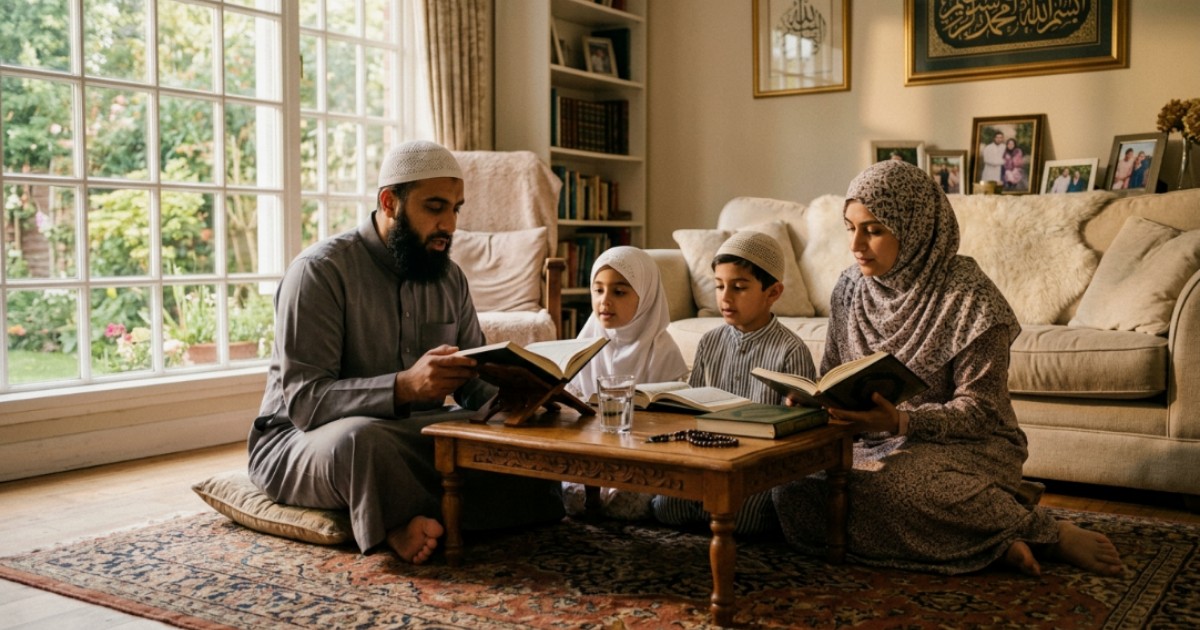
Modern Islamic scholars emphasize that adhering to the guidance of the Holy Quran and Hadith is essential for maintaining peace and harmony within every Muslim household. According to a special report by Al Jazeera on Islamic lifestyle, correcting personal behavior and engaging in regular spiritual practices are the most effective ways to eliminate family disputes and emotional distance in the contemporary world. Properly practicing Islamic family principles brings stability, tranquility, and blessings into domestic life. The importance of these spiritual practices is increasingly recognized across global Muslim diasporas and general Muslim societies seeking to prevent family breakdowns.
The first and foremost practice for family happiness in Islam is establishing regular and collective acts of worship within the home. The Messenger of Allah, peace and blessings be upon him, urged Muslims not to turn their homes into graveyards and commanded them to offer voluntary prayers and recite the Quran at home (Sahih al-Bukhari, 432). Regular recitation of the Holy Quran, especially Surah Al-Baqarah, protects the household from the negative influences of Satan and malicious energies. A study by the Ministry of Islamic Affairs of Saudi Arabia revealed that families that maintain a regular environment of religious observance experience significantly fewer psychological complexities and domestic disputes.
Another major avenue for establishing family peace is practicing mutual forgiveness and maintaining gentle, respectful behavior toward one another. The love and mercy between a husband and wife in marital life are considered a special gift and sign from Allah for humanity (Surah Ar-Rum, 30:21). A sociological publication by the Islamic Foundation noted that overlooking minor faults and maintaining mutual respect strengthens the internal bond of the family. Being empathetic toward one another and avoiding decisions made in anger are integral parts of Islamic family etiquette that preserve long-term harmony.
Conveying greetings of peace, or Salam, when entering the home has a profound impact on the blessings of sustenance and the overall tranquility of the family. Allah has explicitly commanded in the Holy Quran to greet one another when entering houses, a greeting from Allah that is blessed and good (Surah An-Nur, 24:61). Prominent scholars state that this regular habit of greeting eliminates mutual distance, jealousy, and arrogance among family members, fostering deep affection and sincerity. Even when entering an empty house, it is sunnah to offer greetings to the angels present.
Ensuring lawful earnings and practicing contentment are also critical actions for maintaining permanent peace in the household. In Islam, unlawful income and usury are identified as primary causes of domestic unrest and the disobedience of children. When the head of the family earns a livelihood through completely halal means, the special mercy of Allah descends upon that household. Major Fiqh academies across the Muslim world frequently emphasize in their rulings that consuming lawful food directly influences human thought patterns and behavior positively.
Maintaining family bonds by upholding ties of kinship and showing kindness to parents serves as another monumental practice to solidify the domestic structure. The Prophet, peace and blessings be upon him, stated that whoever desires an increase in their sustenance and a prolonged life should maintain ties of kinship (Sahih al-Bukhari, 5986). The prayers of parents can transform a child`s life and dispel the dark clouds of family distress. Educating children in religious values from an early age and demonstrating excellent character before them remains a vital parental duty. Islamic sociologists suggest that family peace is not merely a matter of verbal rituals but a collective manifestation of faith and character.
In times of difficulty or during daily challenges, there is no substitute for the entire family gathering to supplicate sincerely before Allah. The Holy Quran teaches a specific prayer for attaining an ideal spouse and righteous progeny, asking Allah to grant from among their spouses and offspring comfort to their eyes and make them leaders for the righteous (Surah Al-Furqan, 25:74). Practicing these essential amals and incorporating these lifestyles regularly can enable any Muslim family to reclaim lost happiness and achieve authentic tranquility.