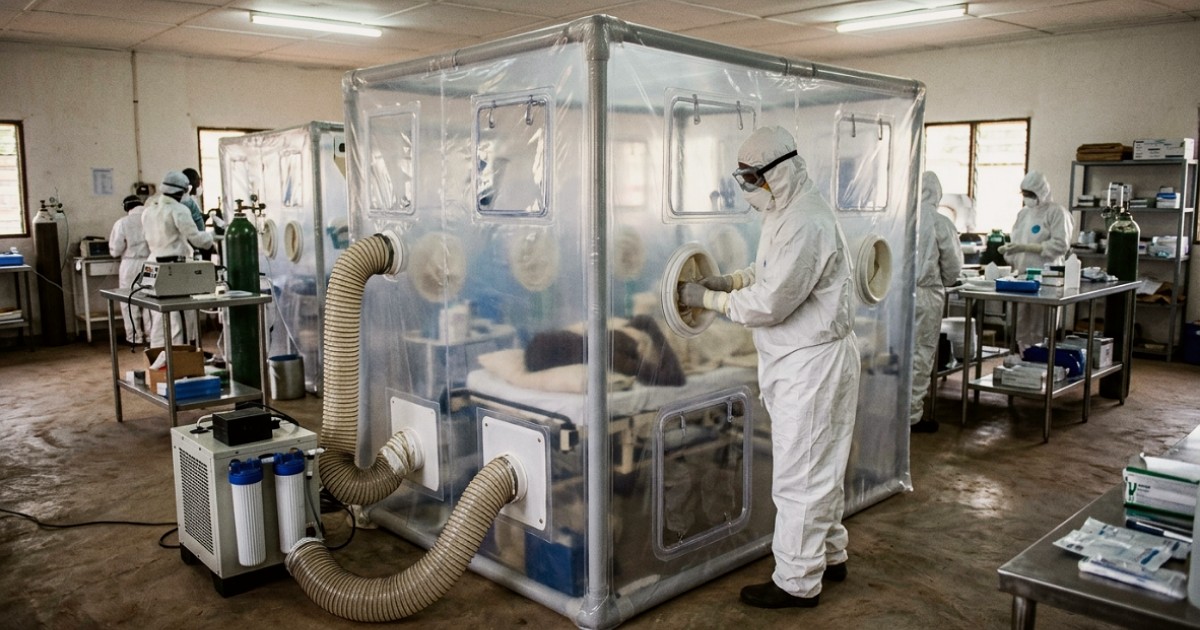
Healthcare workers in the eastern Democratic Republic of Congo are racing against the clock to contain a new Ebola outbreak. As case numbers continue to climb, medical teams are utilizing innovative technology to manage patient care while ensuring their own safety. A key innovation being deployed in the region is the CUBE, a self-contained, biosecure treatment unit designed by the medical humanitarian organization ALIMA to protect staff from highly infectious pathogens.
The CUBE acts as a transparent, individual containment structure that allows medical personnel to treat patients without direct physical contact. By utilizing built-in, tunnel-like gloves integrated into the walls, healthcare workers can perform essential medical procedures while remaining outside the isolation area. This design significantly reduces the reliance on full-body personal protective equipment, which is often difficult to manage in the intense tropical heat. Furthermore, the transparent walls facilitate visual interaction between patients, their families, and staff, helping to mitigate the psychological trauma associated with the strict isolation required for Ebola treatment.
The current outbreak has posed significant challenges to public health authorities, particularly due to the similarity of early Ebola symptoms to other endemic diseases like malaria and typhoid. Symptoms often begin with non-specific signs such as fever, headache, and fatigue, making early detection a complex task. Once confirmed, patients are admitted to specialized treatment centers for isolation and monitoring. The clinical protocol involves rigorous laboratory testing, requiring two negative results before a patient can be discharged from care.
Global health organizations, including the World Health Organization, are scaling up support to the Congolese government to strengthen surveillance and contact tracing. The humanitarian situation is exacerbated by regional insecurity and limited healthcare infrastructure, which complicates efforts to deploy medical supplies and personnel to remote areas. Community engagement is a cornerstone of the current strategy, as local participation is essential to controlling the spread of the virus and ensuring compliance with safety guidelines.
Despite the technical innovations and the dedication of medical staff, the spread of the virus to neighboring provinces and international borders remains a concern. The global community continues to monitor the situation closely, with efforts focused on rapid response, supply delivery, and the optimization of vaccine strategies. As researchers continue to explore new therapeutics and vaccines, the primary focus remains on reducing mortality rates through early intervention and maintaining the highest standards of safety for the brave individuals working on the frontline of this health crisis.