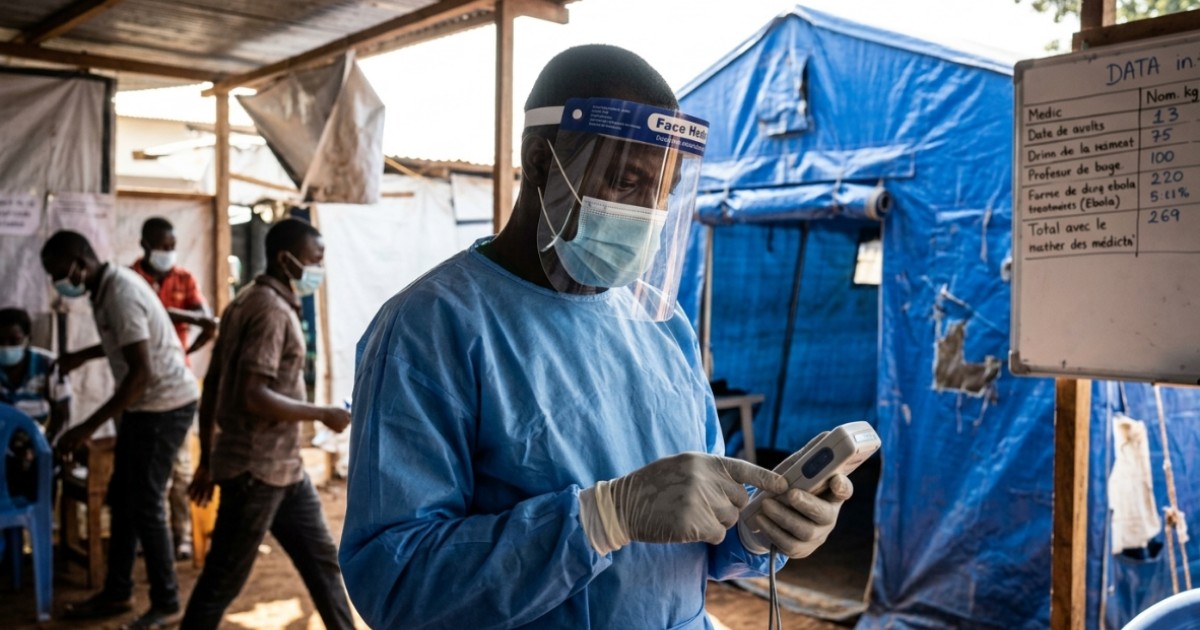
Africa’s primary health agency has officially declared a new Ebola outbreak in the Ituri province of the Democratic Republic of Congo. The Africa Centres for Disease Control and Prevention (Africa CDC) confirmed on Friday that 246 cases have been identified, resulting in at least 65 fatalities. The surge in infections has been concentrated in the gold-mining hubs of Mongwalu and Rwampara, where the density of workers has complicated initial containment efforts.
Most of the recorded deaths have occurred within these mining communities.
In an official statement, the Africa CDC announced an emergency meeting involving representatives from DR Congo, neighboring Uganda, and South Sudan. The discussions will prioritize localized response strategies and the implementation of robust cross-border surveillance. Health officials are particularly concerned about the potential for the virus to migrate across national borders via transit routes used by mining laborers.
This development marks the 17th Ebola outbreak in DR Congo since the virus was first discovered in the country in 1976. Believed to have originated from bats, the disease is transmitted through direct contact with infected bodily fluids or broken skin. It is characterized by severe internal bleeding and can lead to rapid organ failure if left untreated.
Initial symptoms often mirror common illnesses, including fever, muscle pain, fatigue, headache, and a sore throat. These are typically followed by more severe manifestations such as vomiting, diarrhea, rashes, and external bleeding. The World Health Organization (WHO) notes that while treatments are under development, the average fatality rate for Ebola remains high at approximately 50 percent. Medical teams are currently being deployed to the Ituri region to establish isolation centers and begin contact tracing.
Source: BBC Africa and Reuters