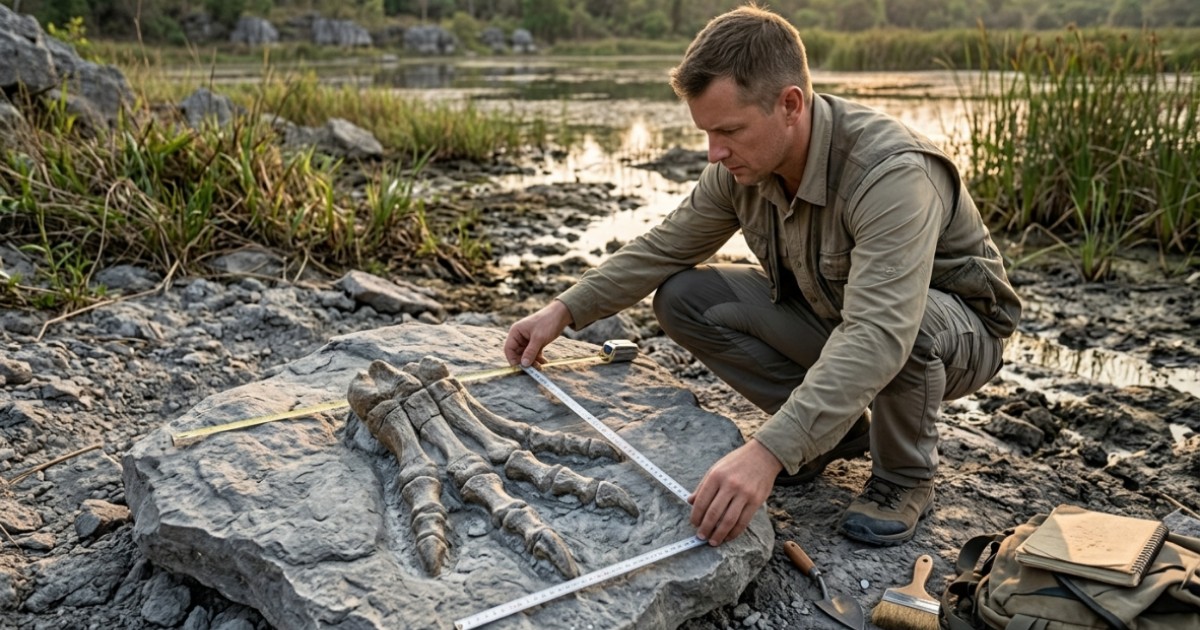
Scientists have identified a new species of giant long-necked dinosaur from remains unearthed in Thailand, marking a significant milestone in Southeast Asian paleontology. The Nagatitan, now recognized as the largest dinosaur ever found in the region, weighed an estimated 27 tonnes—equivalent to the weight of nine adult Asian elephants. Measuring 27 meters in length, this prehistoric giant was even longer than the well-known Diplodocus. The discovery follows a decade of analysis after fossils were originally found beside a pond in northeastern Thailand.
Nagatitan chaiyaphumensis belonged to the sauropod family of long-necked herbivores.
A collaborative team of researchers from the United Kingdom and Thailand identified the species, noting that the find provides crucial insights into how ancient environmental shifts facilitated the development of such massive creatures. The dinosaur`s name is rich in cultural and scientific meaning: "naga" refers to the mythical serpent of Southeast Asian folklore, "titan" pays homage to the gods of Greek mythology, and "chaiyaphumensis" denotes its discovery in the Chaiyaphum province. According to Reuters, the Nagatitan lived between 100 and 120 million years ago, roaming the Earth roughly 40 million years before the Tyrannosaurus rex.
The lead author of the study, published in the journal Scientific Reports, was Thitiwoot Sethapanichsakul, a Thai doctoral student at University College London (UCL). He characterized the Nagatitan as the "last titan" of Thailand, as the fossils were located in the country`s youngest dinosaur-bearing rock formation. Sethapanichsakul explained that younger rocks in the region are unlikely to contain such remains because the area eventually transitioned into a shallow sea toward the end of the dinosaur era. This makes the Nagatitan likely the most recent large sauropod to be discovered in Southeast Asia.
The Nagatitan is the 14th dinosaur species to be formally named in Thailand.
Dr. Sita Manitkoon, a paleontologist from Mahasarakham University, highlighted that Thailand possesses a high diversity of dinosaur fossils, ranking it among the most abundant sites in Asia. The Nagatitan existed during a period of rising atmospheric carbon dioxide and high global temperatures. This environmental context has intrigued researchers, as large-bodied creatures typically find it harder to regulate heat. Professor Paul Upchurch of UCL noted to National Geographic that while it seems unusual for sauropods to thrive in such heat, they likely adapted to the specific plant life available in those conditions.
Ongoing research into the Nagatitan aims to further understand the prehistoric ecosystems of Southeast Asia. This discovery not only adds a massive new entry to the global dinosaur catalog but also deepens the understanding of how geography and climate shaped the evolution of Earth’s largest land animals.
Source: Reuters