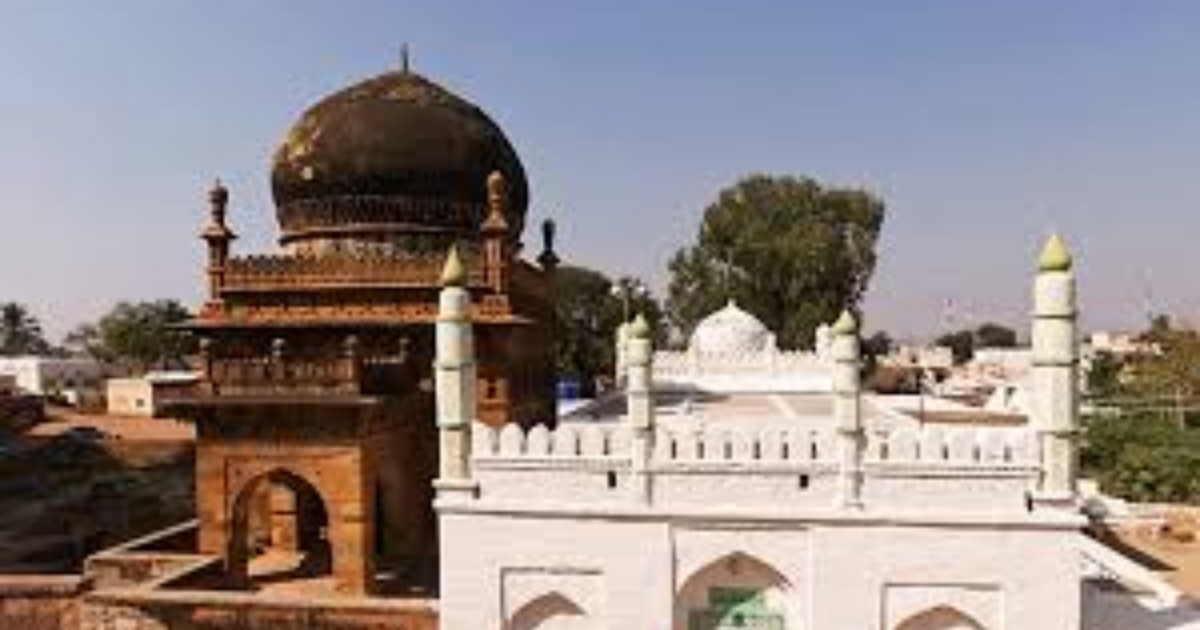
The Madhya Pradesh High Court delivered a significant verdict on Friday regarding the long-standing dispute over the Bhojshala-Kamal Maula Mosque complex in Dhar. A division bench, comprising Justices Vijay Kumar Shukla and Alok Awasthi, officially declared the site as a Saraswati Temple. This ruling effectively shifts the legal status of the structure, which has been a point of religious contention for decades. The court cited historical evidence and the findings of a scientific survey to support its decision.
The verdict marks a major shift in the religious landscape of the district.
In its observation, the court noted that historical literature establishes the site as a center of Sanskrit learning and a temple dedicated to the goddess Saraswati, built by Raja Bhoj of the Paramara dynasty. The bench remarked that the continuity of Hindu worship at the location was never entirely abolished throughout history. This conclusion was heavily influenced by a comprehensive report submitted by the Archaeological Survey of India (ASI) following a court-ordered investigation.
The legal journey toward this ruling intensified on March 11, 2024, when the High Court directed the ASI to conduct a scientific study of the complex. Over the course of 98 days, experts examined the structure, eventually concluding that the current mosque was built using reused parts of a pre-existing temple. The Hindu petitioners presented sculptures, coins, and inscriptions discovered during the survey as proof of their claims. Meanwhile, the Muslim side argued that the findings were biased and designed to favor the Hindu narrative.
The court has requested the state to allocate alternative land for a mosque.
Furthermore, the judges urged the state government to provide a separate plot of land within the district for the Muslim community to construct a mosque for regular prayers. Since 2003, a special arrangement by the ASI allowed Hindus to worship on Tuesdays and Muslims to offer prayers on Fridays. However, Hindu groups challenged this arrangement in court, demanding exclusive rights over the entire premises. The Muslim side contended that the site has been used as the Kamal Maula Mosque for centuries.
According to the ASI report, a massive structure from the reign of the Paramara kings predated the mosque. The survey identified 92 inscriptions and several stone pillars that supported the temple theory. However, representatives from the Muslim community claimed the process lacked transparency and ignored their historical presence at the site. They have expressed intentions to challenge the High Court’s ruling in a higher judicial forum.
This verdict in Dhar follows similar high-profile disputes over religious sites in Varanasi and Mathura. Security has been heightened across the region to prevent any potential unrest following the announcement. The ruling is expected to have deep implications for social and political dynamics in Madhya Pradesh as the legal status of the centuries-old structure changes.