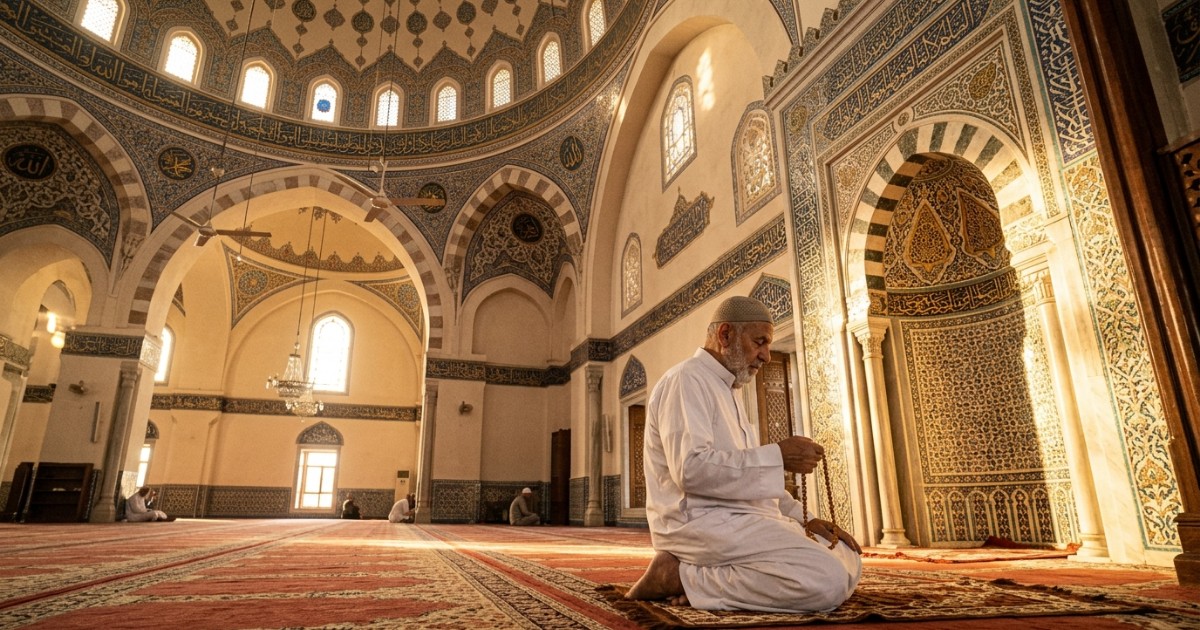
The mosque is the most beloved place on earth to Allah, serving as a sanctuary for prayer, remembrance, and spiritual elevation. In the Holy Quran, Allah Almighty describes mosques as houses that He has ordained to be exalted and where His name is remembered (Surah An-Nur, 24:36). For a believer, building a deep, spiritual bond with the mosque is not merely a social habit but a core requirement of faith. This relationship defines one`s spiritual health and ensures a connection with the Creator throughout the daily grind of life.
Attaching one`s heart to the mosque is a guaranteed path toward divine protection.
According to a well-known narration from Prophet Muhammad (peace be upon him), there are seven types of people who will be granted shade under the Throne of Allah on a day when no other shade exists. Among them is the person whose heart is "attached to the mosque" (Sahih Al-Bukhari, 660). This "attachment" refers to a state of being where a believer feels restless after leaving the mosque, eagerly awaiting the next call to prayer. Achieving this state requires intentional effort and the cultivation of specific spiritual habits.
The first step in fostering this connection is seeking knowledge about the immense virtues of the mosque. Humans are naturally inclined toward profit, and when a believer realizes that every step taken toward the mosque earns a reward and erases a sin, the motivation to attend increases significantly. Abdullah Ibn Abbas (may Allah be pleased with him) noted that mosques are the houses of Allah on earth, shining as brightly to the inhabitants of the heavens as stars do to the people of the earth (Tabarani, Al-Mujamul Kabir, 10608). Understanding this grandeur makes the mosque feel more like a true home.
Reflecting on the specific rewards of congregational prayer (Jama`ah) can further solidify this bond. Performing Salah in congregation is twenty-seven times more rewarding than praying alone (Sahih Al-Bukhari, 645). Beyond the ritual itself, participating in the educational activities of the mosque enhances one`s Iman. The Prophet (peace be upon him) stated that anyone who goes to the mosque solely to learn or teach something good receives the reward of a complete Hajj (Tabarani, Mujamul Kabir, 7473). These spiritual incentives make the mosque a center for both worship and growth.
Furthermore, the mosque should be viewed as a fortress against the temptations of the world and the whispers of Shaitan. Solitary worship can sometimes make a person more vulnerable to distractions, but the environment of the mosque provides a collective shield. The Prophet (peace be upon him) warned that Shaitan gains mastery over those who do not pray in congregation, much like a wolf preys on a sheep that has strayed from the flock (Abu Dawood, 547). Surrounding oneself with mosque-going friends and righteous companions is crucial, as their presence encourages consistent devotion.
The mosque stands as a symbol of Muslim unity and a hub for spiritual transformation.
In summary, wishing for the welfare of the mosque and engaging in its maintenance and activities is a vital part of a believer`s identity. A heart that beats in sync with the Adhan is a heart that remains at peace amidst the chaos of the world. Building a relationship with the mosque is, in essence, building a relationship with Allah. May He grant us the discipline to be among those whose hearts are forever attached to His house and may the light of the mosque guide us in this life and the next.