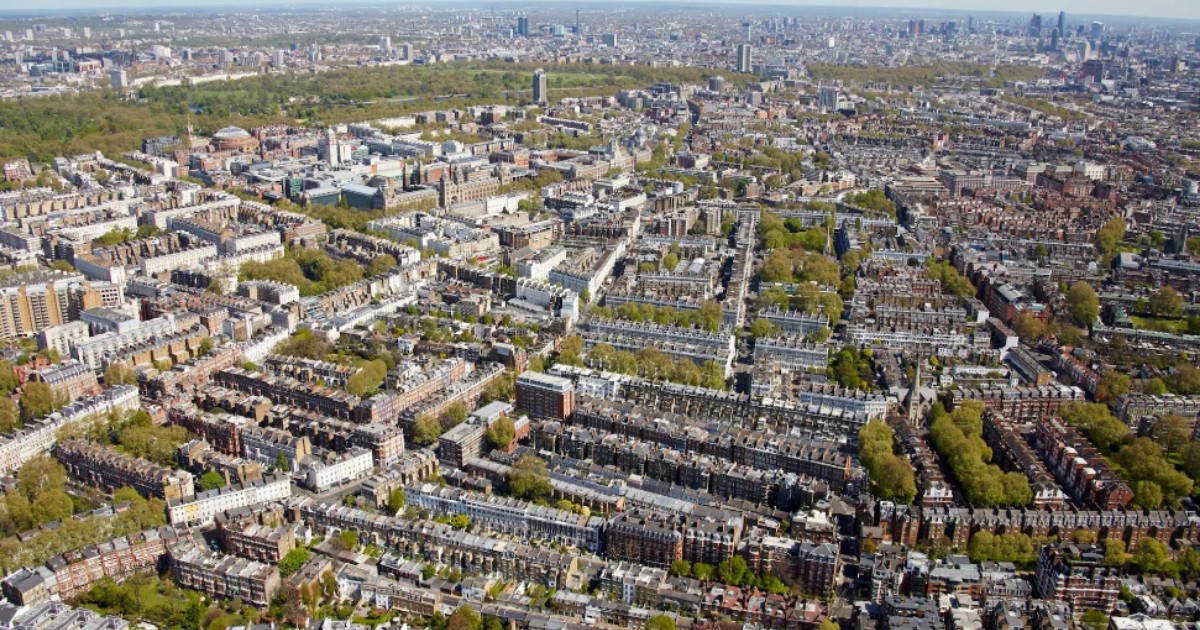
London has long been a city defined by its layers of history—from the fog-laden streets of Dickens’ novels to the romantic, gentrified towns depicted in modern cinema. It has always been a beacon for those seeking fortune and a new beginning. However, by May 2026, the narrative of the British capital has shifted into something far more troubling. For a young person today, the dream of living a "London life" is slipping away, not because of a lack of ambition, but because the city’s housing system has become an impenetrable wall of spiraling costs and bureaucratic dysfunction.
While many point to wealthy international buyers from Russia or the Gulf, rocket-high rents, or the "Kafkaesque" planning system as the villains of London`s housing crisis, there is one significant factor that remains largely undiscussed: the massive stock of social housing that occupies the most valuable land in the world. This system, intended to provide a safety net, is now being criticized as a primary driver of the capital’s hollowed-out center and stagnant social mobility.
In central London’s most desirable boroughs, the density of social housing is staggering. According to 2021 Census data, approximately 25% of all housing in areas like Westminster, Hammersmith and Fulham, and Kensington and Chelsea is socially rented. In boroughs such as Camden and Tower Hamlets, that figure rises to a third. In trendier neighborhoods like Hackney, Islington, and Southwark, nearly 40% of households are social tenants. This means that a vast portion of London’s housing stock is permanently removed from the open market, regardless of demand or the economic contributions of those wishing to live there.
Institutional Failure and Economic Inactivity
The management of these properties by local councils has come under fire. Lambeth Council, for instance, has recently found itself at the bottom of national league tables for social landlords. Residents frequently report crumbling infrastructure, damp-infested rooms, and severe overcrowding. Despite the immense pressure on the housing market, these councils have built very little new stock, and what they have produced often comes at an exorbitant cost to taxpayers. No private sector developer could survive with such a model, yet these councils continue to levy high taxes while paying senior officials six-figure salaries.
Furthermore, the intended beneficiaries of this system—working-class British families—are increasingly being left behind. Data suggests that nearly 50% of households in London’s social housing are entirely economically inactive, with four out of every five residents receiving housing benefit. Instead of acting as a springboard for social mobility, council properties are becoming traps of dependency. Statistics show that once a tenant enters social housing, they are statistically unlikely to ever leave. In London today, the turnover for new social lettings is just 2.7%, the lowest in the country.
The gap between social and private rents in London has widened into an unbridgeable gulf. With private rents often exceeding social rents by more than £1,000 per month, there is little incentive or practical ability for tenants to move out and participate in the private market. This stagnation distorts the entire housing ecosystem, locking in a cycle of disadvantage in the heart of one of the world’s most expensive cities.
The Migration Debate and Systemic Unfairness
A particularly contentious aspect of the current system is how eligibility is determined. Critics argue that the system is skewed against the working class who earn "too much" to qualify but too little to afford the private market. Meanwhile, certain mechanisms like "borough of sanctuary" schemes have allowed migrants, including those who arrived illegally, to access temporary accommodation that places them ahead of those on decades-long waiting lists. Nearly half of the lead tenants in London’s social housing are now foreign-born, a fact that has sparked intense debate over the fairness of the allocation system.
This systemic unfairness is driving a wedge through the heart of London’s communities. While many social housing residents are pillars of their neighborhoods, the lack of turnover and the concentration of economic inactivity often lead to the despoiling of shared spaces and a breakdown in community spirit. Those living in private flats next door often find themselves paying three or four times more than their neighbors for the same privilege, leading to a sense of social resentment that undermines the city’s harmony.
A Call for Radical Reform
The social housing system in London was originally built to improve the lives of working families and eliminate slums. Ironically, in 2026, it is being accused of creating "modern-day slums" and trapping people in a cycle of poverty and dependency. For London to remain a vibrant, functional global city, the housing system needs more than just a tweak; it requires a fundamental overhaul that prioritizes social mobility and economic participation.
If the center of London remains a patchwork of high-end luxury and managed decay, it will lose the very people who make the city function—the teachers, nurses, and service workers who can no longer afford to live where they work. Addressing the "anti-social" nature of current housing policies is no longer optional; it is a necessity for the survival of the London dream. The time for romanticizing a broken system is over; the time for realistic, market-driven reform is now.