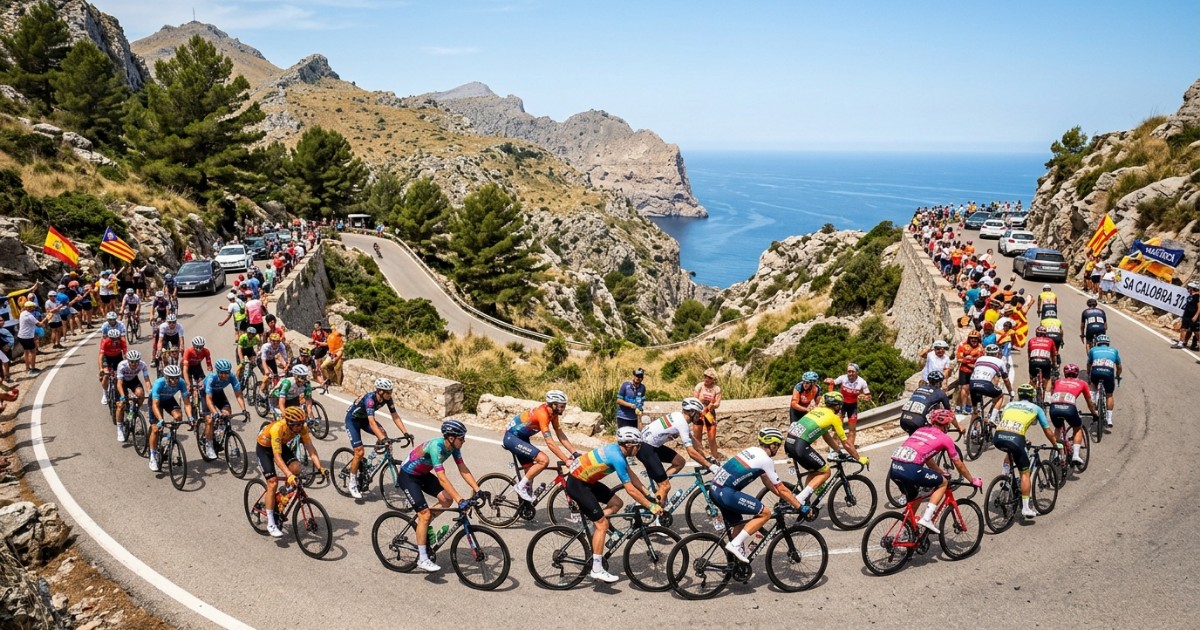
On the winding mountain roads of north-west Mallorca, a familiar sight has become a flashpoint for local tension. Pelotons of cyclists, three abreast and clad in bright Lycra, laboriously climb the steep gradients between Sóller and Deià. While the azure sea and ancient olive groves provide a stunning backdrop, the harmony is frequently shattered by the sound of car horns. Behind these riders, long convoys of tour buses, delivery trucks, and local commuters are often brought to a complete standstill.
This scenario has divided the island`s residents.
Every year, approximately 150,000 cyclists visit Mallorca, drawn by its mild climate and 1,076 miles of immaculately maintained roads. Supported by 120 specialist hotels, this niche group contributes roughly €300 million to the off-season economy annually. Despite representing only a fraction of the island’s 13.5 million annual visitors, their presence is felt disproportionately on the narrow, sylvan routes of the Serra de Tramuntana.
The friction is not just about traffic; it is about behavior and the clash of cultures. Residents complain about cyclists jumping red lights, riding the wrong way down one-way streets, and showing little consideration for other road users. In small villages, the clatter of cycling cleats on stone floors and bikes propped obstructively against café tables have become daily annoyances. Many feel that while mass tourism is expected in the summer, the encroachment of these issues into the spring and autumn "shoulder" seasons is testing local patience.
Tourism officials argue the benefits far outweigh the irritations.
Miguel Roselló, director general of tourism for the Balearic Islands, emphasizes that cycling helps create a more balanced distribution of visitors throughout the year. Competitive events like the "Mallorca 312" attract thousands of international participants, generating significant revenue for local businesses outside the peak summer window. Hoteliers in areas like Playa de Muro have long championed these riders, noting that they tend to stay longer and spend more than the average tourist.
However, infrastructure remains a critical bottleneck. Long-time residents and business owners note that the roads, built for a gentler era of traffic, are now expected to handle local commuters, rental cars, and large cycling groups simultaneously. Some business owners in the Sóller valley admit that while they value the business, the lack of thoughtful etiquette from large groups can be problematic. They argue that the issue is less about the cyclists themselves and more about an island grappling with its own overwhelming popularity.
As evening falls and the pelotons return to their hotels, the mountain roads regain their tranquility. Yet, the underlying debate persists as Mallorca searches for a sustainable way to manage its visitors. The real dilemma is whether the island can continue to market itself as a global cycling hub without alienating the very people who call it home.