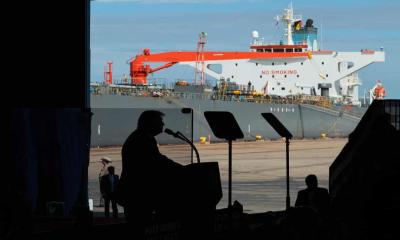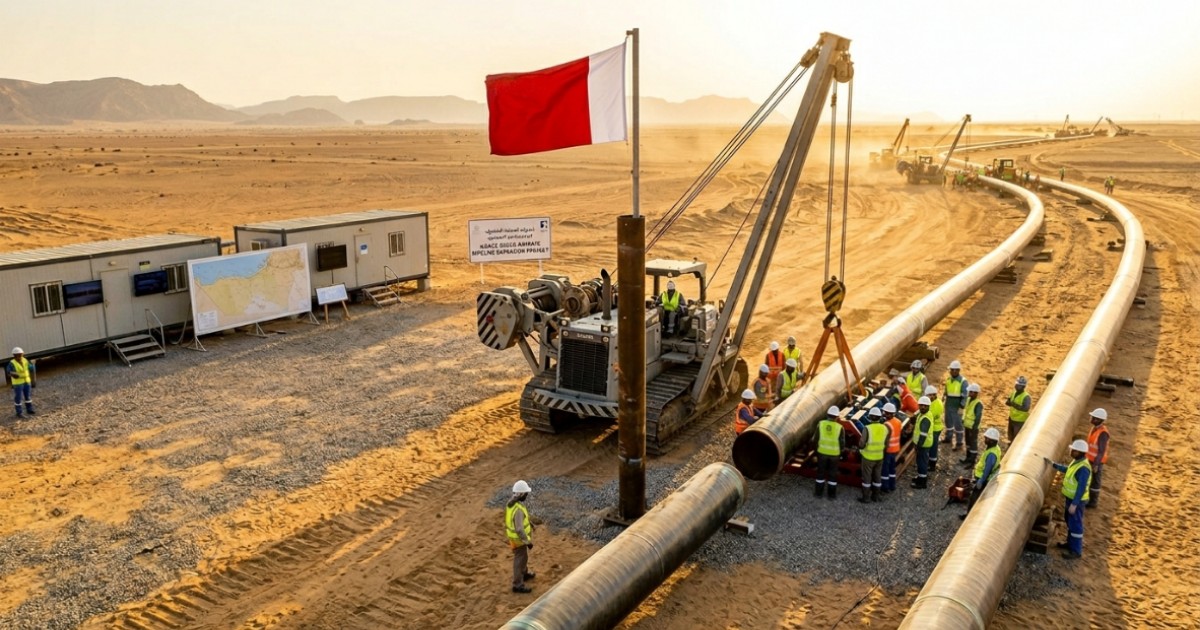
The United Arab Emirates is fast-tracking the construction of a new oil pipeline project designed to double its export capacity through the eastern port city of Fujairah. This strategic move aims to bypass the Strait of Hormuz, a critical maritime chokepoint currently fraught with geopolitical risks. Sheikh Khaled bin Mohamed bin Zayed Al Nahyan, the Crown Prince of Abu Dhabi, announced the acceleration of the "West-East Pipeline" during an executive meeting of the Abu Dhabi National Oil Company (ADNOC) on Friday.
The project is expected to be fully operational by 2027.
Government officials confirmed that the decision is a direct response to the escalating tensions involving Iran, the United States, and Israel. The ongoing conflict has severely disrupted global energy supply chains, prompting Gulf nations to seek more secure trade routes. Currently, nearly 20 percent of the world’s oil passes through the Strait of Hormuz, where Iran has recently implemented new maritime protocols and blockades. By expanding infrastructure to Fujairah, which lies outside the waterway, the UAE is positioning itself as a reliable energy producer capable of meeting market needs regardless of regional instability.
The UAE already utilizes the Abu Dhabi Crude Oil Pipeline (ADCOP), a 380km network running from the Habshan oil fields to Fujairah. Operational since 2012, ADCOP has a capacity of approximately 1.5 million barrels per day (bpd). The newly accelerated "West-East" project will build upon this existing foundation to provide the operational flexibility required to circumvent export constraints. Fujairah has become a focal point of this strategy, even though the port city has faced occasional security threats in the past.
Other regional powers are pursuing similar infrastructure goals to insulate their economies from the Iran war. Saudi Arabia operates its own 1,200km East-West pipeline, which transports crude from its eastern fields to the Yanbu port on the Red Sea. While Oman enjoys an extensive coastline outside the Strait, nations like Kuwait, Iraq, Qatar, and Bahrain remain heavily dependent on the waterway for their trade shipments. These countries are now closely watching the UAE’s rapid expansion as they face similar export vulnerabilities.
This latest development follows the UAE’s recent departure from the Organization of the Petroleum Exporting Countries (OPEC). Abu Dhabi stated that the move was necessary to prioritize national interests and evolve its energy profile. As the UAE focuses on its long-term strategic vision, the "West-East Pipeline" serves as a critical component of its independence from regional chokepoints. For ADNOC, the goal remains clear: maintaining steady exports to global markets despite the shadows of war across the Gulf.