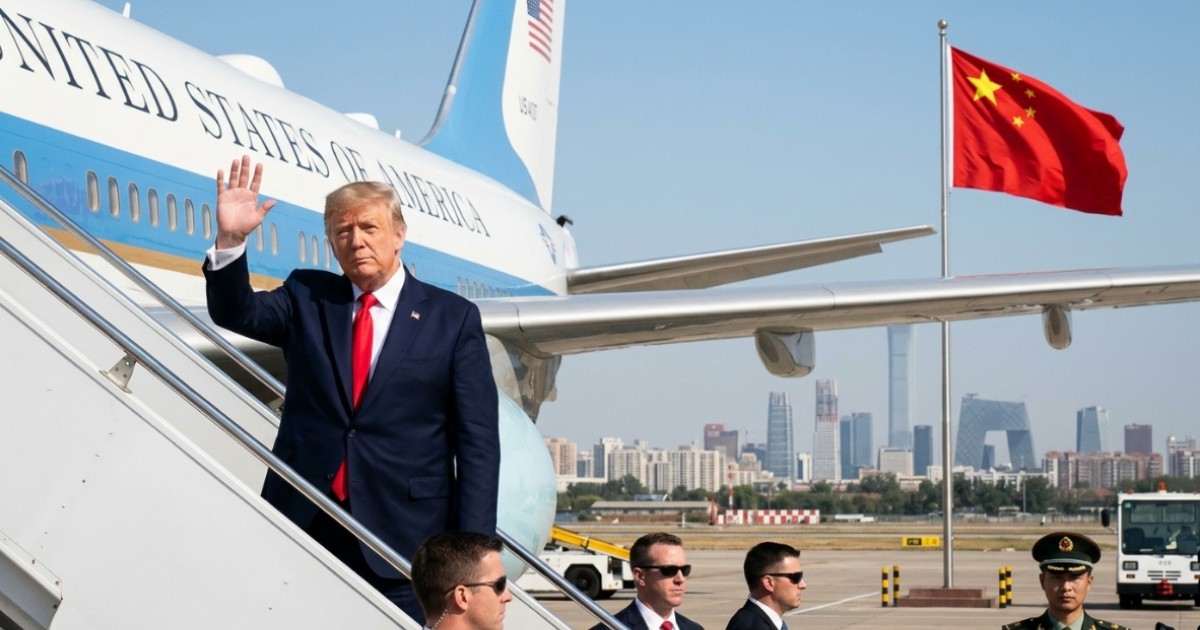
United States President Donald Trump concluded his high-profile three-day diplomatic visit to China on Friday, touting several broad trade agreements but offering little clarity on sensitive regional issues. While the summit featured significant cultural fanfare and high-level business discussions, it yielded no breakthroughs regarding the self-governing island of Taiwan or the escalating US-Israeli conflict in Iran. Trump departed from Beijing Capital Airport, characterizing the trip as a success, despite lingering tensions between the two global superpowers.
This visit marked the first official trip to China of Trump’s second term.
Throughout his stay, the American President was greeted with a military honor guard and a private tour of the 15th-century Temple of Heaven. However, the diplomatic tone grew increasingly serious behind closed doors. Chinese President Xi Jinping repeatedly emphasized that Taiwan remains the most critical and sensitive issue in China-US relations. Xi warned that mishandling the situation could lead to a direct collision between the two nations, potentially placing the entire bilateral relationship in a "highly perilous situation."
Speaking to reporters aboard Air Force One, Trump detailed his discussions with the Chinese leader regarding Beijing`s territorial claims. He confirmed that Xi had voiced strong opposition to any movement toward Taiwanese independence. Trump, maintaining a neutral stance during the talks, told the press that he "heard him out" but made no commitment either way. The President noted that he remained non-committal on several key points of contention, including the future of US-China cooperation on regional stability.
The fate of a massive new weapons package for Taipei remains a significant point of friction. While US lawmakers have already approved the multi-billion dollar sale, it still requires Trump’s final signature to proceed. On Friday, Trump indicated that he has not yet made a final decision on whether to sign off on the military aid. Although Washington does not maintain official ties with Taiwan, it has historically provided extensive military support, a practice that Beijing vehemently opposes and views as a violation of its sovereignty.
The ongoing Iran war was also a major topic of discussion, though details remains scarce. Trump suggested that he was not seeking any favors regarding the conflict, but rather sought to define American interests clearly to his Chinese counterpart. According to Reuters and The Associated Press, while trade deals were the highlight of the public messaging, the lack of consensus on military and geopolitical issues suggests that the US-China relationship remains complex. As Trump heads back to Washington, the focus will now shift to how these unresolved tensions will manifest in future policy decisions.