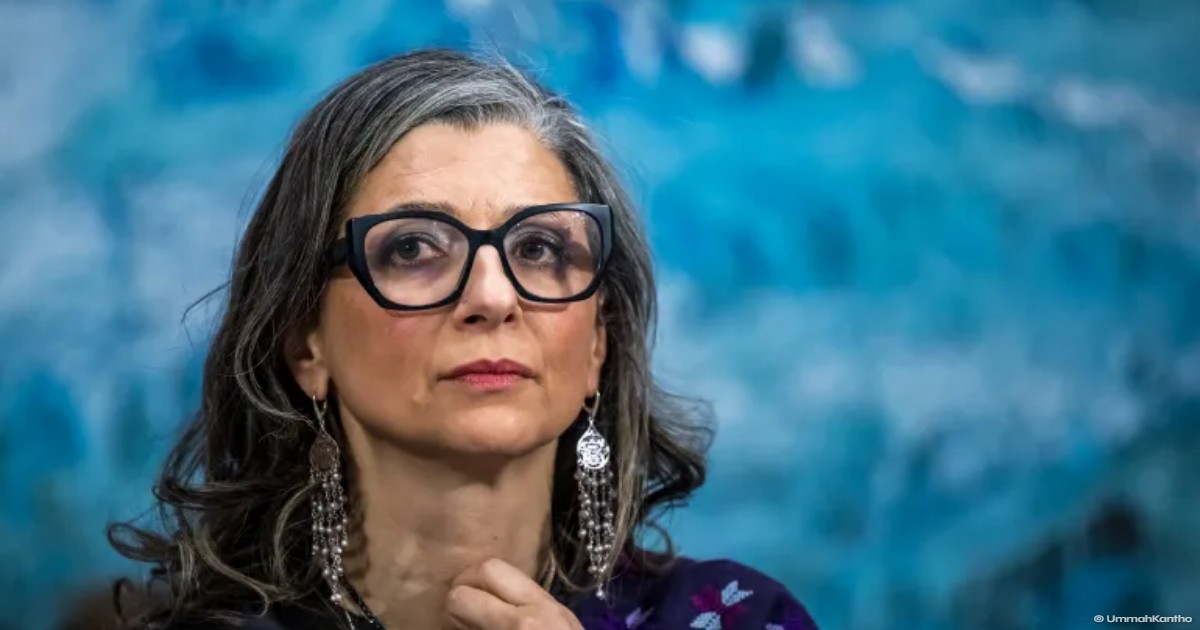
In a significant legal victory for international human rights advocacy, a US federal judge has temporarily blocked the sanctions imposed by the Trump administration against Francesca Albanese, the United Nations Special Rapporteur on the occupied Palestinian territories. On Wednesday, May 13, 2026, US District Judge Richard Leon granted a preliminary injunction, effectively stalling the measures that had barred the legal expert from entering the United States or accessing its banking systems.
The sanctions were initially triggered in July 2025, shortly after Albanese published high-profile legal reports accusing Israel of committing war crimes and genocide during its military operations in Gaza. The Trump administration had justified the move by claiming her rhetoric undermined US foreign policy and regional stability. However, the legal pushback began in February 2026 when Albanese`s husband and daughter filed a lawsuit, arguing that the sanctions were a retaliatory strike intended to silence her documentation of Palestinian rights abuses.
In his memorandum opinion, Judge Leon was pointed in his critique of the administration’s actions. He noted that the sanctions appeared to be an attempt to regulate Albanese’s speech specifically because of the "idea or message expressed." The judge emphasized the non-binding nature of her work, stating that her recommendations carry no legal weight over the International Criminal Court (ICC).
“Albanese has done nothing more than speak,” Judge Leon wrote. “It is undisputed that her recommendations have no binding effect... they are nothing more than her opinion.”
What this really means for international observers is a potential shift in how the US judiciary views the intersection of national sanctions and the First Amendment rights of foreign experts. By framing the sanctions as an ideological tool rather than a security necessity, the court has sent a clear message regarding the limits of executive power when it comes to suppressing critical global voices.
Following the ruling, Albanese took to social media to celebrate the court`s decision. "Thanks to my daughter and my husband for stepping up to defend me, and everyone who has helped so far," she posted on X (formerly Twitter). She added, "Together we are One," signaling her intent to continue her UN mandate without the looming shadow of financial and travel restrictions.
Albanese has long maintained that the sanctions were "calculated to weaken" her mission and delegitimize her findings. While this ruling is temporary, it provides a crucial window of operational freedom for the UN expert as the broader lawsuit proceeds. Human rights organizations have lauded the decision as a defense of academic and diplomatic freedom, particularly concerning the ongoing and sensitive situation in the Middle East. Whether the Trump administration will appeal the injunction remains to be seen, but for now, Albanese remains free to engage with the American legal and financial landscape.