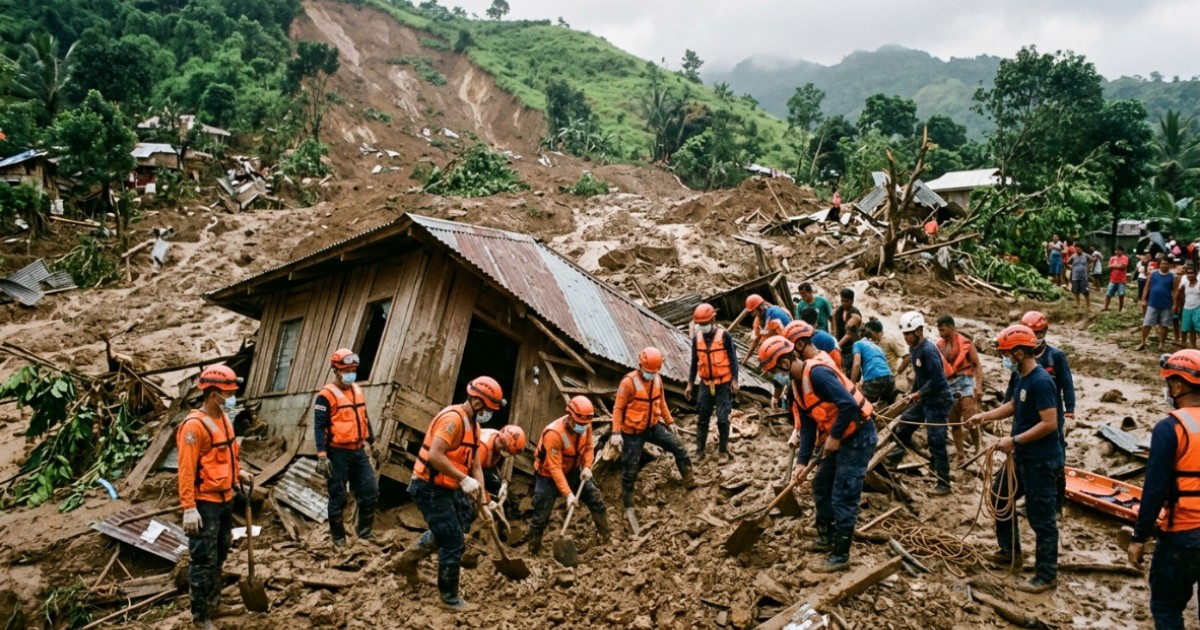
At least 15 people have been killed in a series of landslides in the Philippines as Typhoon Bavi moves across the region. Local authorities reported that a landslide early Friday in the southern Sarangani province claimed the lives of 10 people. A separate landslide in the southern province of Lanao del Sur resulted in at least five additional deaths, according to local media reports.
Known locally in the Philippines as Inday, the storm entered the Philippine Area of Responsibility on Wednesday. While the typhoon is not expected to make direct landfall in the country, its outer bands have triggered persistent, heavy monsoon rains. The Philippine weather agency, PAGASA, has issued flood warnings for various areas, including the capital, Manila. Mayor Salway Sumbo Jr. of Malapatan, Sarangani, stated that evacuation efforts are currently underway in the most affected villages as weather conditions remain volatile.
The storm previously impacted the United States territories of Guam and the Northern Mariana Islands earlier in the week, resulting in significant infrastructure damage but no reported casualties. Having moved past the Philippines, Typhoon Bavi is now on a trajectory toward Taiwan, Japan, and China. Authorities in these countries have begun intensifying preparations, closing schools and businesses, and ordering evacuations in anticipation of the storm’s arrival on Saturday.
Reports from Japan indicate that coastal areas, particularly the Ishikawa prefecture, experienced heavy rainfall on Friday morning. In Taiwan, residents in port cities have been stockpiling supplies and securing homes, as forecasters warn of severe wind and potential flooding. The storm’s reach is significant, covering a vast expanse of the Pacific Ocean as it moves toward mainland China.
The region is already reeling from the effects of severe weather. Southern China was hit by Typhoon Maysak earlier this week, which led to widespread flooding and the deaths of 39 people following a dam breach in Nanning. With Typhoon Bavi now threatening these same regions, emergency services are on high alert. The combination of intense rainfall and the scale of the storm poses a critical risk to infrastructure and public safety across East Asia. As the typhoon advances, officials continue to monitor the track closely, urging communities in its path to follow all evacuation orders and safety protocols.