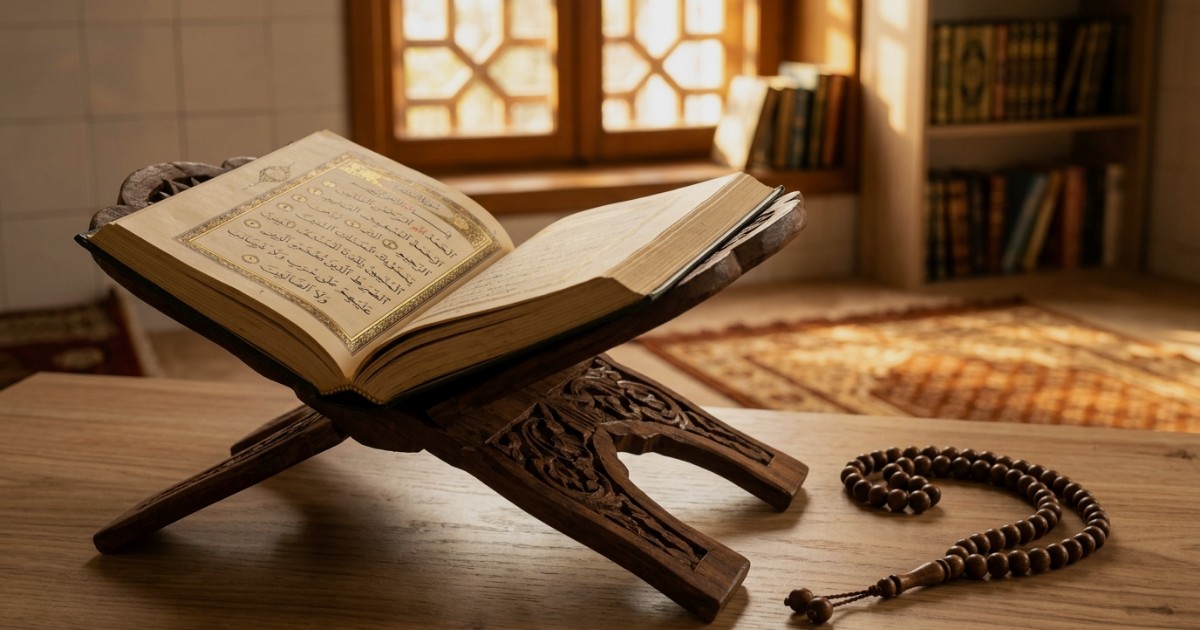
In Islamic tradition, certain spiritual practices require only a few seconds to perform yet offer immeasurable spiritual rewards and blessings. Among these brief but highly potent supplications is the dhikr "Subhanallahi wa Bihamdihi," which translates to "Glory be to Allah and praise be to Him." Prophetic teachings indicate that integrating this simple phrase into daily routines serves as an incredibly effective means to wipe away accumulated transgressions and enrich a believer`s record of good deeds.
The Prophet Muhammad (PBUH) identified this concise phrase as one of the most beloved words to Allah.
According to an authentic narration transmitted by Abu Dharr (RA), the Messenger of Allah (PBUH) stated that the specific statement Allah chose for His angels and His servants is Subhanallahi wa Bihamdihi (Sahih Muslim, 2731). Daily life frequently introduces minor moral lapses, and this invocation acts as a highly effective spiritual cleansing mechanism. The Prophet (PBUH) explicitly promised that whoever recites this remembrance 100 times a day will have their sins forgiven, even if their moral errors are as vast as the foam of the sea (Sahih al-Bukhari, 6405).
The weight of this testimony becomes exceptionally apparent regarding its impact on the divine scales of justice on the Day of Judgment. The Prophet (PBUH) noted in another well-known narration that there are two expressions that are incredibly light on the tongue, remarkably heavy on the scale, and deeply loved by the Most Merciful; one of these is Subhanallahi wa Bihamdihi (Sahih al-Bukhari, 6682). Furthermore, consistent practice offers unmatched spiritual distinction in the afterlife. Whoever repeats this phrase 100 times in the morning and evening will find that no one will present a better deed on the Day of Resurrection except an individual who performed equal or greater recitations (Sahih Muslim, 2692).
Reciting this powerful dhikr does not mandate any complex physical rituals or even the formal state of ritual purity (wudu). A Muslim can easily engage in this remembrance during commutes, while performing household chores, or during brief moments of leisure. Focusing deeply on the underlying meaning of the praise maximizes its spiritual efficacy and transforms ordinary daily moments into opportunities for profound divine connection. Establishing this practice functions as an invaluable opportunity to protect oneself against moral vulnerabilities.