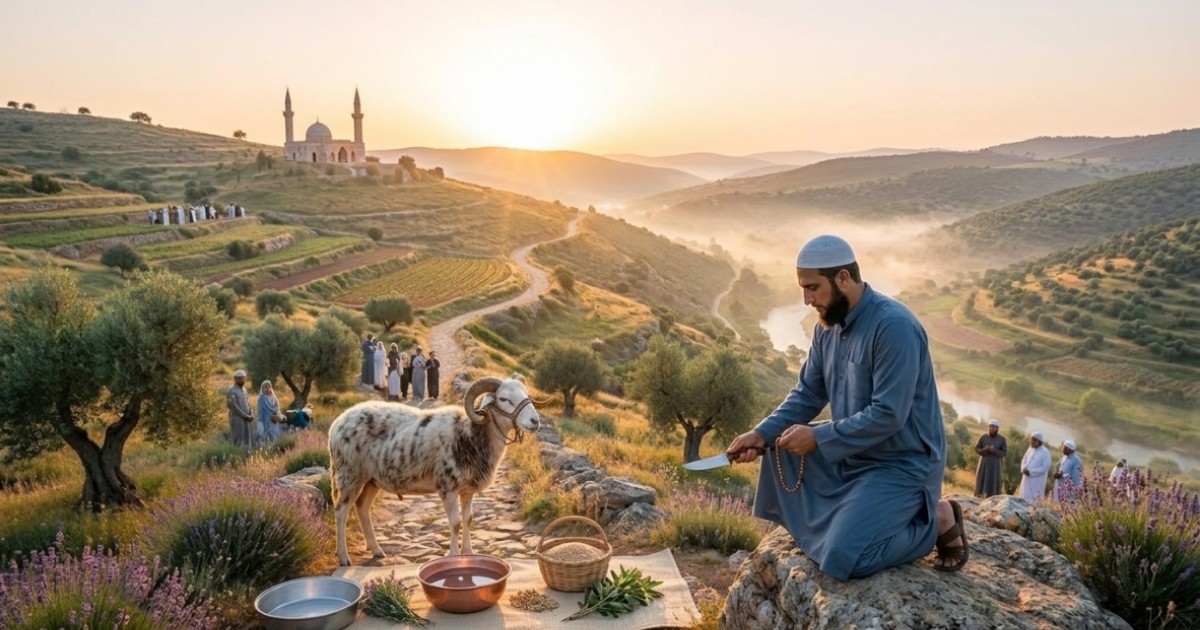
In our culture, Eid-ul-Adha is most commonly known as the `Festival of Sacrifice` or Qurbani Eid. According to the teachings of Prophet Muhammad (PBUH), this ritual of sacrifice is a continuation of the Sunnah of Prophet Ibrahim (AS). A Hadith narrated by Zaid ibn Arqam (RA) confirms that when the Prophet (PBUH) was asked about the nature of Qurbani, he explicitly identified it as the legacy of Prophet Ibrahim (AS). The Holy Quran details the historic event involving Prophet Ibrahim and Ismail (AS), documenting their profound act of obedience and devotion.
The core spirit of Qurbani lies in the absolute obedience of Prophet Ibrahim (AS).
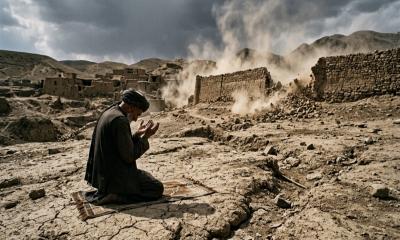
Preparing to fulfill the command of Allah, he presented himself at the isolated plain of Mina. That difficult moment, when he prepared to sacrifice his son, was the ultimate test of his love for the Almighty. Pleased with this immense sacrifice and patience from both father and son, Allah saved Ismail (AS) and accepted a ram as the sacrifice instead. This represents the profound lesson of sacrifice that continues to inspire the Muslim Ummah today.
Prophet Muhammad (PBUH) encouraged his daughter Fatimah (RA) to witness the Qurbani.
He explained that as soon as the first drop of blood from the animal touches the ground, Allah forgives all the sins of the person performing the sacrifice. When the companions asked if this merit was exclusive to the Ahl al-Bayt, the Prophet (PBUH) clarified that this virtue is available to all Muslims. He issued a stern warning against those who have the financial capacity yet neglect this act of worship, stating that those who can afford Qurbani but do not perform it should not come to the Eid prayer grounds.
It is essential for every Muslim to have a clear understanding of the rules and conditions related to Qurbani.
The ritual becomes mandatory (Wajib) for every sane, adult Muslim who possesses wealth equivalent to the value of 52.5 tolas of silver in excess of their basic needs between the Fajr of 10th Dhu al-Hijjah and the sunset of 12th Dhu al-Hijjah. This wealth threshold does not need to be maintained throughout the year; it only needs to exist during the days of Qurbani. However, Qurbani is not mandatory for minor children or those living in poverty. If a person buys an animal specifically for Qurbani, the sacrifice then becomes mandatory for them.
The sacrifice can be performed from the 10th to the sunset of the 12th of Dhu al-Hijjah.
If possible, performing the sacrifice on the 10th is considered most virtuous. Camels, cows, buffaloes, goats, sheep, and rams are the only animals permitted for Qurbani. Animals like deer or wild cattle are not acceptable. A camel must be at least five years old, cows and buffaloes must be at least two years old, and goats, sheep, and rams must be at least one year old. If a sheep or ram is slightly younger than one year but is robust and resembles a one-year-old animal, the sacrifice is considered valid.
A single goat, sheep, or ram can be sacrificed by only one person.
Up to seven people may share a single camel, cow, or buffalo. If a person fails to fulfill the mandatory sacrifice during the prescribed days, they are then required to donate the value of one share of a Qurbani animal to charity. This act of sacrifice should not be limited to the shedding of blood; its true purpose is to attain the essence of Taqwa—a deep consciousness of Allah in one’s heart.
May Allah grant us the ability to practice this great Sunnah with sincerity.