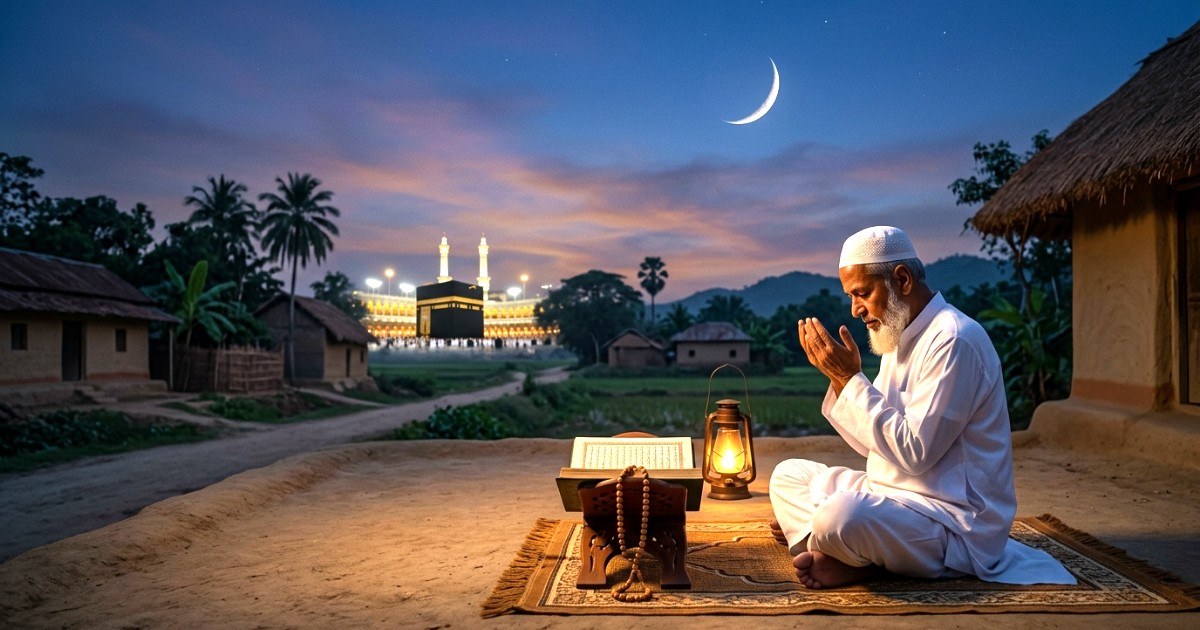
The first ten days of the holy month of Dhul Hijjah represent an unparalleled spiritual window gifted by the Creator to the global Muslim Ummah. In Islamic jurisprudence, this sacred decade serves as a seasonal awakening for deep purification, sincere repentance, and the ultimate consolidation of personal righteousness. Authentic prophetic traditions establish that structural acts of devotion performed within this timeframe carry greater weight than those executed during any other period of the year.
The astronomical tracking for the new crescent moon is actively underway this Monday evening.
In Surah At-Tawbah, verse 36, the Holy Quran explicitly mandates that out of the twelve months established since the creation of the universe, four periods are designated as inherently sacred. According to documentation in Sahih al-Bukhari, Dhul Hijjah ranks prominently within this sacred category. This particular phase is so intensely esteemed that the Almighty swears an oath by these ten nights at the commencement of Surah Al-Fajr. Renowned classical commentators, including Abdullah ibn Abbas and Imam Mujahid, confirm that this textual reference points directly to the initial decade of Dhul Hijjah.
Virtues of the Sacred Decade
Prophet Muhammad declared that there are no days in which righteous actions are more beloved to Allah than these specific days. The spiritual compensation for righteous deeds increases exponentially during this decade due to the unique convergence of all fundamental pillars of Islamic worship within a singular timeframe. While daily ritual prayers remain foundational, major obligations such as animal sacrifice, charitable almsgiving, and the performance of the sacred Hajj pilgrimage intersect simultaneously. This concentration of diverse devotional acts is entirely unique to this month and is unmatched by any other period on the lunar calendar.
The gathering of millions of pilgrims upon the plains of Arafat serves as the central spiritual focus of this entire decade. In Shariah frameworks, the Day of Arafat represents an exceptional period for universal divine amnesty and salvation from hellfire. Prophetic narrations in Sahih Muslim confirm that on no other day does the Almighty emancipate more souls from eternal punishment than on this specific day. This arrangement enables believers residing across distant continents to tap into the collective spiritual current generated at the epicenter of Islamic pilgrimage.
Every passing moment of this decade demands strategic allocation by the believer.
Ten Prescribed Deeds for Believers
To maximize the immense blessings of this sacred period, authentic Islamic texts outline ten distinct deeds that practicing Muslims should actively execute. The initial deed involves increasing the continuous internal remembrance and praise of God through specialized verbal invocations. Narrations in the Musnad of Imam Ahmad instruct believers to recite the phrases "La ilaha illallah," "Allahu Akbar," and "Alhamdulillah" extensively throughout these days. The secondary deed requires individuals intending to offer a sacrifice to completely abstain from clipping their nails or trimming their hair from the moment the crescent moon is verified until their sacrifice is fulfilled, creating a symbolic connection with the pilgrims in Ihram.
The third deed encourages fasting during the initial nine days of the month for non-pilgrims, a practice verified by historical accounts of the Prophet’s personal routines in Sunan Abi Dawud. The fourth deed emphasizes the critical importance of fasting specifically on the ninth day of Dhul Hijjah, known as the Day of Arafat. Authentic references in Sahih Muslim confirm that a single fast on this day serves as an expiation for the minor sins committed during the preceding year and the upcoming year. The fifth practice mandates increasing private supplications for salvation and protection against spiritual ruin.
The sixth deed involves the systematic recitation of the optimal supplication prescribed for the Day of Arafat: "La ilaha illallahu wahdahu la sharika lahu, lahul mulku wa lahul hamদু wa huya ala kulli shaiyin qadir." The seventh deed encompasses the performance of the Hajj and Umrah pilgrimages for those endowed with the requisite financial and physical infrastructure. The eighth assignment dictates the vocal recitation of the Takbir al-Tashriq immediately following every obligatory congregational prayer from the dawn of the ninth day until the afternoon of the thirteenth day. This praise is articulated as: "Allahu Akbar Allahu Akbar, La ilaha illallahu wallahu Akbar Allahu Akbar walillahil hamd."
The ninth deed calls for the physical execution of Udhiyah or Qurbani on the tenth day of the month, establishing a fundamental wajib obligation upon every financially capable Muslim household. The tenth and final action requires believers to perform the formal congregational Eid al-Adha prayer shortly after sunrise on the designated holiday. Approaching these ten actions with absolute sincerity ensures that the profound essence of the sacred month remains a living reality.