During the extended Eid al-Adha vacation, millions of individuals relied on personal transportation to travel across the country to spend quality time with their families. Amidst the congestion of public transport systems, the personal motorcycle emerged as the most efficient and versatile vehicle for navigating both wide open highways and prolonged traffic gridlocks. Safely completing a multi-mile round trip demands a substantial amount of endurance from the rider, but it also subjects the mechanical framework of the two-wheeler to severe structural stress.
Neglecting proper maintenance after returning from such extensive journeys can rapidly degrade the motorcycle engine and mileage, leading to unexpected component failures and heavy repair bills. Executing a few fundamental mechanical checkups right after a long tour ensures that your vehicle preserves its peak operational efficiency and remains reliable for daily commuting.
Automotive experts emphasize that post-trip motorcycle care extends far beyond simply washing away the visible layers of mud and dust from the external bodywork. Operating a motorcycle at high speeds for hours destabilizes the chemical properties of critical fluids and accelerates the wear and tear of friction-reliant components. Riders frequently fall into the trap of assuming their vehicle is in perfect health simply because it managed to complete the journey without breaking down.
This administrative oversight often leads to long-term internal degradation that compromises fuel efficiency and compromises on-road safety. By focusing systematically on five primary maintenance sectors, motorcycle owners can actively protect their investments and retain that factory-fresh riding smoothness.
Fluid Maintenance and Air Intake Efficiency
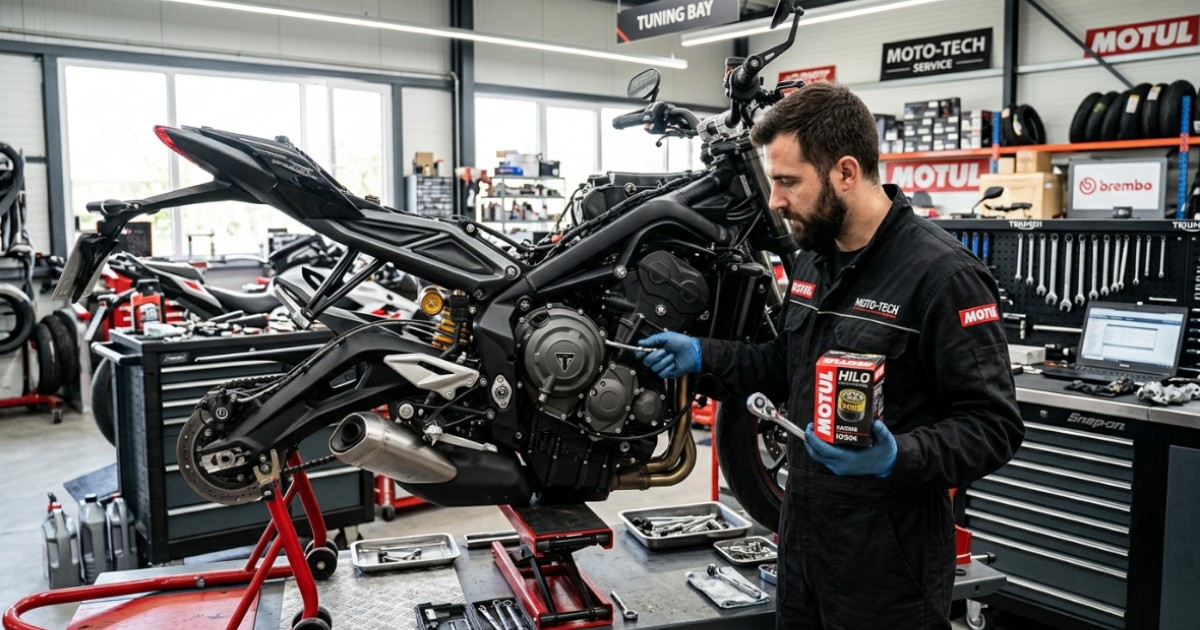
The absolute primary objective upon returning from an extensive cross-country journey is checking and replacing the engine lubricant. Continuous high-rpm operation on open highways, combined with the lack of cooling airflow during prolonged idle periods in heavy traffic jams, drives internal engine temperatures to extreme levels. This thermal stress rapidly breaks down the chemical viscosity of the engine oil, neutralizing its capacity to minimize friction between the moving piston and cylinder walls.
Running an engine with degraded, thin oil accelerates metal-on-metal friction and can permanently score internal components. Draining the old oil and replenishing the reservoir with a fresh supply matching the manufacturer`s exact grade guidelines stabilizes internal operations, preserves mechanical responsiveness, and protects the heart of the machine from premature aging.
Sustaining an optimal air-to-fuel ratio is equally dependent on the structural cleanliness of the vehicle’s air intake system. Traveling along unpaved rural tracks or dusty highway shoulders forces the air filter element to capture a massive volume of airborne particulates and microscopic debris. When this filter medium becomes structurally clogged, it chokes the engine’s intake, restricting the clean airflow necessary for efficient fuel combustion. This restriction directly damages the motorcycle engine and mileage by forcing the carburetor or fuel injection system to burn a rich fuel mixture, which causes sluggish throttle response and sharply increases fuel consumption metrics. Removing the filter to clear out loose debris with pressurized air is an immediate fix, though completely replacing a heavily saturated filter element is always the most cost-effective decision for long-term fuel preservation.
Mechanical Drive Trains and Braking Security
The mechanical drive chain endures the highest physical tension during long-distance touring cycles. Exposure to road grime, rain moisture, and abrasive sand strips away the factory-applied grease from the links, increasing internal structural friction. Operating a completely dry chain over extended periods causes the metal to stretch, altering the proper tension alignment between the drive sprockets. A loose or unlubricated chain introduces severe safety hazards, including the structural risk of the chain snapping or derailing from the sprockets at high speeds, which can instantly lock the rear wheel and induce a dangerous crash. Cleaning the chain thoroughly with a dedicated solvent and reapplying a high-grade chain lubricant or gear oil stabilizes the drive train, minimizes operational noise, and extends the lifespan of the entire sprocket kit.
Managing vehicle velocity on busy highways places an extraordinary burden on the motorcycle`s braking components compared to low-speed city navigation. Frequent, intense braking at elevated speeds strips away the friction material from brake pads and drum shoes quite rapidly. It is highly recommended to visually inspect the remaining thickness of both the front and rear braking elements immediately after a long tour. Operating a vehicle with worn-out pads allows the metal backing plates to scrape directly against the brake rotors, causing deep scoring channels that ruin the discs and demand an expensive total replacement. Simultaneously, ensuring the hydraulic brake fluid levels are optimal and checking for potential line leaks preserves immediate stopping power when navigating unexpected road hazards.
Finally, allocating a few minutes to examine tire integrity and spark plug health rounds out a comprehensive post-trip inspection. High-stress highway travel under heavy loads can compromise tire bead seating or cause subtle punctures that result in slow pressure drops, increasing the risk of a high-speed blowout if left uncorrected. Utilizing a precise pressure gauge to confirm proper inflation specs is vital for maintaining balanced handling and optimal rolling resistance. Concurrently, removing the spark plug to inspect the electrode and cleaning away any accumulated black carbon deposits optimizes ignition efficiency and guarantees clean power delivery. Dedicating time to these basic maintenance tasks guarantees that your motorcycle remains completely secure, structurally durable, and ready for your next destination.